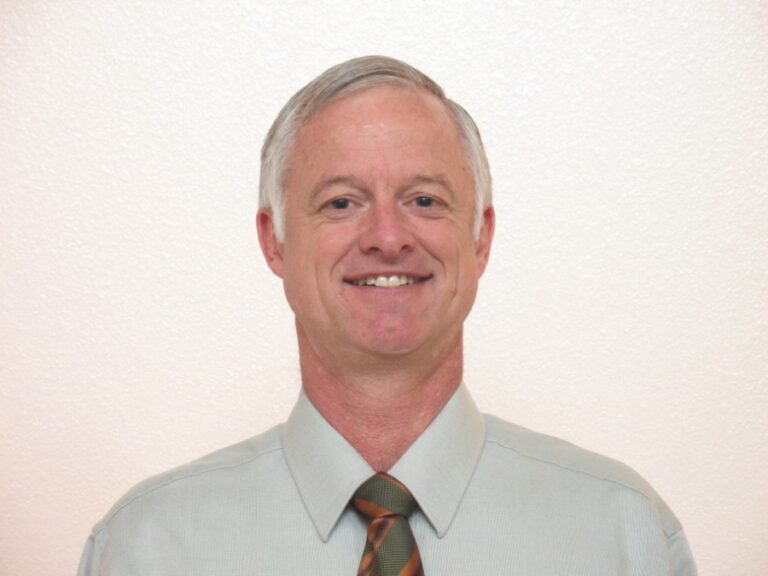
For 50 years, Scott Sucher created exact replicas of history’s most famous diamonds in cubic zirconia. The shapes were right. The dimensions were right. The research behind every stone was as rigorous as anything published in a peer-reviewed journal. But the material was not diamond.
He knew it. His clients knew it. And there was nothing he could do about it.
Man-made diamonds changed that. As growing technology matured over the past several years, large CVD rough became available in sizes and qualities that could finally meet the specifications his research demanded. A precision cutting partner in India capable of executing to that standard. An anti-counterfeiting system built on blockchain records, Gemprinting and laser-inscribed girdles. The infrastructure, piece by piece, arrived.
“We are the ones, right now, that are able to bring these stones to life,” Sucher says. “And we’ll probably remain the only ones.”
The Nassak diamond is one of the most storied gems in the world. The original weighed 90 carats and passed through the hands of Mughal emperors, British East India Company officers and American arms dealers before disappearing from public record. A scaled recreation of it, weighing 37 carats, was completed this summer. It took two months from sourcing the rough to finishing the cut. It is now headed to its first buyer.
“We now have proof of concept of creating luxury collectibles from man-made diamond,” Sucher says.
The buyer is a gemstone connoisseur, someone who understands both the history of the stone and the precision required to bring it back to life. He has commissioned pieces from Sucher before, turning earlier cubic zirconia replicas into brooches and hat pins. He knows what goes into these stones. This time the material is diamond, and this time, he can say something no one else in the world can say: he has the first.
“He has the braggability,” Sucher says. “He can put it on his chest and say, look what I have.”
Sucher’s credentials in this category are not easily replicated. He is author or co-author on six peer-reviewed articles on famous diamonds, including a 17-page analysis of the Koh-i-Noor in Gems and Gemology that required waiting 26 years for the right measurement data to become available. He delivered the keynote at the GIA Diamond Symposium in 2011. In 2005, the Smithsonian Institution unseated the Hope Diamond so he could model it for the Discovery Channel documentary. Museum curators worldwide know his work. Major jewelry houses and film and television productions have commissioned his stones.
What he did not have was the right material.
Cubic zirconia is visually convincing, but it is not diamond. The density is different, the optical behavior is different, and for someone whose standard is true replicas rather than representations, that distinction matters. Man-made diamond is diamond: the same crystal structure, the same optical properties, grown in a reactor from a carbon seed and cut to the precise specifications of a centuries-old historic gem.
In May 2026, Sucher completed his first full-size famous diamond recreation in man-made diamond: the Hortensia, a pale pink stone from the French Crown Jewels. The finished piece weighs 20.31 carats, within a fraction of the original’s 20.53, cut from 42-carat rough. Every piece he produces is registered with a GCAL certificate, GemPrint and laser inscription, and entered on a blockchain record, creating a verification trail that links the stone permanently to its origin and its buyer.
That last detail matters for reasons that go beyond authentication. Sucher’s buyers fall into two distinct camps. Some want complete privacy: the documentation exists, the provenance is ironclad, but the transaction stays between the buyer and Sucher. Others want to walk into a room and let everyone know. He accommodates both.
Ask Sucher what keeps a competitor from replicating what he does, and he is direct about the answer: time, skill, and a research depth that takes decades to accumulate.
“The modeling process is extremely time consuming,” he says. “It could easily take hundreds of hours of research just to get the raw data needed to create a single stone.”
Cutting complexity compounds that further. Simple recreations can take ten hours to model alone. Difficult ones take months. The historic version of the Koh-i-Noor took two years. The Beau Sancy, a lesser-known stone from the French Crown Jewels, carries a note in the gemological literature that it has been so difficult to model that no one has ever been able to cut it. Sucher has one in his personal collection.
A major jewelry house, once told it could source comparable stones at a lower price elsewhere, responded to Sucher’s transparency with a question that settled the matter: “What part of we’re buying it from you do you not understand?”
Sucher is now working toward stones in the 40 to 60 carat range. The Sancy, the number one crown jewel in the French Royal Inventory of 1791 at 55 carats, is at the top of his list. Its history stretches back before 1725, and entire books have been written about it. The current ceiling on full-size recreations is set by available rough, not by research. As man-made diamond technology continues to scale, so does what is possible.
He spent 50 years building the expertise that made this possible. He does not appear to be wasting any time now that it has.