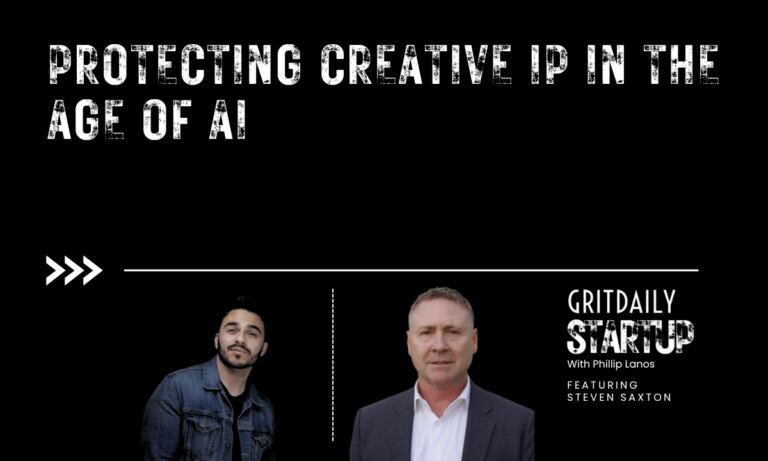
Artificial intelligence is transforming creative work faster than many industries can adapt.
For writers, filmmakers, musicians and publishers, the opportunity is enormous. AI can accelerate research, generate ideas and streamline production. At the same time, it introduces difficult questions about ownership, copyright and creative control that have yet to be fully answered.
After spending more than three decades producing, financing and developing film, television and music projects, Steven Saxton believes the next challenge facing entertainment isn’t simply how creators use AI, it’s how they protect the intellectual property that makes their careers possible.
Intellectual Property Is a Creative Asset
Saxton’s motivation became personal after the Woolsey Fire destroyed much of his creative archive.
The experience forced him to ask a simple question: why wasn’t there a better way to protect valuable creative work?
For years, entertainment professionals have relied on hard drives, email attachments and cloud storage to share scripts, treatments, music and production materials. Those systems were never designed for an era where AI models can analyze, summarize and potentially learn from massive amounts of digital content.
Once a screenplay or manuscript leaves a creator’s hands, it becomes increasingly difficult to know where it travels or how it may be used.
For creators whose livelihood depends on original ideas, that uncertainty carries real risk.
AI Should Inspire, Not Replace
Saxton is not opposed to artificial intelligence. In fact, he sees it becoming an essential creative tool.
The distinction, he argues, is how it is used.
AI can help writers brainstorm plot directions, research historical events or test ideas during development. It can accelerate the creative process without replacing the creator’s own work.
Problems arise when AI begins generating substantial portions of the creative material itself.
If a screenplay, novel or song is largely written by an AI model, future copyright ownership becomes much harder to establish. Courts and regulators are still determining where those boundaries will ultimately be drawn.
Rather than avoiding AI altogether, Saxton advocates responsible use with clear guardrails that preserve the creator’s ownership and document how AI contributed during development.
Building Trust Into Collaboration
Entertainment has always been collaborative.
Writers, producers, directors, financiers, actors, attorneys and distributors all contribute to bringing a project from concept to audience.
That collaboration, however, often requires creators to repeatedly send valuable intellectual property to people outside their immediate team.
Saxton believes that process needs new infrastructure.
His company, Hollywood Studios™, is building a platform designed to let creative teams collaborate inside a secure environment while maintaining clear records of authorship, revisions and ownership.
Instead of relying on scattered email chains and multiple versions of documents, projects can remain inside a controlled workspace where contributors know which version is current and how ideas evolved over time.
The goal is not only security, but confidence.
Why Chain of Title Matters
One concept that receives little public attention—but is critical throughout entertainment—is chain of title.
Before significant money is invested into a film, television series or publishing project, investors want confidence that the underlying intellectual property is legally secure.
Saxton compares it to real estate.
No one would build an expensive skyscraper on land with unresolved ownership disputes. Likewise, investors hesitate to finance projects whose underlying rights could become tied up in future litigation.
As AI-generated content becomes more common, proving exactly who created what may become increasingly important.
Documenting that process from the beginning could become a competitive advantage for creators seeking financing.
The Entertainment Business Is Changing
Saxton also sees broader structural changes affecting independent entertainment.
The disappearance of the DVD market fundamentally changed film financing. Independent producers now rely far more heavily on theatrical releases and streaming revenues, making it harder to attract investment for original projects.
At the same time, creators have more opportunities than ever to produce content independently through social platforms and digital distribution.
That creates both opportunity and competition.
Millions of people worldwide are creating scripts, books, podcasts, music and video content. The challenge is no longer simply creating great work—it’s standing out, protecting ownership and demonstrating value to potential partners and investors.
Technology, Saxton believes, can help solve some of those problems by giving creators better tools for collaboration, project development and data-driven decision making.
Supporting Creativity Rather Than Controlling It
Throughout the conversation, one theme remained consistent: technology should serve creators, not replace them.
Great storytelling still depends on imagination, experience and human judgment. AI may accelerate parts of the creative process, but it cannot substitute for originality or authentic artistic vision.
Instead, its greatest value may be helping creators spend less time managing files, protecting assets and organizing collaboration—and more time creating.
As entertainment enters another period of technological disruption, the biggest opportunities may belong to those who can combine creativity with trustworthy infrastructure.
For creators hoping to build lasting careers, protecting intellectual property may become just as important as producing it in the first place.
Want more Grit Daily Startup Show? Take a look at past articles, head over to YouTube, or listen on Apple Podcasts or Spotify.