
As businesses race to adopt AI and streamline operations, many founders are asking the wrong question.
Instead of asking, “How can I replace people?” they should be asking, “How can I give leaders the support they need without hiring an entire executive team?”
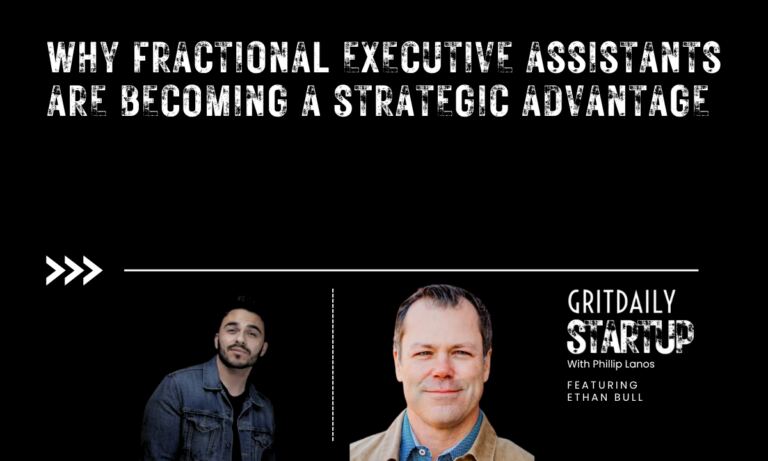
That distinction sits at the heart of Ethan Bull‘s approach. As co-founder of ProAssisting, Bull believes the rise of fractional executive assistants represents one of the most practical ways for growing companies to access enterprise-level support without enterprise-level costs.
For many small and midsize businesses, the answer is not replacing people with technology. It is combining experienced professionals with modern tools in a smarter operating model.
Executive Support Is No Longer All or Nothing
For years, hiring an executive assistant was viewed as a milestone reserved for CEOs of large organizations.
The traditional choice was simple. Either hire a full-time assistant or go without one.
Fractional support changes that equation.
Rather than paying for a dedicated employee whose workload may fluctuate, businesses can access highly experienced executive assistants who support a limited number of clients simultaneously. That gives founders access to strategic administrative support while keeping overhead aligned with the stage of the business.
The same model has already transformed executive leadership through fractional CFOs, CMOs, and COOs. Executive assistance is simply the next function benefiting from that evolution.
Experience Matters More Than Availability
One misconception about remote support is that every assistant provides the same value.
Bull argues the opposite.
A career executive assistant does far more than complete tasks. They understand priorities, anticipate needs, manage competing stakeholders, protect executive time, and become an extension of leadership.
That requires context.
Over time, experienced assistants accumulate institutional knowledge about the business, the executive’s communication style, important relationships, personal preferences, and recurring workflows. Every interaction becomes faster because less explanation is required.
That growing knowledge base becomes one of the most valuable assets in the relationship.
AI Makes Great Assistants Even Better
Artificial intelligence has changed nearly every business conversation, but Bull does not see it replacing high-level executive support anytime soon.
Instead, he sees AI functioning as an accelerator.
Routine drafting, research, summarization, and repetitive administrative work can often be completed faster with AI. The assistant’s value comes from knowing when to use those tools, when to verify their output, and when human judgment is essential.
That distinction becomes increasingly important as organizations experiment with automation.
Business decisions rarely fail because someone lacked information. They fail because information lacked context.
Executive assistants provide that context.
Delegation Is a Leadership Skill
Many founders claim they need help.
Far fewer are actually prepared to delegate.
Bull notes that first-time executives often struggle because they continue acting as the central decision-maker for every small task. Micromanagement limits the value an assistant can create.
Successful partnerships begin when leaders intentionally share context instead of simply assigning tasks.
Including assistants in meetings, email threads, planning discussions, and strategic conversations allows them to recognize patterns and solve problems independently. As trust grows, executives recover more time while assistants become increasingly proactive.
The goal is not simply reducing workload.
It is removing the executive as the bottleneck.
Hospitality Creates Better Business Relationships
Perhaps Bull’s most distinctive insight is that great executive assistance resembles hospitality more than administration.
Excellent assistants do not merely complete requests.
They anticipate needs before they are expressed.
Whether coordinating schedules, preparing meetings, communicating with clients, or managing travel, the highest-performing assistants create experiences that feel seamless. That level of service strengthens relationships throughout an organization because every interaction reflects positively on leadership.
As AI handles more transactional work, those human qualities become even more valuable.
Technology can accelerate productivity.
Trust, judgment, empathy, and anticipation remain distinctly human advantages.
For growing businesses navigating rapid change, the winning strategy may not be choosing between people and AI. It may be building teams where experienced professionals use AI to amplify their strengths while preserving the relationships that businesses are built upon.
Want more Grit Daily Startup Show? Take a look at past articles, head over to YouTube, or listen on Apple Podcasts or Spotify.