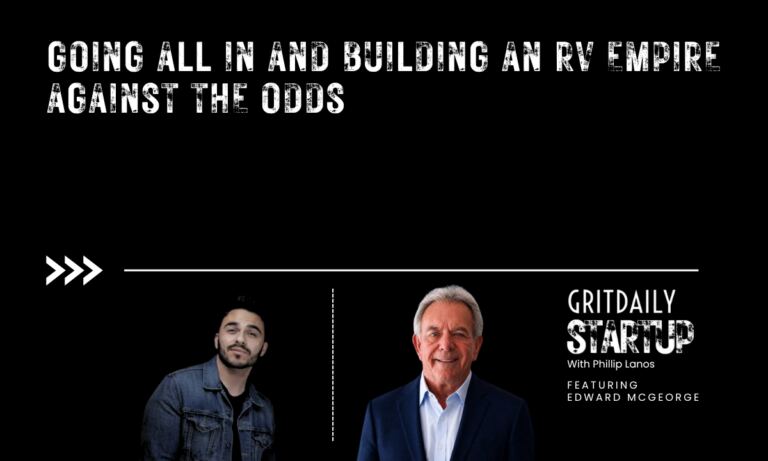
Edward McGeorge was 13 years old when a confrontation with his father ended with him being told to leave home. His sister took him in, and McGeorge quickly learned to support himself through work while continuing to compete in sports. It was an unforgiving introduction to independence, but the experience helped form the persistence that would eventually take him from Richmond, Virginia, to the top of the recreational vehicle business.
McGeorge tells that story in ALL IN, his memoir about the life behind his business success. His journey includes family conflict, elite athletics, encounters with Muhammad Ali, multimillion-dollar negotiations, business disasters, fatherhood and the complicated consequences of wealth. Through it all, McGeorge developed a simple habit that repeatedly changed his circumstances: when the obvious path disappeared, he looked for another one.
https://youtu.be/jD-evE_OLes
From Athletics to Muhammad Ali
Sports initially appeared to be McGeorge’s future. He excelled in football, track and boxing, and says he was recruited by legendary University of Alabama football coach Bear Bryant. His boxing career also produced an opportunity few athletes could imagine when he was invited to Miami to spar with Muhammad Ali.
McGeorge remembers Ali as very different from the charismatic provocateur audiences saw on television. Away from the cameras, he found him gentle and personable, while inside the ring his ability to anticipate punches was extraordinary. McGeorge spent weeks helping Ali prepare for a fight, an experience that remains one of the defining episodes of his athletic life.
Yet McGeorge eventually walked away from the sporting opportunities in front of him. After years of separation from his father, the two reconnected at the family dealership. When his father invited him into the business, McGeorge chose the relationship over the athletic career he had been building.
Finding His Way Into Business
McGeorge soon discovered an aptitude for sales. He became known for refusing to accept an initial no when another workable solution might still exist. In one memorable sale, a couple wanted an RV but had no money available for a deposit. McGeorge noticed the wife was wearing a diamond ring and asked whether she would leave it temporarily while they retrieved the funds. She agreed, and the deal moved forward.
That willingness to search for unconventional solutions became far more important after McGeorge’s father died at 57. The dealership remained connected to a trust, and McGeorge says he was eventually given roughly 60 days to raise $1.6 million to purchase the business.
He was still in his twenties and lacked the assets normally expected for a loan of that size. Lender after lender rejected him until Bank of Virginia agreed to consider the business and the person running it. When the loan was approved, McGeorge asked why. The answer was simple: the bank believed in him. He says he was given five years to repay the money and finished in less than three.
Building Through the Setbacks
Owning the dealership didn’t make the problems disappear. A fire eventually destroyed the operation, leaving McGeorge standing outside a burning business and thinking about how to reopen the following morning. Temporary facilities were arranged, and the company returned to work.
Then a hailstorm damaged inventory across the dealership. Rather than allow another setback to stall the business, McGeorge turned the damaged inventory into a sales event. The episodes captured an approach he would use throughout his career: assess what remains, make a decision and keep moving.
As the company expanded, McGeorge also had to change his approach to leadership. He remembers personally signing huge numbers of employee and accounts-payable checks before realizing he had become a bottleneck. Delegating responsibilities and trusting the people around him allowed the company to grow faster.
McGeorge eventually expanded across multiple businesses while turning the RV operation into an industry leader. When the time came to sell, he negotiated with Camping World CEO Marcus Lemonis and ultimately exited the dealership he had spent decades building.
Rethinking What Success Means
The money created questions McGeorge hadn’t faced while building the company. After his sons received substantial wealth, he began questioning whether giving children financial security without requiring them to build something themselves could have unintended consequences. His own difficult upbringing had given him resilience that couldn’t simply be transferred along with money.
That experience also shaped how he defines success today. McGeorge doesn’t measure it by the size of a bank account, a business or an exit. He sees success as being at peace with what you’ve done, taking care of the people who helped you, giving back and knowing you put everything you had into the work and relationships that mattered.
Writing ALL IN gave him an opportunity to examine those choices from a distance. The memoir took roughly nine months and 14 drafts, forcing McGeorge to revisit both the victories and painful parts of his life.
His central lesson is considerably simpler than the story required to learn it. Everyone gets knocked down eventually. What matters, McGeorge says, is learning from what happened, finding another way forward and refusing to stay down.
Want more Grit Daily Startup Show? Take a look at past articles, head over to YouTube, or listen on Apple Podcasts or Spotify.