

Cats have overtaken dogs in new pet adoptions, and interest in dog adoption has been sliding for five straight years while interest in cats keeps climbing. Kittens now make up more than 80 percent of new cat households. Analysts have started calling it the Cat Renaissance, and it is less a passing trend than a structural shift in who is bringing home a pet and why: smaller apartments, remote work schedules, and busier calendars all favor an animal that asks for less daily hands-on attention than a dog does.
Most of the pet industry has not caught up to it yet. Product development in pet health has spent years optimizing for dog owners, and a lot of that thinking (more advanced formulas, more premium ingredients, more frequent routines) does not map cleanly onto a first-time cat owner who has never had a pet before.
The Convenience Gap Nobody’s Talking About
Despite the boom, basic cat care remains strangely under-addressed. According to industry data, one in five cat households went the past six months without purchasing any kind of health or wellness item for their cat at all. Dental care and litter management, two of the most routine parts of owning a cat, are also two of the categories owners are most likely to skip entirely.
“One of the biggest challenges in feline health isn’t awareness, it’s convenience,” said Tovey Call, Marketing Director at Tevra Brands, a pet health and wellness company. “If caring for your cat feels difficult, it’s easy to skip.”
That is a different diagnosis than the one most product development in this category still operates on. A lot of pet health innovation assumes an owner who is already engaged, already consistent, and just needs a slightly better formula. Call’s argument is that the formula was never really the problem. The follow-through was. The same compliance gap shows up across human health categories, too. The products that succeed there are rarely the most effective ones on paper. They are simply the ones people can actually stick with long enough for it to matter.
Designing for Routines
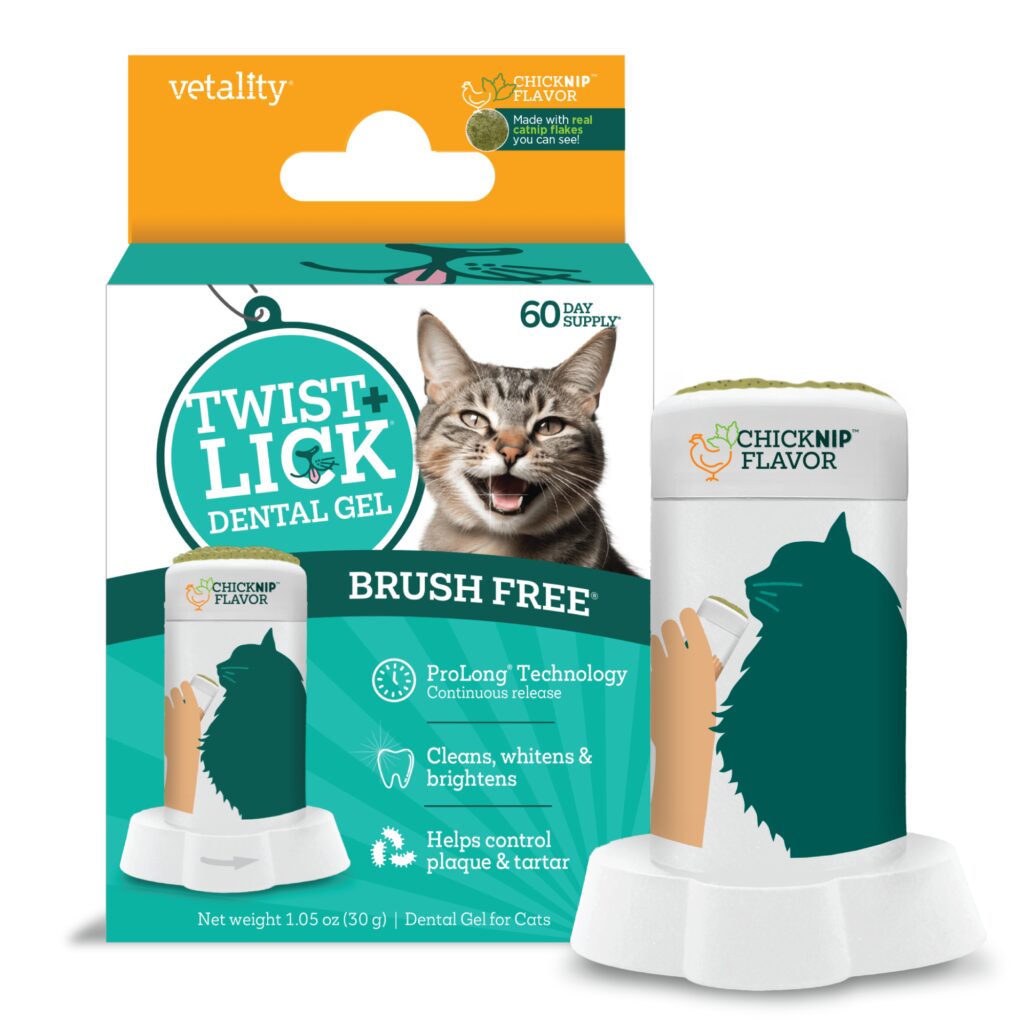
Tevra’s answer was Twist + Lick, a dental gel built to skip brushing altogether. Owners twist the applicator, let the cat lick the gel, and the routine is over. The company calls the underlying delivery system ProLong Technology, designed to bond to a cat’s gums so a single application keeps working well after the cat has finished licking.
None of that is a new active ingredient. The formula is built on chlorhexidine gluconate, an antiseptic with a long track record in veterinary dentistry specifically because of how reliably it controls bacterial buildup. What changed is not the chemistry. It is the format it comes in.
“We designed Brush Free Twist + Lick to remove that barrier so maintaining your cat’s oral health becomes something owners not only can stick with but actually enjoy,” Call said. “We wanted to create a dental solution that works with cats instead of against them.”
That framing is becoming a common thread across pet health categories: design around the cat’s behavior and the owner’s patience, not just the chemistry. It matters more every year, as the market fills with first-time owners who do not yet have established routines.
What Comes Next
The number of first-time cat owners keeps growing, and that changes what “better” pet health products look like. The winning products may not be the most advanced formulas on the shelf. They may just be the ones that ask the least of an owner who hasn’t built the habit yet.
For years, innovation meant a better formulation. Now it means better follow-through — a pet product people will keep using. The brands paying attention to that now are the ones likely to shape what cat care looks like for the next decade.