Music’s next “Disco Sucks” moment is already here.
On trend simulation, the loudness war, and why Madonna walking back onto the dance floor in 2026 is the most authentic move in pop right now.
I. The Plant in the Garden
A Brooklyn band called Geese released Getting Killed last September. The album landed at the top of every year-end list. Coachella came calling. SNL came calling. The Guardian anointed them “the new saviors of rock and roll.”
Then the floor dropped.
In April, WIRED reported what some had already suspected. The band’s rise had been engineered by a marketing firm called Chaotic Good Projects. Founders Andrew Spelman and Jesse Coren had described their tactics openly to Billboard at South by Southwest. They run networks of social media accounts.
They drop songs into video backgrounds. They fabricate comments, reactions, whole ecosystems of discourse, all pushed up the algorithmic ranks until the music looks organic. Spelman calls it trend simulation.
Days later, the singer-songwriter Eliza McLamb published a Substack post titled “Fake Fans.” Her framing was simple. If 100 people think your song sucks, Chaotic Good will create 200 people who think your song is awesome.
Spelman, defending the practice, offered his partner’s belief in five honest words: “Everything on the internet is fake.”
He meant it as an excuse. It landed as a confession.
II. The Claque, the Plugger, the Bot
The con is old. Only the costume changes.
Nineteenth-century opera houses paid troupes of professional applauders called the claque to clap where the audience wouldn’t. Gustav Mahler banned them from his performances and helped drag opera into the serious art form it became.
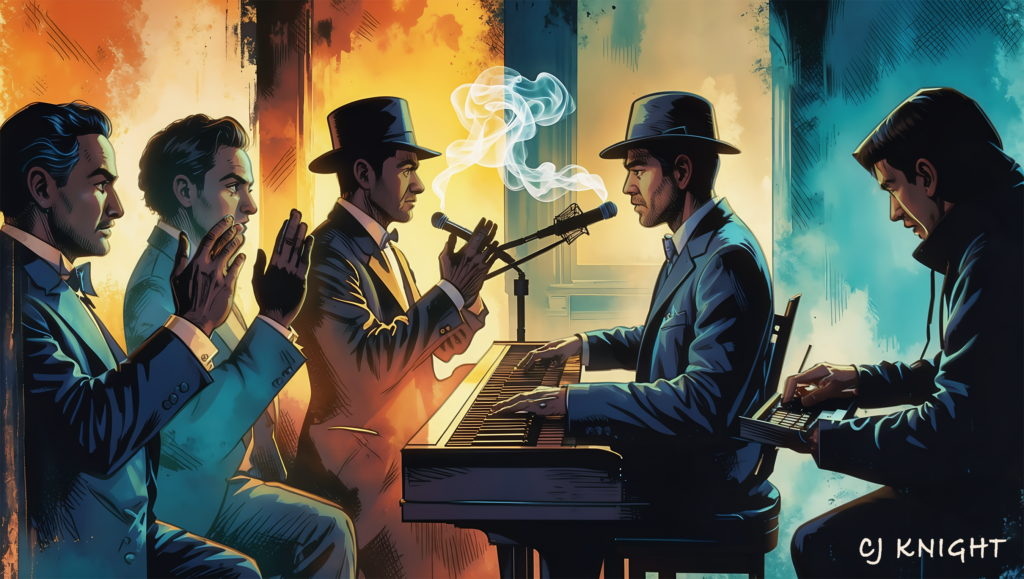
In the early twentieth century, Tin Pan Alley hired pluggers to play their songs in saloons and music halls until people bought the sheet music.
A 1930 industry book described nearly every song heard in public as the result of “a huge plot, involving thousands of dollars and thousands of organized agents, to make you hear, remember, and purchase.”
In the 1950s, rock and roll got caught in the payola scandal. Labels paid DJs in cash, steak dinners, and cocaine to spin records. By the late 1970s, the disco backlash was coming. The labels had flooded the charts with gimmicks. Disco Duck topped Billboard in October of 1976. Three years later, the records were burning at Comiskey Park.
Every cycle, marketing peaks. Audiences revolt. The music re-invents itself rawer.
The claque became the plugger. The plugger became the payola DJ. The payola DJ became the bot farm. The bot farm became Chaotic Good. Same con. New costume.
The audience always finds out.
III. The Loudness War
In 2012, a postdoctoral scholar named Joan Serrà and his team at the Spanish National Research Council ran 464,411 popular recordings through their algorithms. The recordings spanned 1955 to 2010. Their findings, published in Scientific Reports, were peer-reviewed and damning.
Three measurements. Three trend lines:
The timbral palette, meaning the variety of distinct instrumental and vocal textures, peaked in the 1960s and has been shrinking ever since.
Harmonic complexity, the diversity of chord and melody transitions, has been declining for half a century.
Loudness has risen to the point of compression, the so-called Loudness War, where dynamic range is sacrificed to grab the ear in noisy environments.
Pop music, measured by data, has been getting flatter, blander, and louder for decades.
Then came Auto-Tune. Then quantization. Then the TikTok-ification of the hook.
Songs are now engineered for fifteen-second clips. Pastel talk, Spelman calls it: cozy folk over a girl in a scarf on a train. For hip-hop, slowed snippets over video-game footage. For country, cowboy hats and trucks.
Music as wallpaper. Music as social currency. Music as bait.
The sound has been thinning for fifty years.
We just finally have a name for the people doing it on purpose.
IV. The Reminiscence Bump
The body knows.
When music from your adolescence hits you, two regions of the brain fire at once. The hippocampus stores memory. The amygdala processes emotion.
The human brain’s reward circuitry releases dopamine and oxytocin. Stress hormones drop. A song from a single summer can return a body to a single bedroom in a single year, with the smell of the carpet still intact.
Researchers call this music-evoked autobiographical memory. The window of greatest sensitivity, the one that locks a song into the body for life, runs from roughly age twelve to twenty-two. They call it the reminiscence bump.
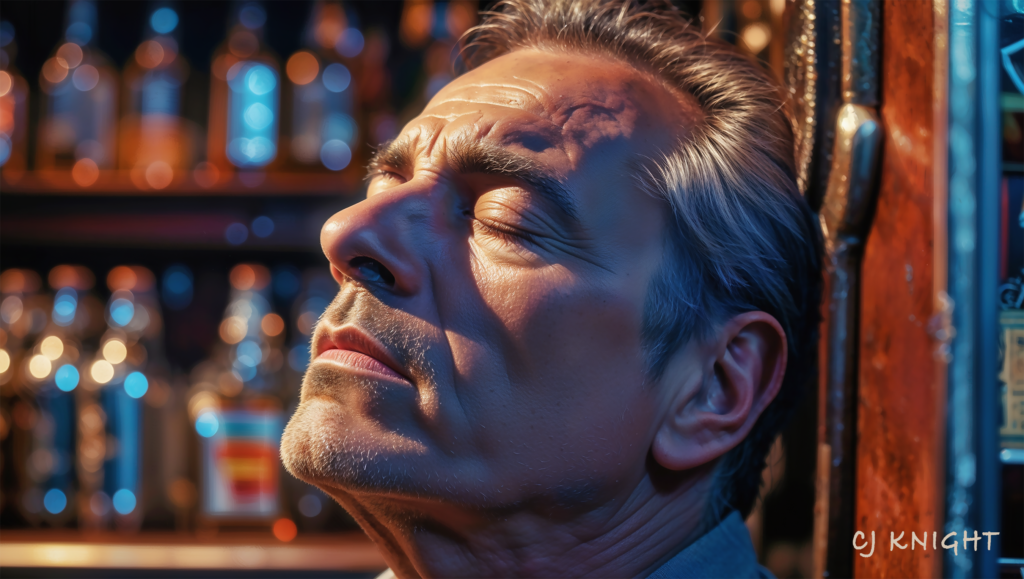
This is why my aunt still cries at a Stevie Wonder song. It is why a Donna Summer track in the right Castro bar in San Francisco will make a sixty-year-old bartender close his eyes and stop pouring for three full seconds.
This is not nostalgia. It is neurology.
Old music lives in our bodies. The algorithm has no body. It cannot age. It cannot remember. It cannot weep at a wedding or a funeral. It can only mimic the surface of what bodies do, and it can only mimic that surface in fifteen-second loops.
The body knows what the algorithm cannot fake.
V. Confessions on a Dance Floor, Part II
On July 3, the Queen of Pop returns. Confessions on a Dance Floor: Part II, Madonna’s fifteenth studio album, drops via Warner Records. She is back with Stuart Price, the producer of the original Confessions in 2005. Same room. Same brain. Same bass.
The cover image: Madonna on top of two purple speakers, her face veiled in pink silk. The first single, “Bring Your Love,” debuted at Coachella alongside Sabrina Carpenter. Two more tracks premiered at one in the morning at The Abbey in West Hollywood, with Price himself behind the booth.
Her manifesto, released alongside the album announcement, is worth reading whole:
“We must dance, celebrate, and pray with our bodies. The dance floor is a ritualistic space. It is a place where you connect, with your wounds, with your fragility. The repetition of the bass, we don’t just hear it, we feel it.”
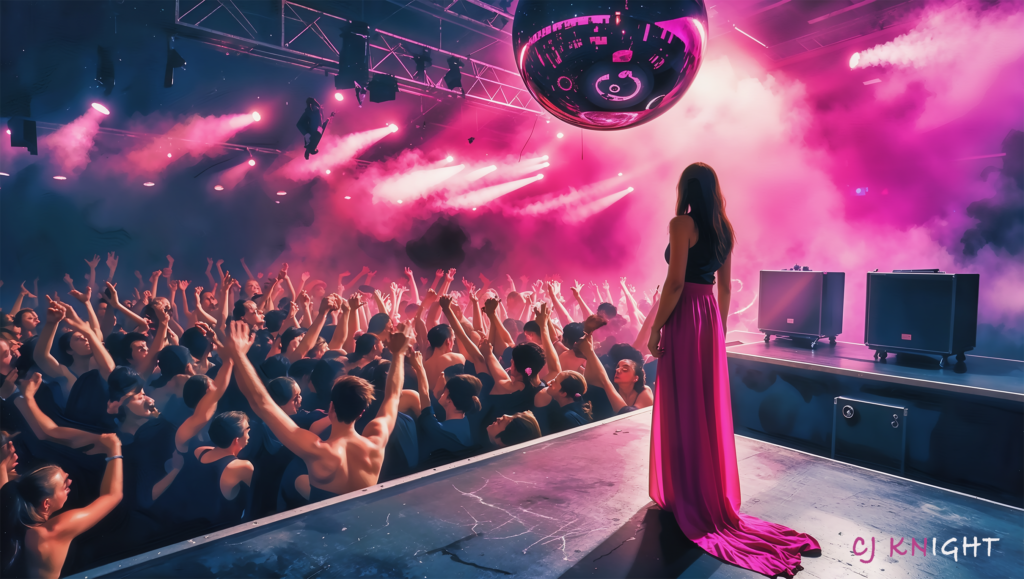
This is not a TikTok hook. It is a thesis.
Madonna is sixty-seven years old. She has every reason to coast. Instead, she has walked back into the same studio she occupied two decades ago, with the same producer, to make a real album, for real bodies, on a real floor.
She is not alone.
Live music revenue is surging. Concert attendance is up.
In February, researchers at the University at Buffalo documented what every dance floor since the claque has known by instinct. A crowd in motion becomes a synchronized organism. Brain-to-brain coupling. Oxytocin release. Collective effervescence. The amygdala lights up at a live show in ways recorded music cannot reach.
The dance floor is older than every platform that ever tried to colonize it.
The needle drops. The bass repeats.
The floor knows what the algorithm never will.