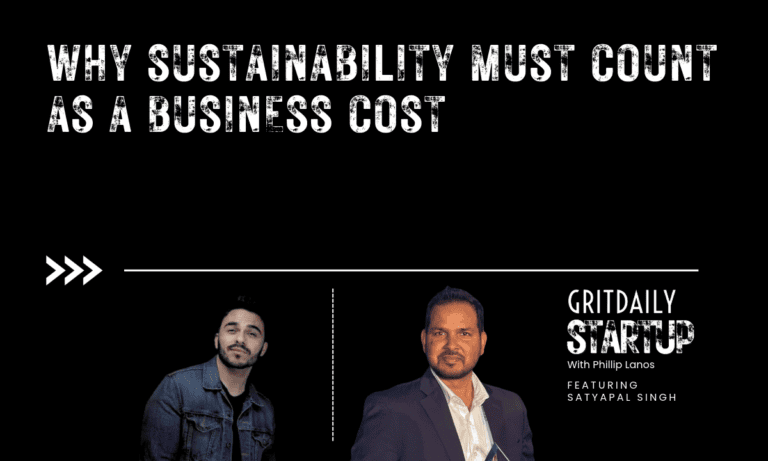
Satyapal Singh, CEO and Director of GE3S, learned the value of resources long before he worked with sustainability technology. Growing up in a rural community, he watched people draw drinking water from a well, separate household waste, and use organic scraps in agriculture. Every resource required effort, and wasting it meant losing something the household had worked to obtain.
Years later, moving into cities, Singh saw a different relationship with those same resources. Water flowed from taps, energy was available at a switch, and waste disappeared from view once someone collected it. The convenience was real, but so were the costs that businesses and consumers rarely saw.
What Rural Life Made Visible
Singh values the technologies that have made living and working easier, but believes they have also made it simpler to overlook the systems supporting everyday life. His childhood experiences taught him that conserving resources was a practical necessity woven into ordinary routines.
In his community, drawing water took physical effort, and people understood why it mattered to conserve it. Organic material returned to the land, while other waste was separated for collection. Homes were designed with attention to daylight, and food production connected households directly to the resources they depended on.
Those experiences formed the basis of Singh’s view that sustainability begins with responsibility. He believes the habits of earlier generations still offer useful lessons, even as technology gives organizations better ways to monitor consumption and reduce pollution.
When Business Moves the Cost Elsewhere
Singh sees a recurring contradiction in modern business. A company may celebrate a profitable year while treating the resulting waste, polluted water, or damaged air as somebody else’s problem. Governments then inherit costs that never appeared in the company’s operating budget.
He argues that this is a distorted way to measure performance. If a manufacturer can treat wastewater but chooses to discharge pollution because treatment would reduce its margin, the apparent savings do not eliminate the expense. They transfer it to people living downstream and to institutions responsible for cleanup and public health.
The same reasoning applies to air emissions and solid waste. Singh supports industrial growth, but wants companies to include the cost of reducing harm in their calculations, just as they budget for payroll or workplace safety.
That requires resisting the temptation to regard environmental controls as optional whenever competition becomes difficult. Otherwise, a company investing in responsible practices can find itself competing against one that lowers prices by passing its environmental costs to the public.
Measure What Profit Leaves Out
Singh’s proposed answer is to make resource use and environmental performance visible alongside financial results. The GE3S sustainability platform is designed to monitor, rate, and track organizations against measures covering water, energy, waste, air quality, health, safety, and other environmental and social responsibilities.
The important detail is how those measures are expressed. Singh points to water consumed per unit of production, per employee, or per amount of revenue, with similar intensity measures for energy and waste. A business can then examine whether it is becoming more efficient as it grows, alongside reporting its financial performance.
That comparison raises a harder question about management. If a leader increases returns while allowing resource consumption and pollution to worsen, how much lasting value did the leader create? Singh wants companies to record a starting position and assess whether their performance improves from year to year.
He says the platform has been developed for 34 sectors, including manufacturing, construction, finance, utilities, and public institutions. His ambition is to bring measures drawn from different sustainability frameworks into a consistent system that organizations can use to evaluate progress.
Make Accountability Part of the Operating Model
For Singh, measurement is useful when it changes decisions. A dashboard revealing rising waste intensity should lead managers to examine processes and available treatment technologies, alongside providing information for an annual report.
He believes businesses should plan for those responsibilities from the start. Pollution controls, efficient water systems, and attention to the eventual disposal or reuse of materials belong in a project’s economics from the beginning.
Different industries face different environmental challenges and operating costs, making consistent measurement particularly important. Singh emphasizes shared obligations and a way to assess progress appropriate to an organization’s activities. He wants the duty to protect air, water, and other common resources to remain visible across business models.
His perspective comes from living on both sides of the convenience divide. Modern infrastructure has removed much of the daily labor associated with basic necessities, but the energy, materials, and environmental consequences involved in providing them remain.
Singh wants leaders to recognize those consequences as part of doing business. A company can keep pursuing growth and profitability, but the measure of its performance should also account for what it consumes, what it leaves behind, and whether those costs are being handed to someone else.
Want more Grit Daily Startup Show? Take a look at past articles, head over to YouTube, or listen on Apple Podcasts or Spotify.