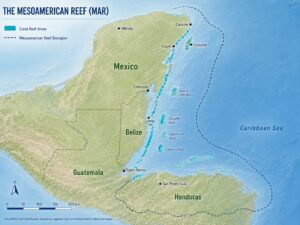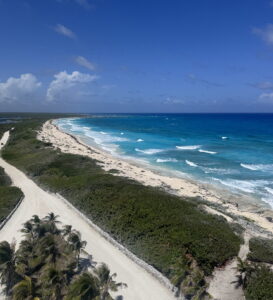
Along the shores of the Riviera Maya, the image of paradise is increasingly shaped by what washes up on it.
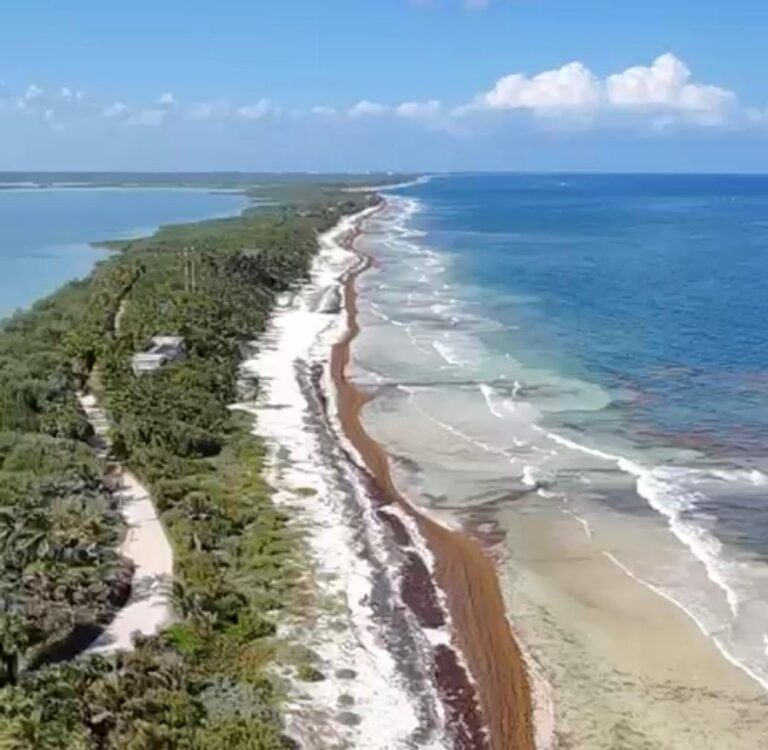
Plastic waste carried by ocean currents accumulates along beaches, mangroves, and protected areas. Seasonal waves of sargassum arrive in growing volumes each year, while erosion is steadily reshaping the coastline. These forces do not act independently. They compound, placing ecosystems, infrastructure, and the tourism economy on which this region depends under sustained pressure.
What is unfolding in the Mexican Caribbean is no longer just an environmental challenge. It is forcing a redesign of how coastlines are managed, financed, and protected.
The Cost of Staying Reactive
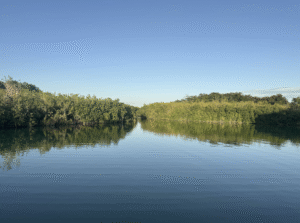
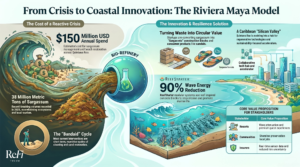
The region is already investing heavily to keep pace. Sargassum management across Quintana Roo is estimated at $2,000–3,000 million MXN annually (approximately $100–150 million USD), while beach nourishment projects, such as the 33.5 km restoration program planned for Quintana Roo, require $600–700 million MXN per cycle just to maintain existing shorelines. At the same time, plastic pollution continues to enter coastal systems daily, often ending up in fragile ecosystems such as the Sian Ka’an Biosphere Reserve. Despite this level of investment, most interventions remain short-term bandaids. Beaches are cleaned, sand is restored, and the cycle repeats while the underlying environmental dynamics continue to intensify.
This challenge is not local, and it is no longer temporary. Sargassum has become a reality across Caribbean and Atlantic shorelines, arriving earlier in the year and lingering for longer periods each time. In 2025, observations from the University of South Florida’s Oceanography Lab recorded approximately 38 million metric tons of sargassum across the Atlantic, the largest amount ever observed, with hundreds of thousands of tons reaching the Mexican Caribbean coastline and impacting tourism, marine ecosystems, and coastal operations. As it accumulates and decomposes near shore, it reduces light penetration and alters oxygen levels, placing additional stress on coral reefs. When combined with plastic pollution, which becomes entangled in its masses and breaks down into microplastics, the impact becomes more complex and even more difficult to manage.

From Crisis to Strategy
What is changing is not just the scale of the problem, but how it is being approached. Mara Lezama, Governor of Quintana Roo, has positioned environmental resilience as central to the region’s long-term economic strategy, emphasizing that continued growth must be aligned with the protection of natural ecosystems. As she stated,
“The region can continue to grow, but it must be sustainable growth, protecting the environment.”
At the implementation level, Óscar Rébora Aguilera, Secretary of Ecology and Environment of Quintana Roo, has pushed for solutions that move beyond containment toward infrastructure, processing, and long-term systems. His approach emphasizes transforming sargassum into a usable resource through technology and coordinated action, including biogas and industrial-scale processing initiatives.
The Rise of a Caribbean Innovation Hub
At the same time, Cancun and the broader region are increasingly positioning themselves as an emerging innovation hub. Initiatives led by organizations such as CANIETI are working to attract global tech talent, startups, and investment, while new developments such as a signal significant capital being deployed into this vision. This trajectory has led many to describe Cancun as a potential “Silicon Valley” of the Mexican Caribbean.
What makes this moment distinct, is that the foundation of this ecosystem is already being shaped. Accelerators like Mayma are actively supporting entrepreneurs building ventures at the intersection of sustainability, innovation, and economic development, demonstrating how a new generation of companies can align growth with environmental responsibility.
The critical question is not whether this transformation will happen, but how it will be shaped. In a region where tourism depends directly on the health of coastal ecosystems, aligning this growth with regenerative technologies is not optional, it is essential. The long-term viability of the economy depends on recognizing that nature is not a backdrop to development, but its foundation.
Turning Waste Into Value
This is where innovation born from necessity is taking form. Across the region, entrepreneurs are already transforming sargassum into consumer products such as sandals, with companies like Sargassum Sandals demonstrating how algae can be repurposed into wearable materials and new circular value chains. Other companies like Dakatso are developing construction materials that incorporate sargassum biomass into a concrete alternative called Sargacreto, offering alternatives for the building industry. These efforts reflect a broader shift toward circular systems, where sargassum is no longer treated as waste to be removed, but as a resource to be integrated. Plastic waste is also being reimagined through innovators such as Petgas, which converts recovered plastic into fuel, turning pollution into usable energy.
These early efforts point to a much broader opportunity. Around the world, a new generation of regenerative technologies is emerging that could be applied in regions like the Mexican Caribbean. In the maritime sector, ship hull cleaning technologies are improving vessel efficiency, reducing fuel consumption, and lowering emissions, addressing a critical but often overlooked dimension of environmental impact in coastal economies shaped by cruise traffic and shipping.
Rebuilding the Coastline

At the same time, new approaches to coastal protection are redefining how shorelines can be stabilized. Solutions like ReefStarter use reef-inspired systems to reduce wave energy while working in harmony with marine ecosystems to regenerate shorelines, restore reef biodiversity, and reinforce the natural systems that are the foundation of the tourism economy.
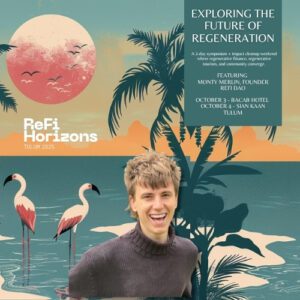
The opportunity now is to connect these emerging solutions with local action. Initiatives like ReFi Tulum are playing a key role in building this bridge, creating platforms through media and storytelling, cleanup events, on-the-ground engagement, and regenerative-focused symposiums that bring together global innovation, local stakeholders, and real-world implementation.
Below the Waterline
What is clear is that no single intervention can solve the problem in isolation. Cleaning beaches, restoring sand, and removing sargassum are necessary, but they do not change the underlying forces reshaping the coastline.
The future of the Mexican Caribbean lies in integrated systems that address what is happening both on the shoreline and below the waterline.
ReFi Horizons: Below the Waterline is convening technologists, operators, policymakers, and local communities to explore how regenerative solutions can be applied in real-world coastal environments. Our next gathering takes place on June 8, World Ocean Day in Tulum.
If you are building in coastal protection, circular materials, maritime efficiency, or environmental infrastructure, this is an open invitation. Reach out directly if you are interested in learning more or participating.
Full Disclosure: Author is founder of ReFi Tulum and working in partnership with ReefStarter, however this is not a paid post.