
Why peer-authored literature deserves a place in the conversation about reading comprehension and elementary education
Did you hear? We’re in a literacy crisis.
According to the 2024 National Assessment of Educational Progress (NAEP), only 31% of fourth-grade students nationwide performed at or above NAEP Proficient in reading. In Florida, that figure was approximately 33%.
Meanwhile, Florida’s Assessment of Student Thinking (FAST) continues to measure student progress toward state academic standards.
These assessments provide important information about student achievement. But I’ve found myself asking another question.
When a child struggles on a reading assessment, do we always understand what that child is struggling with?
Can the child read the words but not understand the passage? Does the child comprehend the subject but struggle to interpret the question? Or does the child understand the literary concept but have difficulty applying it to unfamiliar material?
These are related challenges, but they aren’t necessarily the same.
And understanding that distinction could change how we approach supplemental literacy support.
When Reading the Words Isn’t Enough
I’ve homeschooled a fourth grader, tutored a fourth-grade student with an Individualized Education Program (IEP), and worked with a fifth grader attending a traditional school.
Through these experiences, I’ve encountered reading assignments that made me question how children process unfamiliar material.
One passage described researchers attempting to grow a fruit-bearing plant in an environment where it wouldn’t ordinarily thrive. The story involved greenhouses, environmental conditions, experimentation, and agricultural outcomes.
Now imagine being eight or nine years old and encountering that passage on a reading assessment.
Some children might find the subject fascinating. Others may read every word correctly while struggling to understand the experiment, retain important details, or determine which information matters.
I’m not suggesting unfamiliar passages cause low assessment scores. Children should encounter challenging literature and learn to apply their skills to new subjects.
But I wonder whether we spend enough time distinguishing between a child’s ability to read and their ability to understand what they’re reading.
And when that same child must answer questions about the passage, another challenge emerges.
Do they understand what’s being asked?
Understanding the Question
We don’t get to choose the passages children encounter on standardized assessments.
A child might know everything about dolphins, but the assessment may present a passage about agriculture, climate, or an unfamiliar historical event.
That child must still demonstrate an understanding of the text and the concepts being assessed.
So how do we prepare children for that expectation?
While working with the three elementary students, I began using supplemental literature written by children to help explain literary concepts through stories they could relate to.
Something interesting happened.
Some students returned to their original assignments with a clearer understanding of what the questions were asking. Others still struggled with unfamiliar subject matter but became better able to recognize what information they needed to find.
One experience with my fourth-grade homeschool student particularly stands out.
She was learning plot structure and had been asked to identify the climax of a story.
After working through a relatable peer-authored story, she responded:
“Oh, I know! That’s where it all goes down.”
That response stayed with me.
She hadn’t suddenly mastered every detail of the original passage. But she understood the literary concept.
She knew what the question meant.
And that understanding gave her another way to approach the assignment.
Across the three students, I observed progress in different areas of individual difficulty. These were firsthand observations, not a formal research study, but they encouraged me to explore a larger question.
What if children could develop a clearer understanding of literary concepts through relatable stories before applying those concepts to unfamiliar material?
The Opportunity in Peer-Authored Literature
Imagine a child discovering that the story they’re reading was written by someone their own age.
Really?
I can do that!
That’s so cool!
Now imagine introducing concepts such as plot structure, conflict, resolution, and character development through that story.
The child isn’t simply reading literature. They’re engaging with academic concepts through a perspective that may feel familiar.
That connection may create an opportunity for deeper engagement and understanding.
But the objective isn’t simply to make reading more enjoyable.
It’s to help children develop knowledge they can carry into other assignments.
A child who understands the climax of a relatable story can practice identifying that same concept in unfamiliar literature. A child who understands conflict and resolution can begin recognizing those elements in increasingly complex passages.
Peer-authored literature isn’t automatically more effective because a child wrote it. Nor should it replace traditional literature.
But I believe it deserves consideration as another supplemental resource for helping children develop transferable literary understanding.
Turning an Observation Into an Educational Publishing Opportunity
As Founder, CEO, and Publisher of Books for Little Hearts, an independent children’s publishing company, I’ve spent considerable time exploring what happens when children are given opportunities to contribute their voices to literature.
Our company publishes books written by young authors. My experiences working with elementary students encouraged me to consider another application for those stories.
Could peer-authored literature become part of a structured supplemental literacy experience?
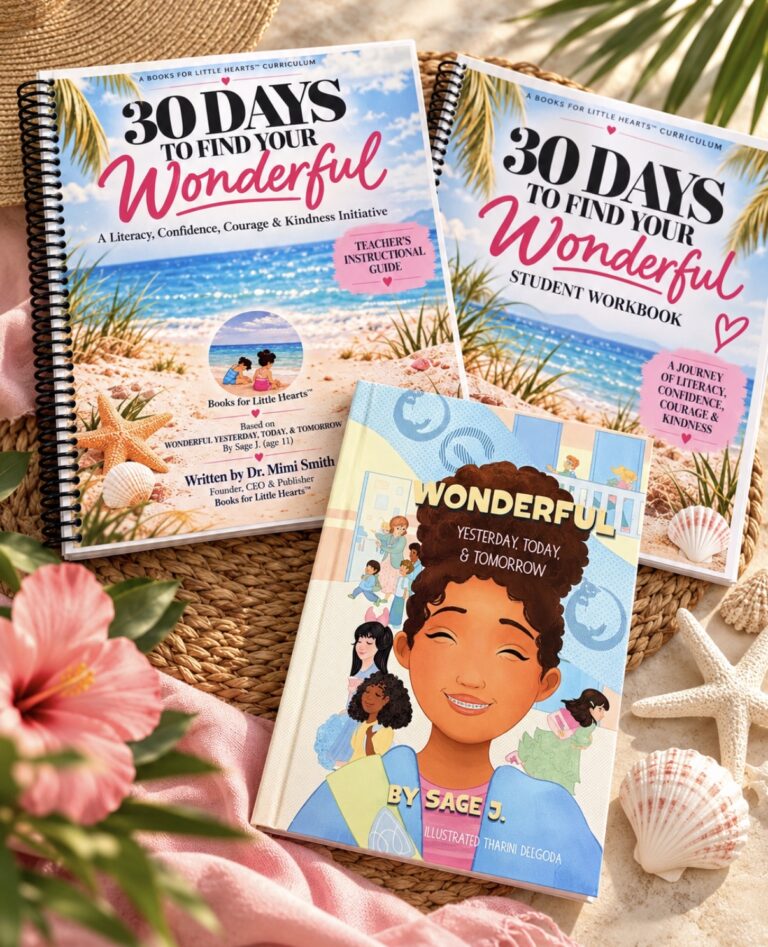
That question influenced the development of our 30-day Supplemental Literacy Enrichment Program for Grades 4–5.
The program incorporates Wonderful Yesterday, Today, & Tomorrow, written by 11-year-old author Sage J., alongside teacher and student resources supporting reading comprehension, literary analysis, writing, and guided reflection.
The materials align with Florida B.E.S.T. English Language Arts benchmarks and are designed to complement existing classroom instruction.
From an entrepreneurial perspective, the experience reinforced something I’ve learned about building a business.
For me, identifying an opportunity requires looking beyond the product you’ve created and considering the different needs it might help address.
Publishing books was one part of our mission, which lead to exploring how those books could support literacy instruction. And now it has opened another avenue for educational publishing.
Looking Beyond the Score
When reviewing school improvement plans, I frequently encounter priorities involving reading comprehension, student engagement, and academic growth.
These goals matter. So does understanding the individual challenges that may stand between students and those goals.
NAEP and FAST provide valuable measures of reading performance, but an individual assessment score doesn’t necessarily identify whether a student struggled with decoding, comprehension, interpreting the question, or applying a literary concept.
Those distinctions deserve attention when determining instructional support.
We should continue challenging children with unfamiliar passages and rigorous academic expectations.
But we should also explore different ways of preparing them to meet those expectations.
For educational leaders, peer-authored literature offers an opportunity worth discussing, particularly as a supplemental resource alongside established instruction.
My goal isn’t to change what children are expected to learn.
It’s to explore how we can better help them understand what’s being asked.
I truly believe helping a child move forward begins with understanding where their difficulty actually starts.

