
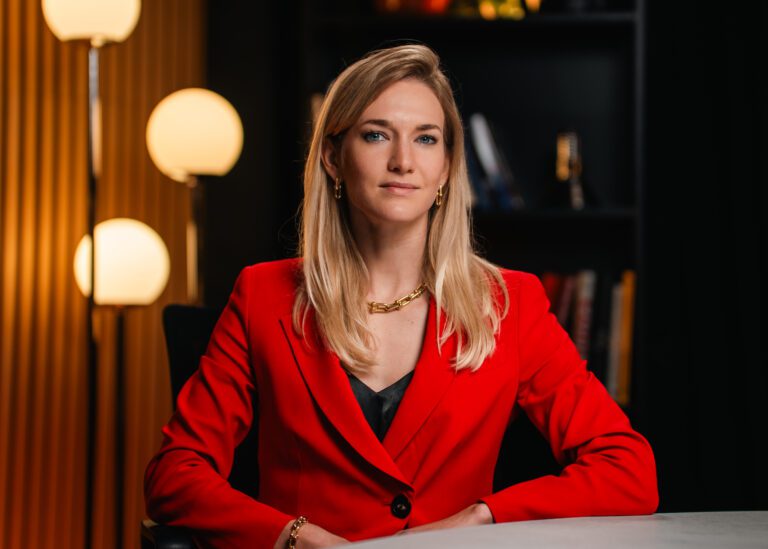
Maria Popova is the co-founder of Between Us, a U.S.-based community and learning platform built around practical learning, curated conversations, and in-person connection. Her background spans technology, education, community building, and experience design. Her interests focus on helping people adapt to technological change while strengthening judgment, agency, performance, and meaningful relationships. We sat down with Maria to discuss her approach to building the community, and what influenced its trajectory, both as a business and as a place of belonging.
How did you get started in your career, and what brought you to entrepreneurship?
At seventeen, I began working at Digital October, a tech incubator and event space. I wanted to build a startup, but I lacked connections. Suddenly, I was surrounded by developers, scientists, and entrepreneurs. That access shaped me deeply. Entrepreneurship gave me authority, agency, and a new way to imagine my future. It also inspired my interest in creating environments where others can discover new possibilities through lifelong learning.
How has your background as a professional athlete influenced the way you work and lead?
Sports taught me discipline, determination, and persistence when progress is slow. However, the athletic environment focused purely on maximum output, suppressing emotions. It took me over ten years to learn emotional recognition, active listening, and asking for support.
Today, my leadership combines clear expectations with psychological safety. My team uses short daily check-ins to share personal concerns, helping us determine how to support each other while keeping work moving forward.
From your experience in education, what have you learned about helping people put new ideas into practice?
Education must be practical. Trying something yourself and working through obstacles is irreplaceable. Motivation varies: some learners build their own paths, while others need structured guidance and clear real-world outcomes. I design learning around individual needs, building manageable habits that persist beyond a program. My go-to format is the live bootcamp, offering peer groups, expert access, and hands-on application to build lasting habits and relationships.
You’ve worked across several industries. What would you say connects those different parts of your career?
My core interest is how our environment – peers, culture, and exposure – shapes our choices and sense of possibility. Moving from tech to education and then hospitality highlighted the irreplaceable value of offline experiences. Sharing physical space influenced how I view psychology, physiology, and experience design. I aim to turn brief interactions into lasting perspectives, relationships, or ongoing exploration.
Can you tell us about a difficult moment in your career and how you worked through it?
Balancing university exams with major projects at Digital October – like TechCrunch Moscow and Facebook World Hack – was overwhelming. I questioned if I could handle it. Drawing on my athletic background, I managed my energy through routines, diet, power naps, and community support. Observing driven founders in those environments strengthened my own sense of agency.
Which project has taught you the most, and what was your role in it?
I’d choose a hospitality project where I was the project director, responsible for the offsite experience. I relied too heavily on senior people’s advice, assuming their position and experience meant they knew best.
The greatest lesson I’ve learnt is to stay open to advice while retaining responsibility for the outcome, and to question every comment and recommendation if I can’t see how a recommendation improves the result, regardless of who it comes from.
What inspired you to start Between Us, and why did you feel it was needed?
Environment and community deeply shaped my career and helped me adapt through moves and self-doubt. I built Between Us to offer that same access, support, and peer learning. Beyond professional growth, I wanted a space that integrates family, relationships, and broader life interests as technology evolves. Our AI Founder Lab is one practical outcome of this mission.

There are already many communities for entrepreneurs. What are you doing differently?
Between Us brings together curious individuals through practical workshops, expert dialogue, and small peer groups. We blend insights from Western and Asian traditions, grounding health and performance claims in scientific evidence while leaving room for creativity, nature, and informal socializing. The community naturally evolves alongside its members.
Why did you choose to make in-person gatherings part of the experience?
Physical presence changes how we absorb experiences and feel connected. Research shows relationships are vital for health, making offline gatherings essential as digital noise increases. In-person events foster serendipitous conversations, deeper relationships, and shared moments of discovery.
Who is Between Us for, and what can someone expect when they join?
Between Us is for builders and seekers – curious, driven people who want to grow and contribute to the growth of others. Our community brings together founders, entrepreneurs, researchers, and leaders with interests spanning technology, business, well-being, relationships, and everything in between.
Ultimately, Between Us is an environment for people who want to make an impact and think about what they pass on to future generations. I also see it as a partner for existing communities; today, we should focus on collaboration rather than competition.
What is AI Founder Lab, and who is it for?
It’s an extension of Between Us focused on practical AI applications for business leaders. Our flagship bootcamp guides non-technical founders through auditing business processes, building prototypes, measuring ROI, and managing data security. It combines hands-on application with a supportive peer network.
What do founders and executives most often get wrong about AI?
Treating AI purely as a tool to automate or replace employees. True adoption requires rethinking work design and investing in human judgment, curiosity, and oversight. Think of AI as a capable junior colleague: it requires clear context, precise instructions, and thorough quality review to produce reliable outcomes.
Where do you see Between Us in a few years?
I want Between Us to be a trusted long-term network for leaders, executives, and researchers. I hope to build bridges with youth communities to provide early access to opportunities. Additionally, we plan to partner with university researchers to study how AI adoption impacts workplace relationships and team cohesion.
What is one piece of advice you’d give to a founder navigating AI today, and how can readers connect with you or check out Between Us?
Watch the movie ‘Momento’ to understand the critical importance of context. AI operates without memory unless you provide the necessary background, goals, and quality standards. Never assume it knows what you need just because its response sounds confident.
To learn more or connect, visit the Between Us website.