
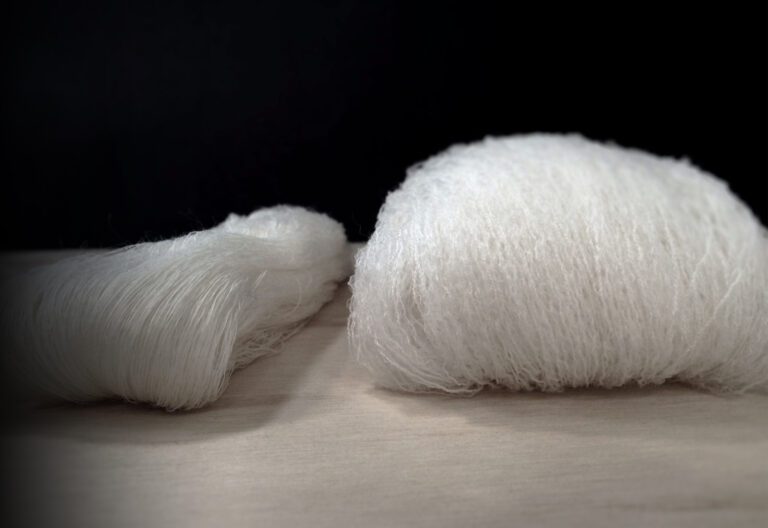
Most yarn relies on twisting fibers together to create a finished material. Nuyarn has built its business around doing something different. The New Zealand-developed technology removes that traditional twisting process from merino wool production, preserving more of the fiber’s natural loft and movement while creating a yarn designed for demanding performance apparel.
It’s an unusual approach to a familiar material, and the results are interesting enough to warrant a closer look.
Merino wool already has a strong reputation among outdoor enthusiasts. It naturally regulates temperature, manages moisture, and resists the odors that can make synthetic workout clothing unpleasant after repeated wear. A New Zealand study involving 13 trained olfactory specialists found that wool fabrics retained 66% less body odor intensity than polyester and 28% less than cotton. The findings, reported by The Woolmark Company, point to wool’s ability to absorb moisture and hold odor molecules within its fiber structure until washing.
Nuyarn’s argument is that conventional manufacturing doesn’t always make the most of these natural properties. Traditional spinning twists wool fibers tightly together, compressing their natural air pockets and restricting their movement. The resulting yarn can lose some of the loft and elasticity that make wool so appealing.
Nuyarn approaches the process differently. Rather than twisting the fibers, its technology drafts superfine merino along a high-performance filament, creating a two-ply yarn with considerably more volume and aeration. The company reports 35% greater volume and aeration compared with conventional ring-spun merino.
That extra space within the yarn structure is responsible for much of the performance advantage Nuyarn is pursuing. More aeration helps with breathability and temperature regulation, while the way the fibers move within the construction contributes to greater stretch and recovery.
Independent testing conducted by Intertek Vietnam and AgResearch in New Zealand provides some impressive comparisons. Against equivalent amounts of conventional ring-spun 100% merino, Nuyarn reports drying speeds up to five times faster, 85% greater elasticity, and 8.8 times the abrasion durability. Its testing also found 35% greater thermal retention.
The durability figures are particularly interesting. In the industry-standard Martindale abrasion test, Nuyarn material withstood 123,333 rubs before showing its first signs of breakdown. Conventional ring-spun merino registered approximately 14,000 to 18,000 rubs. For garments that see regular use on trails, mountain bikes, ski slopes, or during everyday training, that kind of difference could translate into a longer useful life.
There is an important distinction for shoppers, though. Nuyarn is the spinning technology behind the material, rather than a finished clothing collection. Its yarn construction incorporates a high-performance filament alongside merino fibers, and the precise material composition can vary according to the application. Textile World has described a nylon carrier filament in its coverage of the technology, with the merino-to-nylon ratio adjusted to meet different performance requirements. Checking the fiber composition of an individual garment is still worthwhile.
Nuyarn works with established apparel manufacturers to bring the technology into finished clothing. Its partners have included brands such as KUIU, Odlo, Black Diamond, Trew, and Artilect. The resulting collections span technical base layers, running shirts, cycling apparel, hoodies, and other pieces designed to sit close to the skin or withstand demanding outdoor conditions.
The manufacturing process also has an efficiency angle. Nuyarn says its spinning technology operates up to 16.7 times faster than traditional methods while using 30% less raw material. Its wool, yarn, and fabrics are certified to the Responsible Wool Standard, which addresses animal welfare and responsible land management. Because the performance characteristics are created mechanically rather than through chemical treatment, the company says they remain part of the yarn throughout the life of the garment.
What makes Nuyarn interesting is how much attention it pays to something most clothing shoppers rarely consider. People tend to judge a shirt by its fit, feel, weight, and appearance. Yet the way its fibers were spun can have a considerable influence on how it performs once it is actually being worn.
Merino has long had a place in technical clothing, particularly for people who spend extended periods outdoors. Nuyarn is working to make that material more durable, more elastic, and faster drying by changing something as fundamental as the way its yarn is constructed. It’s a fairly unconventional idea, especially in an industry accustomed to pursuing the next new synthetic fabric, and it gives shoppers another reason to pay attention to what’s on the garment label.