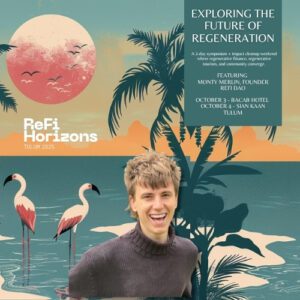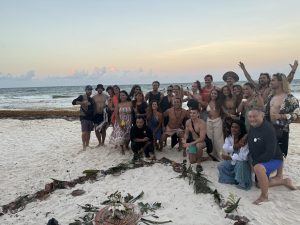
Part 1 of a three-part series on the Guardians, ecosystems and innovations building resilience across Quintana Roo.
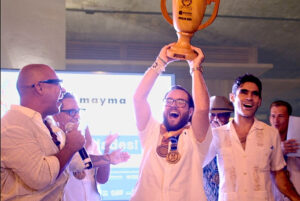
On World Ocean Day, June 8, 2026, ReFi Tulum convened scientists, entrepreneurs, environmental leaders and community members for a special
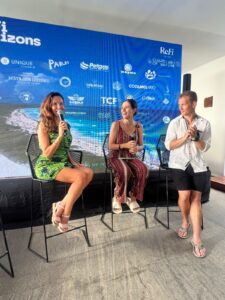
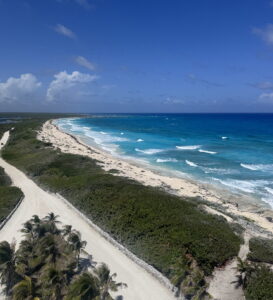
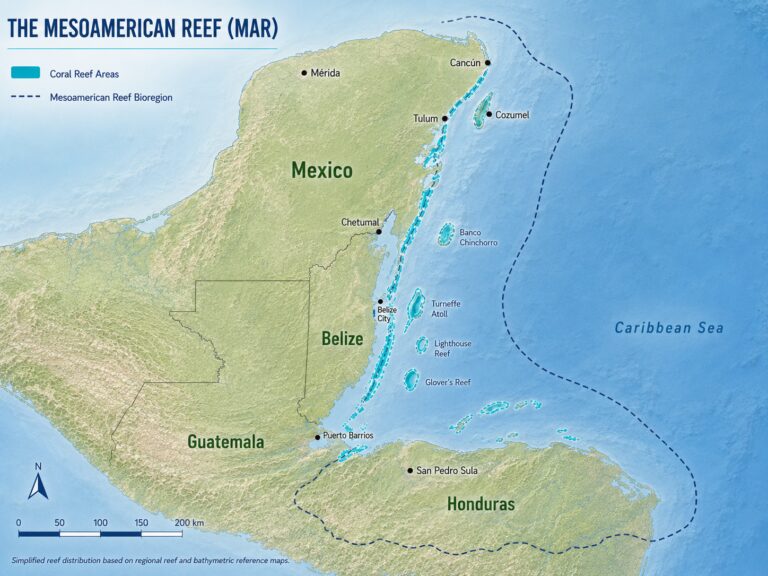
ReFi Horizons: World Ocean edition at Hotel B in Cozumel, an island considered the jewel of Mesoamerican Reef, the second-largest barrier reef system in the world. We came together to discuss the interconnected challenges and opportunities shaping the region, including coral reef health, water quality, sargassum, innovations in plastic transformation, tourism and emerging regenerative technologies. In the two months since, our work on the ground has reinforced just how closely the health of the Mesoamerican Reef is tied to the ecosystems, communities and economy around it.
The Impact of a Low Season on Vulnerable Economies
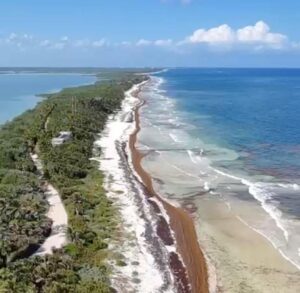
Today, we are living through a particularly vulnerable moment in the Riviera Maya. The summer season began with hotel occupancy across the region below 60%, while here in Tulum, where the downturn has been felt most severely, occupancy was hovering around 41.5% in mid-July. Local restaurants have reported sales declines of as much as 60%, and on the ground we are watching firsthand as longtime businesses we thought would always be here, closing their doors. At the same time, more than 83,000 tonnes of sargassum had already been collected along the Mexican Caribbean by mid-July, with 2026 expected to surpass the previous record.
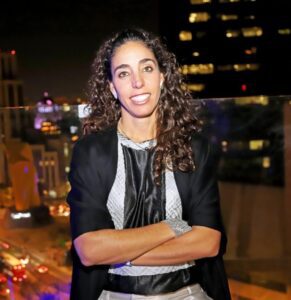
The tourism declines reveal something deeper about the region’s economy: its prosperity is inseparable from the health of its natural systems. As Beatriz Tinajero, president of the Cozumel Hotel Association and director general of Hoteles BF, has said, “Cozumel does not live off tourism. It lives off the nature that attracts.”
When reefs, beaches, water and other ecosystems come under pressure, the consequences quickly ripple through hotels, restaurants, workers and local businesses.
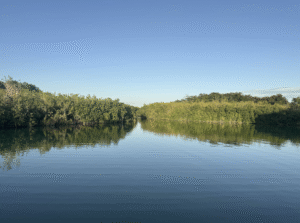
Tulum may be the warning signal, but the larger story belongs to Quintana Roo and the Yucatán Peninsula. The aquifer, cenotes, mangroves, jungle, sand dunes, ocean, coral reef, communities and tourism economy are all part of one interconnected living system. Thinking bioregionally means moving beyond isolated problems to ask how we strengthen the resilience of the whole.
This echoes what the Regenesis Group calls the story of place, an approach that considers the ecological and human patterns that make a place unique before determining how to intervene. We are only beginning to explore this thinking, but it reflects what we are seeing on the ground: the strongest solutions are those that respond locally to the system, including the people already rooted within it.
The Bioregional Path is Collaborative
That collaborative path has shaped what our Guardians of Nature have been doing since World Ocean Day. In Cozumel, we continued our planet-positive actions alongside organizations such as La Fundación de Parques y Museos de Cozumel, the Cozumel Coral Reef Restoration Program, Sand Dollar Sports, Parley for the Oceans, Fundacíon Tuseres and Huellas de Conciencia.
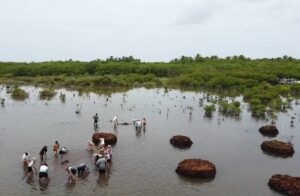
At Punta Sur Eco Park, we learned directly from Profesor Jesús Benavides about the restoration work led through the Fundación de Parques y Museos de Cozumel, including the recovery of mangrove areas damaged during Hurricane Wilma in 2005. We learned that mangrove restoration is much more than planting. It requires understanding hydrology and water flow, creating the conditions that allow the ecosystem to regenerate, carefully recovering and dispersing red mangrove propagules, and committing to long-term stewardship. During 2025, the program worked across 5,500 square meters of mangrove habitat in Laguna Colombia.
We came to Cozumel not to create another restoration project, but to join forces with those already rooted in the island and learn from their experience. Juanita Alonso Marrufo, Directora General of the Fundación, captured that collaborative spirit in reflecting on Laguna Colombia’s success: “when institutions and citizens work together, restoration is possible.”
From the mangroves, we followed the ecosystem underwater. During ReFi Horizons, Enrique Benavides, a geological engineer, cofounder of Jóvenes MaB Cozumel and part of the environmental programs team at Sand Dollar Sports, helped ground us in the ecology of Cozumel’s reefs. Sand Dollar Director, Danirel Álvarez complemented that perspective by sharing the community efforts underway to expand underwater education and environmental awareness across the island.
Learning the Coral Reefs of Cozumel
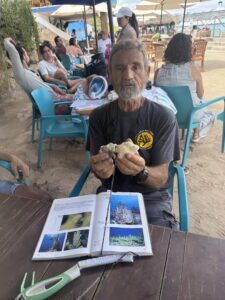
A few weeks later, many of us returned to Cozumel for hands-on coral education and care with Dr. Germán Méndez of the Cozumel Coral Reef Restoration Program. Once again, regeneration proved deeply specific to place. Currents, substrate, water quality, disease, algae and years of observation all influence what can succeed on a particular reef. The knowledge accumulated by people who have spent years working within these ecosystems is essential to understanding which interventions truly belong there.
Cozumel is also demonstrating what collaboration can look like beyond restoration itself. The Órgano de Gestión del Destino (Destination Management Organization) of Cozumel brings government, civil society and the private sector together around long-term planning, including the conservation and regeneration of the island’s natural ecosystems. Cozumel Vivo is building another layer around a regenerative tourism model, with Beatriz Tinajero and Hotel B helping bring hospitality into a broader conversation about the resilience of the destination.
This is the story of a living system, but also of its Guardians: restoration practitioners, scientists, institutions, hospitality leaders and communities bringing different forms of knowledge and capacity to the same bioregion.
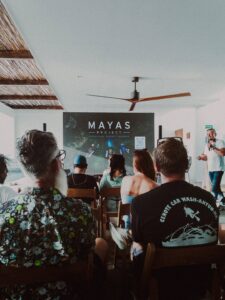
Image Credit: Robbie Schmittner
Even what we cannot see is connected. ReFi Horizons speaker and Guardian of Nature Robbie Schmittner has spent more than three decades exploring the Yucatán Peninsula’s underwater caves and cenotes. His work now continues through the MAYAS Project, a scientific initiative mapping how groundwater moves through the peninsula’s vast aquifer system to better understand and protect this critical freshwater resource. It is another reminder that what happens inland does not stay inland: the aquifer connects our communities, cenotes and groundwater ultimately to the coast.
From Mangroves to Fruit Trees
Our recent work also connected us with Jimi Cohen and Treegens’ global 1 Billion Trees movement, linking our local actions with a much larger effort to mobilize tree planting and regenerative incentives around the world. Treegens uses digital verification and on-chain tools to document planting, while Jimi has built the movement around the idea that regeneration can also create livelihoods. In Cozumel, that movement connected naturally with the mangrove restoration work in Punta Sur and we were thankful to be able to take part in planting over 3000 mangrove propagules that day.
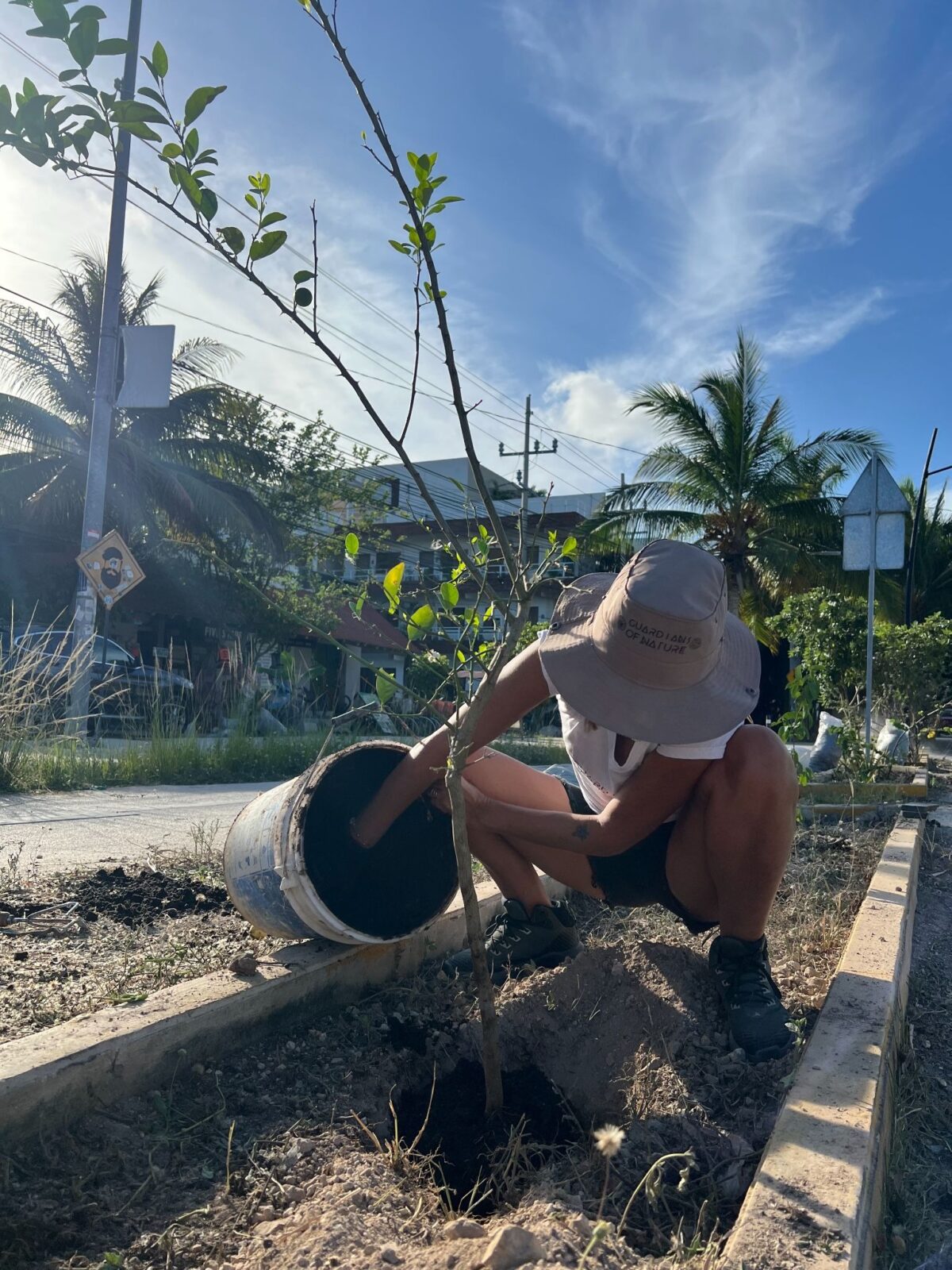
Just a few days later, we brought that activation home to Tulum, where we started with what was closest to us: our own stretch of Avenida Cobá, directly in front of ReFi Tulum’s headquarters at the Crypto Boutique.
There, our Guardians planted a small corridor of lime, guava, guanábana, tamarind and banana trees. At a difficult economic moment locally, fruit trees felt more than symbolic, knowing that with care (i.e. our own responsible stewardship) those trees will eventually provide shade, greenery and nourishment in a shared public space.
A fruit tree in Tulum and a mangrove in Cozumel serve very different purposes. That is precisely the point. Bioregional regeneration is not about reproducing the same intervention everywhere. It is about understanding what the system needs locally and staying connected long enough to steward what comes next.
How Environmental Pressure Leads to Innovation
Quintana Roo’s environmental pressures are also creating demand for new solutions. An officially sanctioned sargassum circular economy park has opened in Puerto Morelos, while companies such as Dakatso, CarbonWave and Sargazzo Sandals are building momentum around new uses for sargassum. Petgas, following launches in Indonesia and the Dominican Republic, is planning an expansion into Tulum with its patented non-catalytic pyrolysis technology, which transforms difficult plastic waste into clean ready-to-use fuels. Mayma is accelerating regenerative businesses and local value chains across sargassum and the circular economy, MesoReefDAO is exploring new ways to fund coral science and restoration, and ReefStarter represents an emerging category of nature-inspired coastal infrastructure combining protection, habitat and environmental monitoring.
These approaches are very different, and that matters. Not every technology will make sense here, but the plan is to connect the right solutions with the needs, knowledge and conditions of the bioregion. As it is progressing, the Riviera Maya is fast becoming a real-world proving ground for regenerative innovation.
Building the Connective Tissue
That is where regenerative finance, or ReFi, can help: connecting grants, corporate and impact capital, public resources and decentralized funding with the people and projects creating measurable regeneration on the ground.
This is where ReFi Tulum comes in: as a platform for bringing regenerative technology and funding to the Riviera Maya, connecting innovators with Guardians, scientists, communities, businesses and institutions so solutions can be adapted to the bioregion rather than simply imported into it.
We will continue that conversation at Tulum Innovation Fest, December 9–12, where ReFi Tulum is actively collaborating on the Regenerative Communities, ReFi & Local Economies pillar, with a focus on regenerative innovation, funding and implementation. In collaboration with regenerative real estate strategist Frances Pimentel, Project Lead for the pillar, we are bringing together regenerative innovators and technology leaders who are actively creating new models for thriving local economies. If you are building, funding, or enabling the regenerative future, we invite you to connect with us and be part of the conversation.

The Mesoamerican Reef cannot be understood only by looking underwater. Its future is tied to the mangroves, aquifer, coastlines, communities and economy around it, and to the people who have spent years learning how those systems work. The opportunity now is to connect that knowledge with the right resources and innovation to strengthen the resilience of the whole.
Part 2 of this series will go deeper into specific regional regeneration efforts and the Guardians leading them.
Part 3 will explore the regenerative technologies and financing models that could help accelerate resilience across the bioregion.