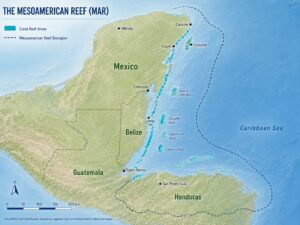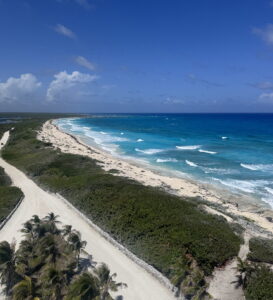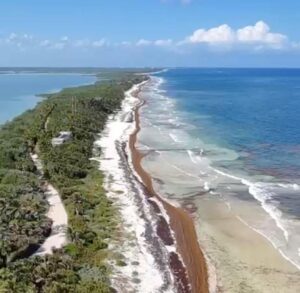
The Riviera Maya is famous for its beaches, reefs and tourism. But alongside paradise, another identity is taking shape: a proving ground for technologies designed to tackle some of the most urgent environmental challenges facing coastal communities around the world.
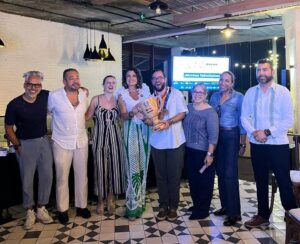
That momentum was on full display in Playa del Carmen at Quintana Roo’s first regional semifinal of the Startup World Cup, coordinated by Mayma and hosted at Hyatt Centric Playa del Carmen. Nine startups took the stage with solutions addressing sargassum, waste, coastal resilience, biotechnology, energy and circular materials. Mayma’s semifinal lineup included Hexa Group, SANDS, SargazoSandals, Waste Neutral Technologies, SubstraTulum, Sphren, Pre-Solar, RubisCO2 and Avoflex.
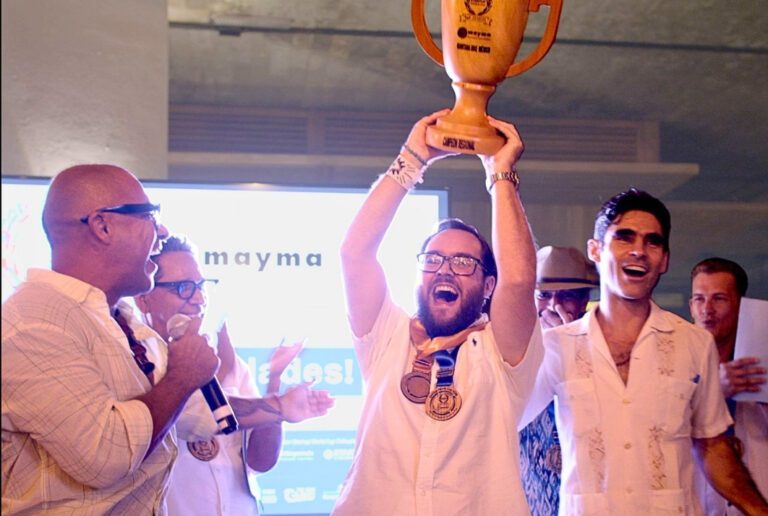
The winner was Waste Neutral Technologies, represented by Andoni Álvarez of WNT, the holding company behind Petgas, is developing technology that transforms difficult plastic waste into new forms of value. The company will now represent Quintana Roo at the Startup World Cup Mexico final in Chihuahua on September 24, continuing on the road toward the global competition in San Francisco this November.
Congratulations to the entire Waste Neutral Technologies and Petgas team. Their win is exciting, but what stood out just as much was the ecosystem surrounding them: a growing group of companies showing that globally relevant regenerative innovation is not only coming to the Caribbean. It is being built here.
From Mexico to Silicon Valley
The Startup World Cup gives local innovation a global platform.
Powered by Silicon Valley-based Pegasus Tech Ventures, Startup World Cup has expanded into a global competition connecting startup ecosystems across six continents. Its 2026 journey culminates in San Francisco November 4-6, where regional champions will compete for a $1 million investment prize.

In Mexico, Ricardo Bustos Gardea, President of Red Emprende Chihuahua and Startup World Cup partner in Mexico, is building that bridge. Since 2023, Chihuahua has coordinated the Mexico competition, connecting founders from across Mexico to the global Startup World Cup network. This year’s national competition takes place September 24 as part of Chihuahua Tech Week.
Bustos has described the goal of finding “Mexican talent with the capacity to compete at a global level.” After seeing the companies that came out of Quintana Roo, he sees that potential extending clearly to the Riviera Maya.
“What surprised me most in Quintana Roo was the technical depth of the innovation. Entrepreneurs are turning challenges like sargassum into energy, materials and scalable businesses. Global investors should understand that these are not just local environmental projects. There is real science, technology and global market potential here. The Riviera Maya is not only a beach paradise; it can also be a place where billion-dollar companies are built.”
His point is reflected in the companies themselves. The technologies presented in Playa del Carmen are rooted in challenges the region knows intimately, but their total addressable markets extend far beyond the Caribbean.
Petgas: Global Technology From Mexico
Waste Neutral Technologies and Petgas offer one example of what this new generation of Mexican innovation can look like.
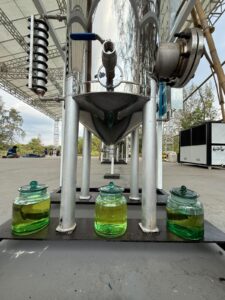
Petgas has developed patented non-catalytic pyrolysis technology that processes waste plastics in the absence of oxygen and converts them into ready-to-use outputs including gasoline, diesel, kerosene, paraffin and gas. The technology is designed to address difficult plastic waste streams that conventional recycling systems fail to recover.
That matters in a region where tourism and rapid development generate enormous material flows and an equally significant waste-management challenge. Reduction, reuse and conventional recycling remain essential, but circular systems also need solutions for the plastics left behind.
Petgas is particularly relevant to the Riviera Maya innovation story because it demonstrates that globally relevant environmental technology can be built in Mexico and move far beyond its original market.
Waste Neutral Technologies already lists global operations across Mexico, Indonesia, Colombia, the United Kingdom and the Dominican Republic. That international footprint reinforces the larger point.
Mexico can build the technology.
The Caribbean can become a place to deploy, test and scale it.
And innovation developed around challenges experienced here can ultimately serve communities and markets around the world.
SANDS: Building Infrastructure for the Sargassum Economy
Perhaps no environmental challenge defines the urgency of innovation in the Riviera Maya more visibly than sargassum.
For years, the dominant model has been reactive: sargassum arrives, hotels and municipalities collect it, trucks move it, and enormous resources are spent trying to keep beaches usable.
SANDS, short for Sargassum Automated Nearshore Defense Systems, is looking further upstream.
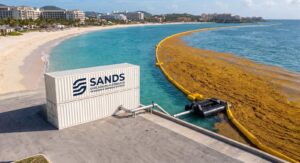
The company is developing two connected technologies: offshore systems intended to intercept and direct incoming sargassum toward collection points, and containerized processing systems that can stabilize freshly collected biomass close to where it comes ashore. Its current processing system washes, dewaters and stabilizes sargassum inside a 40-foot container, with a stated processing capacity of two to three tonnes per hour.
This technology addresses one of the biggest barriers to creating an actual sargassum economy.
Sargassum degrades quickly and, because it contains enormous amounts of water, it is expensive to transport and can lose much of its value before it reaches a manufacturer. If sargassum is ever going to move at scale from environmental liability to usable biomass, we need infrastructure between collection and manufacturing.
SANDS is working on that missing link and is already building its first prototype deployment.
SubstraTulum: Designing New Materials From Sargassum
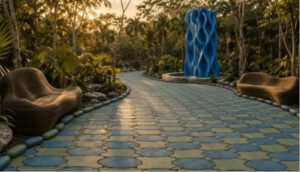
SubstraTulum, based in Tulum, is a Material / Design Lab that combines material research, computational design, prototyping, 3D printing and digital fabrication to experiment with regional resources including sargassum, mineral aggregates, fibers and other forms of biomass. In addition to products made with sargassum, the team is developing and testing different material formulations and fabrication processes for objects, architectural components and habitable spaces.
SubstraTulum is building the knowledge and tools to turn regional resources into a new generation of locally made materials and products. That work is also being strengthened through collaboration with the FabLab at Universidad Anáhuac México in Mexico City, connecting experimentation in Tulum with academic research and advanced fabrication capabilities.
As collection and processing technologies improve, SubstraTulum can explore what those resources can become. Biomass becomes feedstock. Feedstock meets material science, computational design and 3D fabrication. Those experiments can ultimately lead to new products, architectural solutions and businesses.
That progression, from environmental challenge to material research to advanced fabrication, is exactly the kind of innovation chain that is positioning the Riviera Maya as a serious regenerative technology and design hub.
Hexa: Biology Meets Circular Economy
Hexa Group, based in Playa del Carmen, is using biotechnology to transform polystyrene waste, commonly known in Mexico as unicel, into protein for animal feed applications.
It is another example of circular regenerative innovation: taking one of the most difficult waste streams and using biological systems to create something useful from it.
And importantly, it is being developed here.
Hexa reinforces the larger story emerging from the Riviera Maya. The region is not only attracting technologies from elsewhere. Local founders are developing science, intellectual property and businesses with applications that can extend far beyond the Caribbean.
Why the Riviera Maya?

What makes the Riviera Maya especially interesting is the convergence happening here.
The region has urgent environmental challenges, one of the world’s most visible tourism economies, hotels and businesses actively looking for solutions, and a growing network of scientists, universities, entrepreneurs and environmental organizations.
Increasingly, it also has the infrastructure needed to turn ideas into scalable companies.
Mayma has become an important part of that ecosystem, helping founders strengthen their businesses, prepare for investment and connect with larger markets. Bringing the Startup World Cup to the Riviera Maya is giving companies emerging from the region exposure to investors and entrepreneurial networks well beyond Mexico.
ReFi Tulum is also helping build that connective layer. Through regenerative tourism, community activations, events such as ReFi Horizons, and partnerships with hotels, technology companies and environmental organizations, we are working to connect promising regenerative solutions with the people and places where they can be tested, demonstrated and put into practice.
That work will continue at the Tulum Innovation Fest this December, where ReFi Tulum is helping shape the festival’s regenerative communities and local economies programming. The event creates another opportunity to bring founders, investors, tourism leaders and regenerative technologies together in the region.
Pegasus Tech Ventures General Partner and Startup World Cup Chief Evangelist Bill Reichert has said that building “healthy innovation ecosystems” around the world could “change the world.”
The Riviera Maya has many of the ingredients to do exactly that. Companies here are developing technologies around plastics, sargassum, biomaterials and circular systems with relevance far beyond the region.
What is emerging is an ecosystem where entrepreneurs can build, technologies can be tested, hotels can become early adopters, researchers can validate results, and global networks can help the strongest solutions scale.