Ordering something online is now so easy that we barely think about what happens when we tap “buy”. Accessing prescription healthcare online can now feel almost as straightforward.
You fill in a questionnaire, a clinician reviews your case and, if treatment is appropriate for you, medication can arrive at your door a few days later.
Telehealth use surged during the pandemic, but accessing healthcare online has become a normal part of life for many Americans since. In 2025, 59% of US adults said they had used a healthcare app or website to manage prescriptions or medication in the previous year, according to a KFF poll.
More people are now used to accessing healthcare and medication online. But although this can feel like a simple process for the patient, there’s a complicated chain of events behind the scenes.
For starters, patient information needs to reach a clinician who can legally provide care. The clinical decision then needs to be documented and any prescription has to reach a pharmacy that can fulfil it.
In the US, there are rules around providing care across state lines, which can add another layer of complexity as a patient’s location may affect how the process works.
New York-based Bask Health builds software to connect those different parts of a telehealth business.
Bask Health’s founders, brothers Zachary and Elias Dorf, first encountered this complexity while building Lash, a business selling Latisse, a prescription eyelash treatment.
Zach estimates that they spent nearly $500,000 and around nine to ten months building the prescribing and ecommerce infrastructure they needed to launch.
Although Lash ultimately failed to take off, other telehealth entrepreneurs and businesses who found the website began asking the brothers to build a similar platform for them. They took on a handful of consulting clients and quickly found that each needed a slightly different configuration.
The brothers soon realized that rebuilding the same infrastructure for every client wasn’t working. So instead, they began developing a platform customers could configure themselves. Zach compares the idea to Shopify: give business owners the tools to make changes themselves rather than calling a developer every time something needs to be altered.

What Happens After a Patient Clicks Submit?
When a patient uses a service built with the Bask Health platform, the process will feel simple. But there’s a lot going on under the hood.
To explain, the Dorf brothers give the example of someone in California who’s seeking finasteride for hair loss. The patient begins by completing a questionnaire and their information is then sent to a clinician who is licensed to provide care in California. If the clinician decides that finasteride is appropriate, the prescription then needs to reach a pharmacy that can fulfil it.
Bask Health works by handling the connections between these different parts of the process. The platform gives telehealth businesses the tools they need to build questionnaires and manage patient records, payments, prescriptions and orders.
It also connects those businesses with provider groups and pharmacies. So, instead of building all of these systems themselves and making those connections separately, businesses can choose the parts they need and manage their setup through one platform.
Bask Health has also been growing its network and expanding the number of partners available to businesses. Eli says the company started with one or two pharmacy partners, one doctor group and one payment processor. As of fall 2026, customers can choose from more than 60 pharmacy options and more than five doctor-group partners.
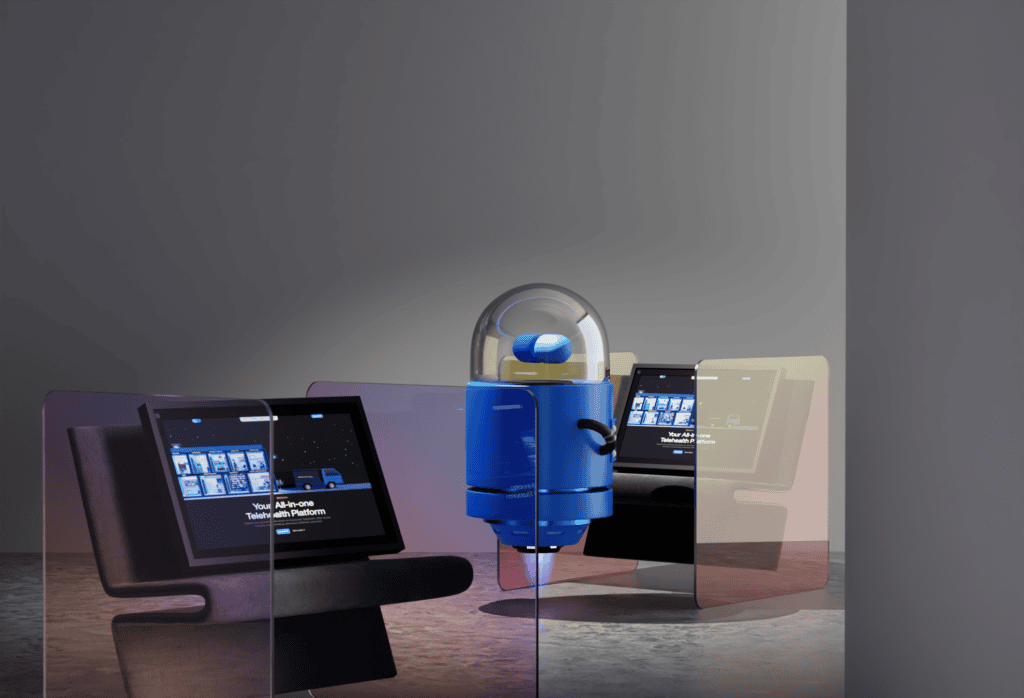
When Demand Changes Overnight
The Bask Health infrastructure the brothers had built faced a major test when demand for GLP-1 treatments began to skyrocket.
By March 2026, 12% of US adults said they were currently taking a GLP-1 medication, according to polling from KFF. That number was up from 6% in May 2024. Online providers are a big part of this market. Among people who had ever taken a GLP-1, 17% said they got their medication or prescription from an online provider or website, which was up from 11% in 2024.
Luckily for Bask, its platform was already up and running when the GLP-1 boom began. Eli says that brought Bask a lot of organic customer growth. And speed was a big part of the appeal.
Zach says that as more entrepreneurs looked for a way to launch businesses in the category quickly. Many could use Bask’s templates and marketplace of providers and pharmacies to get a telehealth service running in a matter of days.
The Next Generation of Telehealth Businesses
Bask has been busy preparing for a change in how its customers are building their businesses.
Zach says more entrepreneurs are using AI coding tools to create their websites and software, and Bask is adapting its platform to support them.
He says founders are already building with tools including Claude and Codex. So the focus now is on making Bask more “AI native”, while keeping the infrastructure behind it reliable.
An AI coding tool might help a founder build an interface quickly, but there’s still a lot that needs to happen behind it. Patient information has to reach the right places, clinicians need to be able to legally provide care to those patients, prescriptions need to reach pharmacies and the whole thing still needs to work as the business grows.

Zach says more than 10 million patients have now passed through Bask’s system. He says some of the businesses that started on the platform have gone on to serve hundreds of thousands, or even millions, of patients.
For patients, most of this infrastructure remains out of sight. That’s how it should be. But as accessing prescription healthcare online gets easier, it’s easy to forget just how much technology is working behind the scenes.