
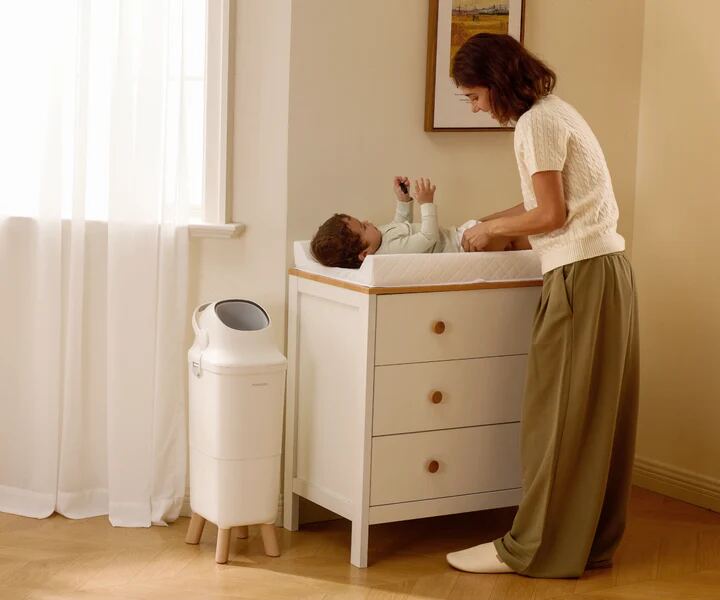
Preparing a nursery for a new baby is an exciting milestone that involves coordinating multiple moving parts, from assembling the crib to organizing a fully stocked changing station. Amidst choosing the perfect color palette and selecting the softest swaddles, new parents inevitably face the less glamorous but highly essential task of plotting an effective environmental management strategy. A primary question that arises during this planning phase is whether a standard household bin can handle the daily influx of infant waste or if investing in a specialized Momcozy diaper pail odor control system is truly necessary. Understanding the practical differences between a diaper pail vs regular trash can is crucial for maintaining a fresh, sanitary, and comfortable home environment for your growing family.
Caregivers manage thousands of diaper changes in a baby’s first year alone, making efficient waste containment a significant factor in daily household management. While a standard utility bin requires no additional immediate investment, it often lacks the specialized engineering required to lock in complex organic smells and persistent moisture. This comprehensive guide breaks down the core structural differences, financial considerations, ergonomic impacts, and maintenance requirements of both options, helping you determine which solution best fits your family’s lifestyle and home layout.
The Core Differences in Structural Engineering
To understand why standard bins often struggle to contain infant waste, it helps to examine how odors behave within a confined space. Newborn waste releases a combination of moisture, ammonia, and gaseous compounds that naturally expand and rise. The fundamental variance between a specialized diaper disposal system and a standard trash bin lies in how they manage this internal air pressure.
Odor Containment Mechanisms
A traditional trash can relies entirely on a single barrier—the main lid. When you step on the pedal of a regular kitchen bin, the entire top opens completely, creating a chimney effect. This action allows a large volume of displaced, stale air to escape directly into the room.
A dedicated diaper trash pail, however, typically utilizes a dual-containment framework. These systems often feature an outer lid paired with an internal trapdoor, airtight silicone gaskets, or a twisting mechanism that seals each individual unit down into the liner. When you open the exterior lid to discard a diaper, the main waste storage compartment remains completely isolated from the room, keeping ambient air currents unmarred.
Capacity and Bag Management
Standard trash bins are designed for general household waste, meaning they hold loose plastic bags that fill irregularly. As heavy, wet diapers accumulate at the bottom, they pull the edges of a standard bag downward, creating air pockets that trap foul smells. Specialized diaper systems are explicitly tailored for compact, heavy waste. They often utilize continuous diaper pail refills constructed from multi-layered, high-density resin films that provide a much stronger physical barrier against gas transmission than a standard, single-layer grocery or kitchen bag.
Analyzing the Financial Investment: Long-Term Costs Explained
When evaluating a diaper pail vs regular trash can, considering both immediate and long-term costs provides a clearer picture of the overall investment.
Upfront vs. Ongoing Expenses
A standard kitchen trash can is an affordable, one-time purchase, and it uses standard trash bags that you likely already buy in bulk. A specialized diaper container requires an initial upfront investment for the hardware itself, along with the recurring cost of specialized refill rings or cartridges. For budget-conscious families, this ongoing expense is an important factor to track.
Maximizing Efficiency to Reduce Cost
Many modern diaper disposal units are designed to maximize the capacity of each liner, allowing parents to pack diapers tightly and minimize plastic waste. Because specialized liners hold a significantly higher volume of compact waste before needing to be cut or tied off, the frequency of bag replacement is often lower than that of a standard bin, which must be emptied daily to prevent odors from spreading.
Convenience and Ergonomics During Late-Night Changes
Infant care operates around the clock, meaning a significant percentage of diaper changes occur during the middle of the night when fatigue is high and lighting is low. In these moments, the physical usability of your care station matters immensely.
Hands-Free Operation
When handling an active infant on an elevated changing table, safety guidelines dictate that caregivers must keep at least one hand securely on the baby at all times. Balancing a squirming child while manually lifting the lid of a standard trash can creates unnecessary physical awkwardness. Most premium diaper bins feature highly responsive foot pedals or automated touchless lids, allowing you to drop wrapped waste directly into the container smoothly without losing physical contact with your child.
Proximity within the Care Radius
Because a specialized diaper bin is engineered to seal tightly, it can safely reside directly next to the changing pad within your immediate reach. A standard trash can, due to its tendency to release a plume of air whenever opened, must often be placed further away, near a door or inside a bathroom. This distance increases transit times across the room, which can lead to accidental spills or localized odor contamination.
Material Integrity: How Porosity Affects Longevity
The material composition of your waste container plays a major role in its ability to resist odor retention over months of continuous exposure to moisture.
Standard Plastics vs. Treated Materials
Many basic household trash cans are constructed from standard utility plastics. On a microscopic level, these plastics are relatively porous. Over time, the moisture and gaseous emissions from dirty diaper storage can seep into these microscopic pores. Once the material itself absorbs these molecules, scrubbing the surface with soap will not eliminate the baseline smell, turning the bin itself into a source of ambient odor.
Advanced diaper disposal hardware often utilizes high-density, treated polymers or non-porous metals such as aluminum or powder-coated stainless steel. These specialized surfaces prevent organic compounds from penetrating beneath the top layer, making the system significantly easier to sanitize and maintain over the long run.
Environmental Factors: Temperature and Airflow in the Nursery
Where you position your waste collection setup within your home layout can influence how well it performs, regardless of the system you select.
- Avoid Direct Heat Sources: Never place your waste container next to a radiator, heating vent, or a window that receives intense direct afternoon sunlight. Higher temperatures accelerate the natural decomposition of organic material, causing internal gasses to expand rapidly and put extra pressure on sealing gaskets.
- Track Room Air Currents: Avoid placing your bin directly underneath an HVAC supply vent. If moving air continuously passes over the top of the container, it can easily capture and distribute stray particles across the bedroom the moment the lid is opened.
- Manage Humidity Levels: High humidity inside a closed nursery fosters an environment where musty smells thrive. Keeping the room well-ventilated and maintaining a cool, consistent temperature helps preserve optimal air quality.
Comparison Summary: At a Glance
| Evaluation Feature | Dedicated Diaper Pail | Regular Trash Can |
|---|---|---|
| Primary Odor Defense | Dual-isolation traps, airtight rubber gaskets, multi-layer liners. | Single lid boundary; creates a “chimney effect” when opened. |
| Long-Term Odor Absorption | Low; often constructed from treated polymers or non-porous metals. | High; standard utility plastics easily absorb organic compounds over time. |
| Operational Ergonomics | Designed for hands-free foot pedal use within the immediate care radius. | Often requires manual lid lifting or placement away from the changing table. |
| Liner Versatility | Typically optimized for high-density, multi-layer proprietary refills. | Utilizes standard, single-layer kitchen or grocery bags. |
Frequently Asked Questions (FAQs)
Can you use regular kitchen trash bags in a specialized diaper pail?
This depends entirely on the specific model you choose. Some diaper pails feature adaptable internal rings that allow parents to secure standard kitchen garbage bags, which can lower ongoing operational costs. However, many systems are optimized to work exclusively with specialized multi-layered continuous refills, which are engineered from high-density resins designed specifically to block gas and moisture transmission far more effectively than standard household bags.
How often should a diaper disposal system be completely cleaned?
While the internal liner bags should be replaced every two to four days depending on use, a comprehensive deep clean should be performed roughly once a month. This involves emptying the unit, wiping down all internal and external walls with a mild vinegar-and-water solution, cleaning out any debris from the rubber seals, and allowing the unit to air dry completely in a well-ventilated area before inserting a fresh liner.
Is a plastic or metal diaper pail better for long-term odor control?
Metal diaper pails constructed from aluminum or stainless steel are naturally non-porous, meaning they will not absorb odor molecules over years of use. However, modern high-density plastic pails that feature advanced, automated dual-trapping mechanisms and multi-layered liner systems also provide exceptional containment. Your choice should depend on whether you prioritize absolute material non-porosity (metal) or advanced mechanical features and hands-free usability (plastic).
Why does my nursery still smell even when the diaper bin is completely empty?
If a persistent odor remains after you have emptied and washed your bin, the smell has likely migrated into nearby porous textiles, such as curtains, area rugs, crib skirts, or upholstered nursing chairs. Washing these fabric elements, wiping down the wall directly behind the care station with a mild household cleaner, and opening windows to encourage fresh air circulation will usually resolve this baseline scent.
Conclusion
When deciding between a diaper pail vs regular trash can, the optimal choice depends on balancing your home’s layout, your budget, and your tolerance for ambient odors. A standard utility trash can is a straightforward, cost-effective option, but it requires frequent daily emptying and strategic placement away from living spaces to keep smells at bay. Investing in a dedicated diaper disposal system provides robust nursery odor control through structural gaskets, hands-free operation, and specialized multi-layer barrier liners. By understanding how material porosity and room climate dynamics affect waste management, you can establish an organized, sanitary changing station that ensures your baby’s nursery remains a fresh, comfortable, and welcoming environment for your entire family.