The final cut of a film is often described as its ultimate rewrite. In the editing room, raw footage is stripped of its technical context and reconstructed into an emotional journey. For film editor Yuntong Hazel Dai, this responsibility is both an exact science and an evolving art form.
A graduate from the American Film Institute (AFI) Conservatory, where she earned her MFA in Editing, Dai also holds a Bachelor of Science in Interactive Media Arts from New York University. She fuses together her technological foundation with a background in psychology and has built a career dedicated to exploring the intersection of human emotion, social-political structures, and visual narrative. From high-profile festival favorites to pioneering workflows in AI vertical dramas, her editorial hand serves as a critical narrative guide in the editing room.
-
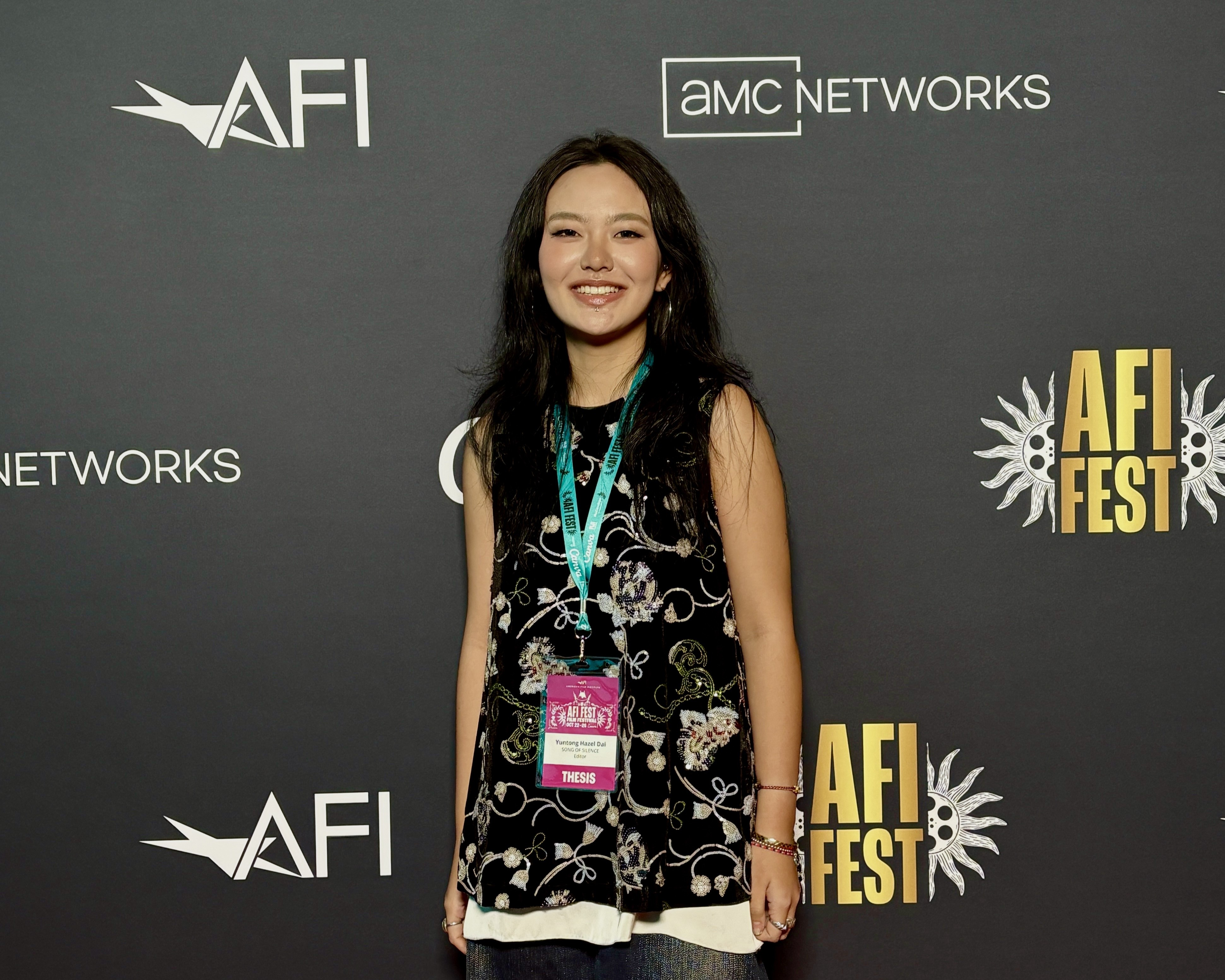
Yuntong Hazel Dai at AFI Fest, Copyright Yuntong Hazel Dai
Redefining the “Cliffhanger” for the Smartphone Screen
The rapid rise of micro-drama platforms has fundamentally changed how stories are consumed. Working on major releases for DramaBox—including episodes 26 to 40 of Through Ashes Their Sorrow Awakens (which has garnered 29 million views) and episodes 26 to 35 of Love to Hate: The Day My Stepbrother Knows My Dirty Secret (reaching 49 million views)—Dai has mastered the unique constraints of the 9:16 vertical format.
In a medium where a viewer can swipe away in a second, pacing dictates retention. “In vertical drama, every episode has to create an immediate emotional contract with the viewer,” Dai explains. Stepping into a massive series during its middle acts requires balancing established rhythms with intense escalation.
“A good cliffhanger is not just a shocking moment. It has to come from character desire,” says Dai. “Someone is about to confess, betray, escape, or discover a secret, and the cut happens when the emotional pressure is highest.”
The Evolution of the Post-Production Workflow: AI Vertical Dramas
As technology shifts, Dai is already adapting to the next iteration of short-form storytelling: AI vertical dramas. Far from viewing artificial intelligence as a replacement for human instinct, she approaches it as a new production environment that demands heightened creative judgment and technical communication.
In this workflow, the line between pre-production and post-production blurs. Drawing on her interactive media background, Dai maps out the script, designs character blocking, and translates complex storyboards into detailed prompts for generation tools, editing the incoming footage in real time.
While AI tools offer unprecedented flexibility—effectively eliminating the issue of missing coverage—they frequently struggle with nuance and emotional authenticity. This is where the editor’s eye becomes indispensable.
“AI video generating tools are not that mature right now,” Dai notes. “The question is whether the result still feels emotionally truthful. Editors are the people who carry responsibility for shaping performance, pacing, narrative escalation, and emotional logic.”
-
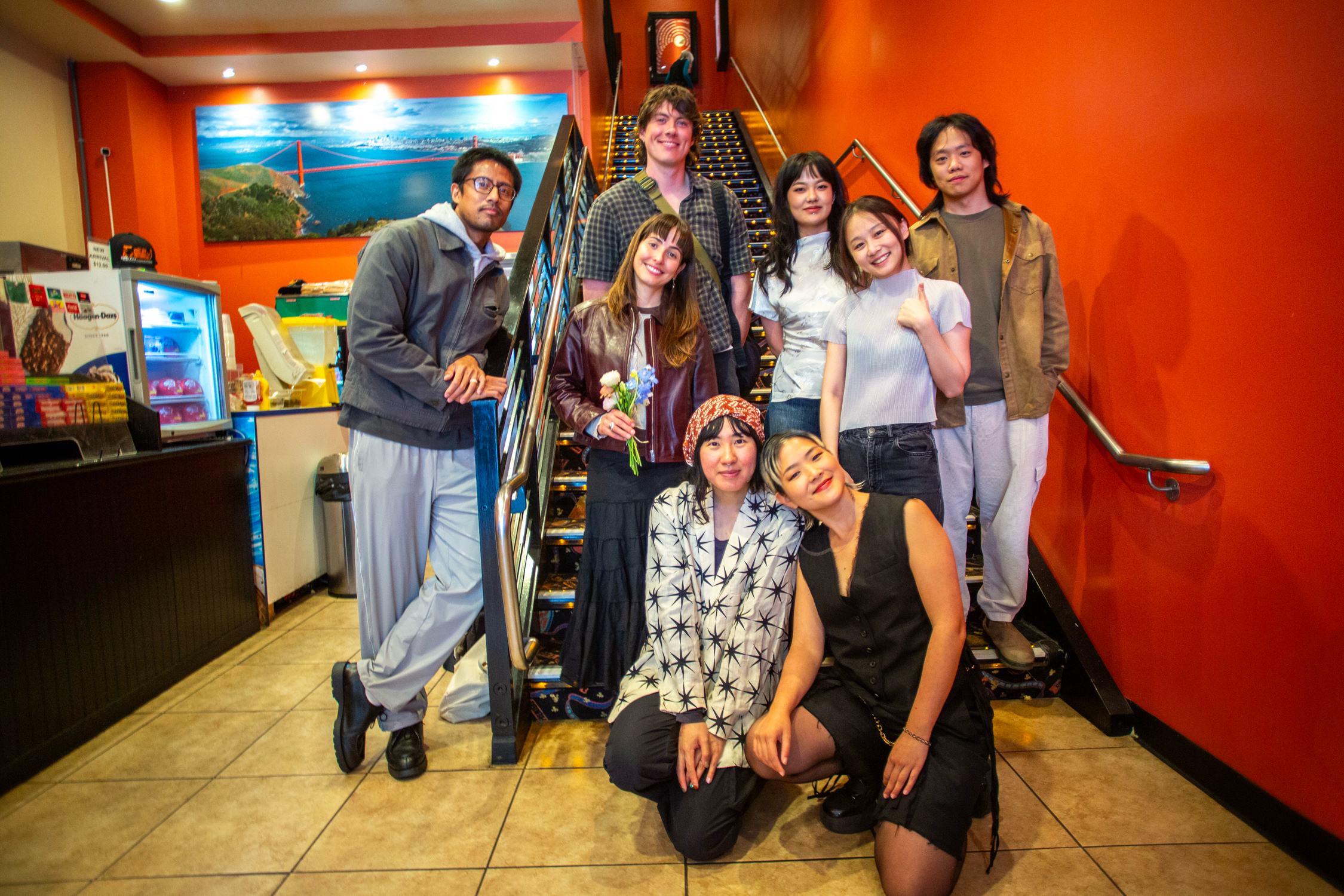
“Drifting, South” Film Crew at SFFILM. Copyright SFFILM
Translating Silence and Deconstructing Text
Dai’s psychological insight and structural precision are equally evident in her traditional independent film projects, which frequently explore complex social themes. A prime example is her work on the AFI thesis film Song of Silence. Produced by an international, all-women crew with a lead cast of deaf actors, the film relies almost entirely on sign language rather than spoken dialogue. For an editor, removing spoken inflection strips away a primary pacing tool. Dai worked closely with the director to deconstruct and rebuild the material.
Rather than relying on overt melodrama, the film explores a harrowing choice: the collective survival of a community versus the private bond between a mother and her child. Through precise structural edits, Dai allowed the narrative tension to live in the pauses and visual subtext, transforming a specific cultural story into a universal test of human nature. The film’s nuanced execution earned it recognition at the Cannes Short Film Corner, the AFI Fest Showcase, and a Student Emmy nomination at the College Television Awards.
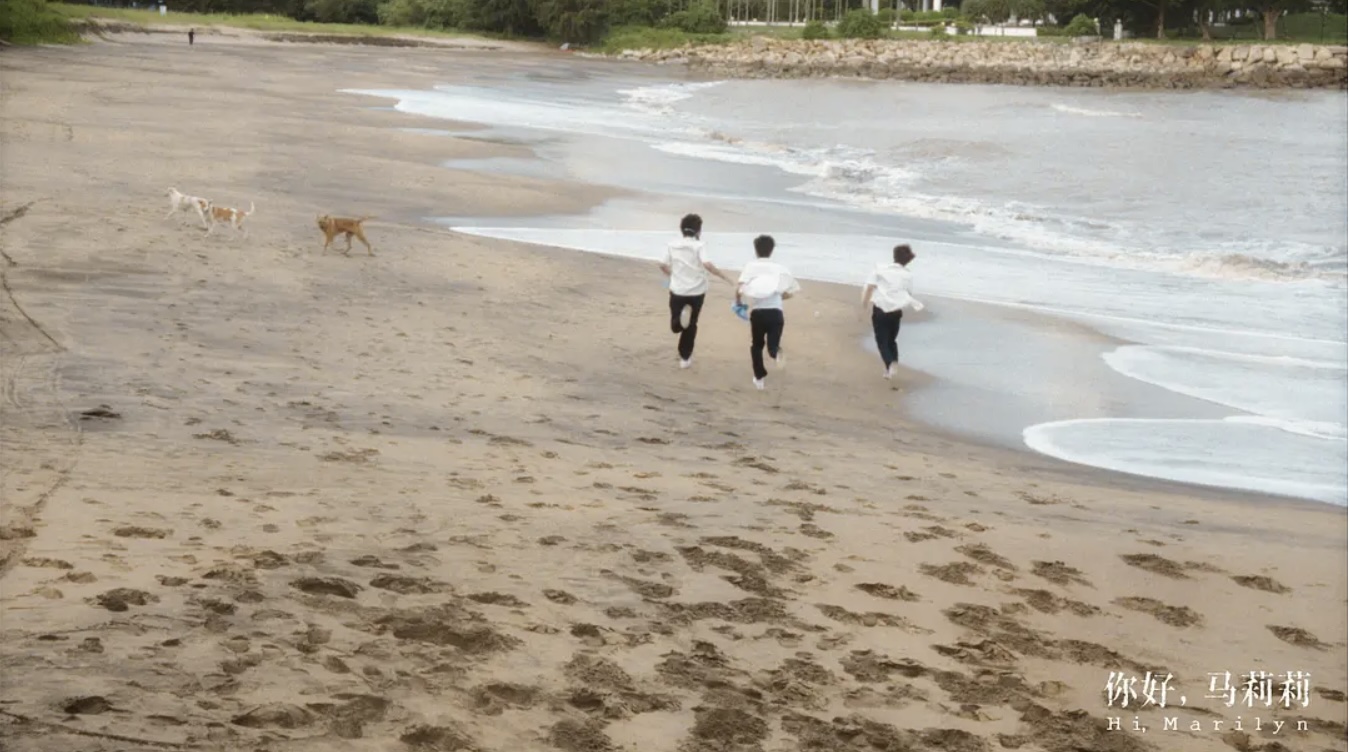
Her broader independent film portfolio has earned significant international acclaim. The 2024 short film Taste of Tea, which she edited, earned official selections at both the FIRST International Film Festival and the Moscow International Film Festival. Additionally, her work on Hi, Marilyn was screened universally and won awards at the China New Media International Short Film Festival and the Qingmu Short Film Festival, alongside official selections at the Beijing International Film Festival and the Paris Chinese Film Festival.
-
“Hi Marylin” Film Still, Copyright Maritime Guangdong
Technical Problem-Solving and Creative Authorship
Whether preserving the organic texture of independent film or generating frames from text, Dai’s approach combines rigorous technical execution with narrative authorship. Her versatility extends across narrative features, coats, commercials, and experimental projects—collaborating with directors like Di Zhang on festival-recognized titles like Between the Moon and the Son and Non-stop Station.
Her sharp technical problem-solving was particularly vital during the post-production of Drifting, South, directed by Di Zhang. Shot entirely on physical 16mm film, the project presented unique exposure and technical hurdles. Dai utilized modern digital post-production workflows to resolve these issues seamlessly, ensuring the visual continuity served the underlying story without sacrificing the film’s raw, celluloid aesthetic. The film went on to win Best International Short Film at the Riga International Film Festival and was nominated at the San Francisco International Film Festival.
This balance between technical proficiency and storytelling insight is also what drives her current work with Deep-Light, a global mentorship platform founded by cinematographer Natasha Braier, ASC, ADF. Editing the program’s flagship series, “Editing Through Their Eyes,” Dai cuts long-form, nonlinear interviews with prominent Hollywood cinematographers like Bradford Young and Lol Crawley.
By finding the intellectual structure inside these complex, organic conversations, Dai’s role expands from shaping fictional worlds to archiving and translating the craft of filmmaking itself. Having served as a teaching assistant in Editorial Storytelling at AFI and trained under industry veterans like Lou Ye, Dai continues to prove that while the tools of post-production are constantly shifting, the core task remains identical: finding the truth in the cut.
For Dai, that truth always comes back to the human element at the center of the frame. As she explains: “I began to understand that editing was the place where my instincts were most useful—listening to people, reading behavior, and shaping emotional rhythm. I wanted a career where I could listen closely to human behavior and shape stories with both precision and empathy. Editing gave me that language.”