
There is a particular kind of label reading that plant-based eaters develop over time. The scan that starts at the top of the ingredient list and stops when something unfamiliar appears. Xanthan gum. Carrageenan. Locust bean gum. These are not harmful at normal consumption levels, but they are also not whole foods in any meaningful sense. They are texture management, shelf-life extension, consistency insurance for products that would otherwise behave differently under different conditions.
Starr Edwards’ Bitchin’ Sauce clears that scan in seconds: almonds, lemon juice, soy sauce, garlic, nutritional yeast, and oil. The list has not changed since Starr and Luke Edwards started the company in Carlsbad, California in 2010. No preservatives. No gums. No stabilizers. Nothing synthetic added to make manufacturing more convenient than the recipe allows.
For a plant-based eater who has gotten used to checking labels even on products that seem safe, this is rarer than it should be.
What Each Ingredient Is Actually Doing
The ingredients are not arbitrary. Each one is pulling real weight, which is why none of them need backup.
Almonds are the base: protein, monounsaturated fats, and a naturally creamy texture that provides body without dairy or synthetic thickeners. According to USDA nutritional data, almonds are among the more nutrient-dense whole foods available, delivering vitamin E, magnesium, and fiber alongside their fat content. Lemon juice handles both flavor brightness and natural preservation. Garlic contributes depth that conventional products replace with chemical flavor enhancers. Nutritional yeast and soy add the savory, umami dimension that makes the dip feel complete without any animal products or artificial flavor compounds. Oil and lemon bind the emulsion.
That’s it. Nothing is filler. Nothing is there to extend shelf life at the expense of the rest.
The natural separation that happens in the fridge is a feature of this, not a flaw. Real emulsions without synthetic stabilizers separate.
Twenty Flavors, One Honest Base
The same almond foundation supports more than 20 rotating flavors. Chipotle. Cilantro Chili. Sriracha. Pumpkin Pie. A ghost pepper accident turned seasonal product called Chi-Ghost-Le. Each flavor built, without adding stabilizers to compensate for a new ingredient, without reaching for gums to maintain texture when the flavor profile changes. One base, twenty directions, zero compromises on what goes into it.
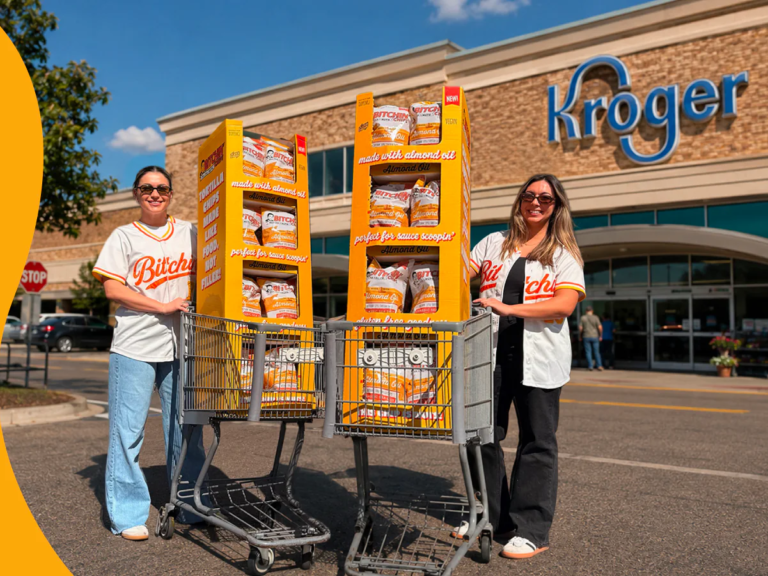
That consistency of approach is what allows Bitchin’ Sauce to now sit in more than 15,000 retail locations: Costco, Target, Kroger, Whole Foods, and Sprouts, plus international distribution through Australia, New Zealand, South Korea, China, and Mexico. The cold chain requirements of a preservative-free refrigerated product don’t get simpler at that scale. They get harder. The sauce ramp, a physical ramp used to test viscosity and texture by hand without automated sensors, is part of how quality stays consistent when the easier answer would be to add a stabilizer and move on.
What the 2026 Expansion Looks Like
The snacking platform rolling out this year follows the same logic into new categories. Bitchin’ Chips are built on an almond-oil base. Salsacados add avocado chunks to a salsa format. Two refrigerated bean dip flavors. The Snacker, a collab with The Good Crisp Company. New formats, same refusal to compromise on what goes in.
Bitchin’ Sauce reached $56M in peak annual revenue. The company is still family-owned, and the recipe is still the same core ingredients it has always been. For anyone who reads labels the way most people read menus, that track record matters. What does it actually look like when a food brand treats its ingredient list as a commitment rather than a starting point?