

You have worked hard, climbed the career ladder and are soon to release Version 3 of your widely adopted platform. Meanwhile, across the globe, a 22-year-old with a laptop, a ChatGPT subscription and zero work experience is building the thing that will obliterate your business model. She’s never sat through a strategy offsite. She doesn’t know how things are supposed to work in your market. That’s exactly what makes her dangerous.
For most of the last century, experience was the moat. It took 10, 20 or even 30 years to learn how an industry really worked including who the real buyers were, which regulations mattered, and why the last three attempts failed. Knowledge was scarce, expensive and slow to acquire. Those who had it won.
That moat is draining.
Knowledge on Tap
Today, more than a billion people use ChatGPT every week. The telephone needed 75 years to reach 50 million. This demonstrates the shifts in society, technology and business that have turned the traditional concepts of competitive advantage upside down.
A young founder can now ask AI to explain the unit economics of a logistics business, draft a go-to-market plan, stress-test pricing, write the code for a first product and critique his pitch deck like a sceptical investor – before lunch. What once required a decade of apprenticeship, a consulting budget or a well-connected mentor is now available to anyone willing to ask good questions.
And the young are asking.
A Google Workspace and Harris Poll survey found that 93 percent of Gen Z respondents use two or more AI tools every week. Not because anyone assigned it, but because they are wired for exploration over instruction. They try, learn, iterate and ship before committees finish their second meeting.
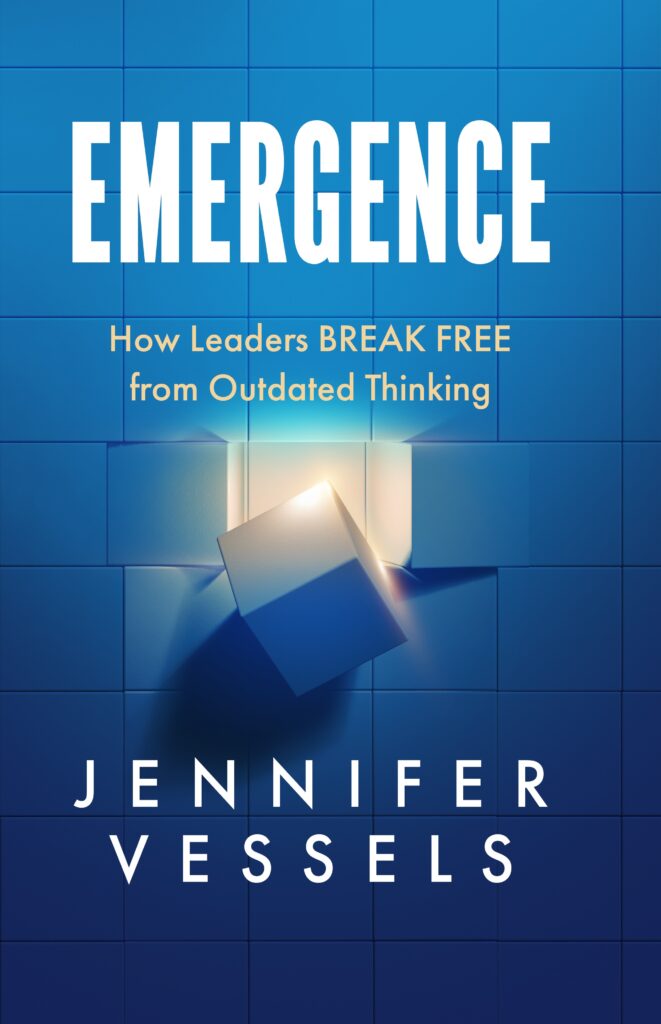
In my book Emergence, I call this the Speed Cyclone: what took 10 years to master can now be automated in 10 months. Access to knowledge used to separate the experienced from the inexperienced. Today the dividing line is speed of learning.
I’ve watched executives with 30 years of experience and degrees from top schools find themselves competing with 25-year-olds who dropped out of college but have already sold their first startup. The veterans weren’t less intelligent. They were navigating with a map of a world that no longer exists.
When Experience Hardens Into Certainty
Let me be clear: experience still matters. Pattern recognition, judgment, relationships, the scar tissue from past mistakes – these are real assets, and AI cannot replace them.
The problem isn’t experience. It’s what experience can harden into: certainty about how things should be done.
The expert says, “This is how it works.” The future-ready leader asks, “What are we trying to achieve, and how might this help us get there?” The first statement closes doors. The second question opens them.
Expertise creates blind spots exactly where vision is needed most. Every mastered pattern can prevent you from seeing new patterns emerging. Every successful framework becomes a filter that screens out the very signals you need. The 22-year-old with ChatGPT doesn’t carry that filter. She doesn’t know it can’t be done. So, she tries and AI lets her try cheaply, quickly and repeatedly.
Today’s Advantage, Tomorrow’s Blind Spot
History is full of companies undone not by weakness, but by strength.
Kodak’s experts knew everything about chemical photography – the chemistry, the processing, the distribution. That expertise wasn’t wrong. It was brilliant. It simply became irrelevant when digital arrived, and it blinded them to what was obvious to anyone not invested in film.
BlackBerry once held around 40 percent of the US smartphone market. But as touchscreen smartphones transformed the market, the physical keyboard that had helped define BlackBerry became part of the problem. By 2016, its smartphone market share had fallen to effectively zero.
Neither company lacked talent, data or capability. What they lacked was the willingness to let go of what had made them successful.
That’s the uncomfortable truth for every established leader – your greatest competitive advantage today is the thing most likely to become your biggest blind spot tomorrow. The playbook that built your career is the one a 22-year-old is quietly rewriting.
Don’t compete with her. Learn from her.
The answer isn’t to out-hustle Gen Z, or to pretend decades of experience count for nothing. It’s integration. A 60-year-old’s contextual judgment combined with a 25-year-old’s digital fluency, amplified by AI, creates an advantage neither could build alone. Success today requires experience and speed. Human intuition and data-driven machines.
So, what does an experienced leader do now?
- Swap certainty for curiosity. Before asking “How can I prove I’m right?” ask “What if I’m wrong?”
- Use AI as a thinking partner, not a vending machine. Ask it to challenge your assumptions and surface your blind spots, not just produce deliverables
- Reverse the mentorship. Pair senior leaders with younger colleagues who use AI daily and let learning flow both ways
- Run experiments, not pilots. Small, fully committed tests with real customers teach more in weeks than a year of analysis. Speed of learning beats depth of planning
- Hold your expertise lightly. Treat what you know as a hypothesis, not a verdict
The Bottom Line
The 22-year-old with ChatGPT isn’t your enemy. She’s a signal – proof that business as usual is obsolete and that access to knowledge no longer protects anyone.
Experience remains powerful, but only when paired with the humility to question it and the courage to act before certainty arrives. Experts defend what they know. Future-ready leaders explore what they don’t.
Waiting for certainty is the riskiest strategy of all.