
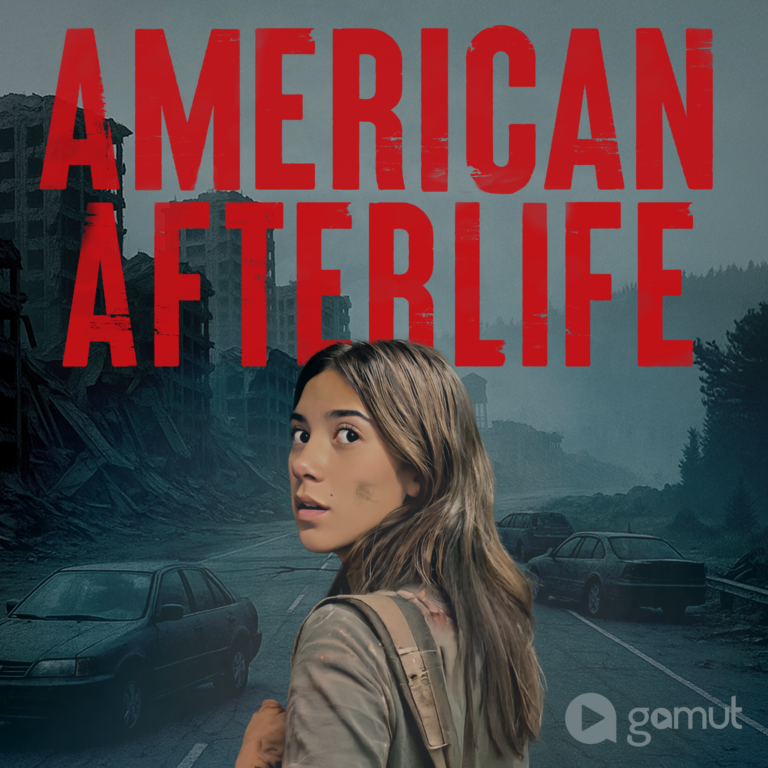
Somewhere between the fourth streaming service and the third notification interrupting a show you were not that invested in anyway, something shifted. Not dramatically. Just a slow, creeping realization that having more content has somehow made it harder to actually enjoy anything. William Stuart, the producer behind The Rock, noticed that shift before it had a name, and instead of waiting around for Hollywood to figure it out, he did something about it. That something became American Afterlife, an audio drama that hit #1 on Apple’s Fiction charts and has not really slowed down since.
And it got there by doing something the industry keeps forgetting works: telling a genuinely great story with the kind of craft and intention that usually gets reserved for nine-figure film budgets. No screen required. Just sound, a rising actress named Scarlett Estevez (Lucifer) and a premise so tense you will want to look over your shoulder while you listen.
The average American now spends roughly eleven hours a day looking at screens (Source: Evoca TV, 2025). Eleven hours. At some point, the eyes need a break, and the ears start doing the heavy lifting. Stuart saw that shift coming, and instead of waiting for a studio to greenlight something, he built it himself.
From The Rock to a Flooded Oregon: The Pivot Nobody Saw Coming
If you told someone a few years ago that one of the producers behind The Rock would eventually bet his creative energy on an audio drama about an undocumented teenager surviving a militia-occupied disaster zone, they would have had some follow-up questions. And honestly, fair enough. It is not an obvious trajectory. But the more you dig into what Stuart actually built with American Afterlife, the more it starts to make complete sense.
The show is adapted from Pedro Hoffmeister’s bestselling novel, and the story is not gentle about what it wants from you. Cielo is fifteen years old, undocumented, and living with her mom in Eugene, Oregon when a massive earthquake and dam collapse turn the city into something unrecognizable. When the National Guard rolls in for evacuations, she does not go. Her mom is missing, and she is not leaving without her. What follows is a survival story that is equal parts heartbreaking and politically charged, threading through a militia called the Repo Men who have essentially colonized the disaster for their own agenda, and ending with Cielo in military custody, accused of a massacre she cannot even fully account for.
That is a lot of story to carry. Stuart did not water it down to make it more “podcast-friendly.” He took his film production instincts, his standards for performance and pacing and sound, and applied all of it to a format that most of the industry still underestimates. The result is something that sounds, and feels, nothing like what people picture when they hear the word podcast.
Estevez put it plainly. “Working on this project truly felt like filming a movie,” she said on The Kidd Kraddick Morning Show. “The writing is so strong, dramatic, and intense that it immediately pulls you into the story. It was also a really interesting experience bringing action to life through audio, especially moments where Cielo is moving through the world and experiencing everything in real time. Relying on imagination to create those moments made the process incredibly rewarding.” That is not someone describing a side project. That is someone describing the kind of work that actually challenges them.
The Format Everyone Kept Sleeping On
Here is the thing about audio drama: it has been getting underestimated for so long that people started to believe the reputation. “It’s just a podcast” became the easy dismissal, the thing you say when you have not actually listened to what modern audio production sounds like. That framing does not hold up anymore, and the audience data has been saying so for a while.
The global podcasting market crossed $18.52 billion in 2022 and is projected to reach $130.63 billion by 2030 (Source: Mordor Intelligence). Fiction and drama formats are leading the charge, pulling in younger, more engaged listeners who actually finish what they start. Completion rates for premium audio drama consistently outperform comparable video content (Source: Podnews, 2022), which, when you think about it, is a fairly devastating statistic for anyone still insisting that TV is the only place serious storytelling lives.
What audio does that visuals sometimes actually get in the way of is this: it makes the story yours. When you cannot see the flooded streets, your brain builds them. When you cannot see Cielo’s face, you feel her panic instead of watching it. There is a particular kind of dread that lives in the space between what you hear and what your imagination fills in, and good audio drama knows exactly how to use that space. It is not a limitation of the format. It is the whole point.
Estevez talked about this on The Kadie Daye Show in a way that stuck. “Some of the most challenging moments came later in the story, when things become especially intense and emotional. Recording those scenes in an audio environment was a unique experience because you’re sitting in a studio, but mentally you have to fully put yourself into those moments. Running, reacting, surviving. It really pushes you to use your imagination in a different way, and that became one of the most interesting and rewarding challenges of bringing this story to life.” The studio walls disappear. The flooded city shows up. That is what this format does when the production actually earns it.
Stuart’s film background gave him a real advantage here. He already understood how to direct performances toward emotional precision, how to use sound as a structural tool rather than a decorative one, and how to build tension without leaning on visual shortcuts. “Working with someone as experienced as Bill Stuart was an incredible learning experience,” Estevez said. “He has such a strong creative vision and a clear sense of direction, and being guided by someone with that level of experience was really special.” You can hear that clarity in every episode.
The Future Is Already Listening
Stuart is not out here predicting the future of entertainment for clout. He has been building it, one episode at a time, with a production that launched at number one and earned a 4.8-star rating on Apple Podcasts because it deserved both. American Afterlife is not riding a wave. It is the kind of work that creates one.
The story of Cielo is not timely by accident. It is about who gets left behind when disaster becomes political, about the specific danger of being invisible in a system that was never really designed to protect you, and about what survival actually costs when no one is coming to help. These are not themes that were softened to make the audio drama format feel safer or more accessible. They are the whole point, and Stuart treated them that way from the start.
What he proved, and what American Afterlife keeps proving every week it stays in the charts, is that audiences are not the problem. They will absolutely show up for something ambitious, emotionally demanding, and genuinely well-made. What they will not do is pretend mediocrity is worth their time. Give them something real, and they will listen to every single second of it.
Go Ahead, Give Your Eyes the Night Off
American Afterlife is available right now on Apple Podcasts, Spotify, iHeart Radio, and wherever you listen to podcasts. If you are the kind of person who is always looking for the next story that actually gets under your skin, this is it. Head over to americanafterlife.com to catch up on the synopsis, meet the cast, and sign up so you never miss a new episode. Your next favorite story does not need a screen. It just needs you to press play.