
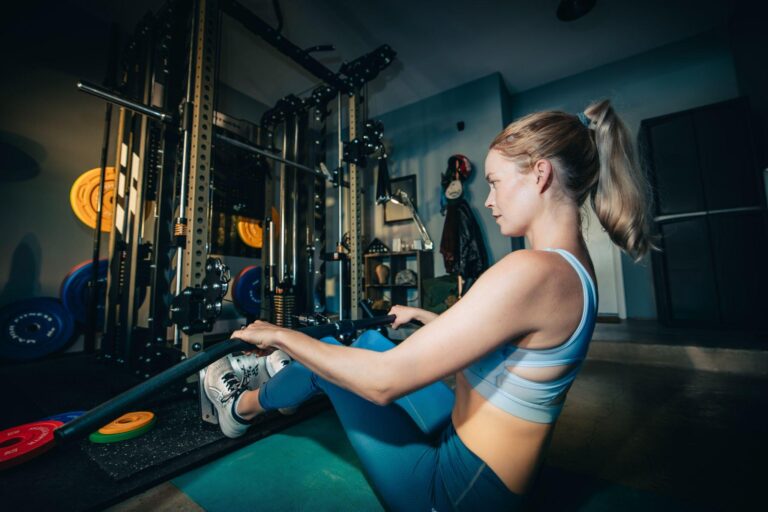
Since the pandemic, home gyms have evolved into thoughtfully designed spaces that emphasize convenience, adaptability, and tech-enabled training rather than just basic at-home workouts. Manufacturers such as Major Fitness are structuring product development around that shift, responding to buyers who are replacing first-generation equipment with cohesive, load-stable platforms designed for long-term progression.
What began as an urgent adjustment to disrupted routines has developed into a reassessment of durability, integration, and expansion capacity. The transition from provisional setups to engineered systems reflects a clearer expectation among repeat buyers: home training is no longer experimental. It requires infrastructure capable of sustained performance.
From Temporary to Permanent
Early purchases prioritized availability and function. Many lifters pieced together racks, benches, and cable units based on what was accessible at the time. Those configurations allowed training to continue, but they were rarely designed as unified systems.
Consistent use exposed limitations. Equipment assembled without a long-term plan often lacked cohesion. Transitions between movements were inefficient. Stability during heavier compound lifts became a concern. Expansion frequently required adding standalone pieces rather than building onto an integrated foundation.
Repeat buyers now approach the category with defined criteria. Structural reliability, compatibility, and consolidated design carry more weight than entry-level pricing. The purchasing decision has shifted from assembling workable equipment to investing in a platform that can support progressive strength development over time.
Engineering Over Convenience
First-generation setups emphasized accessibility. Entry price, availability, and basic function often guided decisions. Many owners pieced together equipment to create something workable, even if it lacked structural unity.
Second-generation buyers approach the process differently. Lessons learned from early setups influence every evaluation. Stability during heavy compound lifts, smooth transitions between movements, and compatibility with future attachments matter more than novelty. Rather than assembling standalone pieces, buyers look for systems that function cohesively under consistent load.
System cohesion now shapes purchase logic. Equipment must operate as a connected training platform rather than a series of isolated tools. That shift reflects a practical adjustment rooted in experience. Strength training at home requires infrastructure capable of handling progression without frequent replacement.
Design philosophies built around integrated architecture align with these priorities. Manufacturers have responded with multi-function platforms intended to consolidate racks, cable systems, and guided bar paths into a single structure. Major Fitness reflects this orientation through structured platforms such as the Major Fitness B17 All-in-One Smith Machine, which centralizes multiple training functions within a single cohesive framework. Integrated designs reduce spatial inefficiencies and limit the need for separate standalone units, addressing many of the friction points identified in earlier setups.
Durability Drives Decisions
Experience changes how lifters evaluate quality. Repeated loading over months of structured programming exposes weaknesses that are not visible during initial assembly. Frame stability, hardware integrity, and smooth adjustment mechanisms become measurable attributes rather than abstract selling points.
Construction details receive closer attention during the upgrade process. Steel thickness, anchor points, and load tolerance influence decisions because equipment must withstand consistent compound training. Reliability under stress carries more weight than aesthetic appeal. Buyers who have experienced movement instability or hardware fatigue during heavy lifts tend to prioritize structural reinforcement in replacement systems.
Longevity also extends beyond structural durability. Expansion capability has become a defining consideration. Owners want platforms that allow movement variety and attachment integration without requiring a complete rebuild of the space. The foundation should remain constant while programming evolves.
Second-generation setups reflect confidence in long-term training plans. Investment logic shifts from short-term affordability to sustained performance value. Equipment is evaluated based on how well it can support years of disciplined progression rather than short bursts of use.
What Upgrades Reveal
The upgrade cycle illustrates a broader shift in home strength training. Initial adoption proved that serious lifting could occur outside commercial facilities. Replacement decisions demonstrate that many lifters no longer view home training as temporary.
Manufacturers positioned around integrated, long-term platforms now sit at the center of that evolution. Major Fitness represents this direction by designing equipment that reflects repeat-buyer priorities rather than first-time experimentation.
The second purchase marks more than an equipment change. It signals permanence. Home strength training has moved from adaptation to commitment, and the systems being installed reflect that reality.