
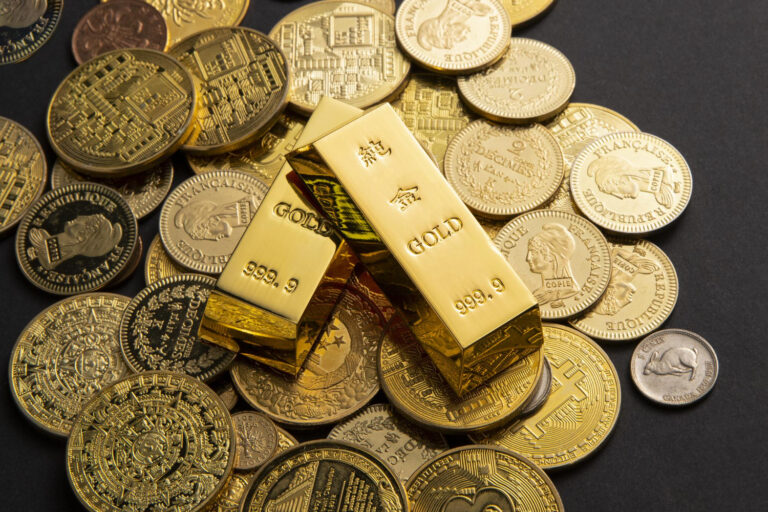
Over the last few years, the gold price has been driven by a combination of excessive government spending, increased geopolitical risks, and reduced confidence in the US Dollar. For centuries, gold has been seen as a safe-haven asset in uncertain times, and this week was no exception: with geopolitical risk rising, the gold price held while broader equity markets sold off. Over the last week, none of these factors have changed, while geopolitical risk has increased.
Unlike many other commodities, gold plays a special role in the global economy. Oil powers industries, copper supports construction and electronics, and agricultural commodities feed populations. Gold, however, is valued mainly for its stability and its ability to maintain value over long periods. Because of this, gold often becomes more valuable during periods of uncertainty and turbulence.
One reason gold rises during unstable times is safe-haven demand. When investors worry that stock markets may fall or that economies may slow, they often move money into assets considered safer. Gold is one of the most trusted options because it has maintained value for thousands of years. Unlike stocks, gold does not depend on company profits. Unlike currencies, it cannot be printed by governments. Its supply is limited, and its value is recognized worldwide.
When major geopolitical events occur, such as military conflicts or rising international tensions, investors often react quickly. Large financial institutions, hedge funds, and even everyday investors may begin buying gold through physical bullion, exchange-traded funds (ETFs), or futures contracts. This sudden increase in demand can push gold prices higher in a short period.
The recent increase in geopolitical risk is really a continuation of a trend from the last few years. Many countries hold gold as part of their national reserves to support financial stability. Over the last several years, many adversaries and potential adversaries of the United States have been reducing their U.S. Dollar exposure and increasing their gold holdings to protect their reserves. These nations do not want to suffer the same fate as Russia, which saw much of its U.S. dollar-based reserves confiscated as a result of the invasion of Ukraine.
While this underlying trend to expand gold reserves has been a significant factor in the rise of the gold price over the last few years. During periods of increased geopolitical tension, this process can accelerate. These large buyers of gold, with their steady purchases, have been providing steady upward momentum for the gold price.
Another important factor that drives gold prices during turbulent periods is inflation. Many global conflicts and economic shocks disrupt supply chains, energy production, and international trade. For example, when oil prices rise due to geopolitical tensions, transportation and manufacturing costs also rise. These rising costs can spread throughout the economy, leading to higher inflation.
Gold has long been considered a hedge against inflation because it tends to maintain its purchasing power as currencies weaken. When people expect inflation to rise, they often buy gold to protect the value of their money. In this way, gold acts almost like financial insurance during periods when prices for everyday goods are increasing.
Interest rates and central bank policies also influence gold prices. Very recent economic data point to a weakening economy, and the recent rise in oil prices is likely to be negative for the economy if it persists. Gold does not produce income like bonds or dividend-paying stocks. Because of this, when interest rates are high, investors sometimes prefer assets that generate regular returns. However, during economic slowdowns or crises, central banks often lower interest rates to stimulate growth.
When interest rates fall, holding gold becomes more attractive because the opportunity cost of owning it decreases. Investors may choose gold instead of bonds or savings accounts that offer lower returns. This shift in investment preferences can add further support to rising gold prices.
Investor psychology also plays a role in gold’s performance during turbulent times. Financial markets are heavily influenced by sentiment and expectations. When headlines focus on global conflicts, economic risks, or political instability, investors often anticipate that gold prices will continue rising. This expectation can lead to additional buying.
Furthermore, in futures and options markets, traders may choose to place bets on higher gold prices. These speculative trades can accelerate price movements, sometimes creating rapid rallies. However, this also means gold can experience short-term volatility as traders react to new information and changing market conditions.
It’s important to remember that gold does not always move upward in a straight line, even during crises. Particularly, if investors need liquidity, at that point, everything is for sale, including gold. However, despite gold often being a passenger in liquidity-driven sell-offs, it is often the first asset class to rise post-crisis, as we saw in both 2008 and 2020.
Still, history shows that gold often performs strongly during times of global uncertainty. From the inflation shocks of the 1970s to the financial crisis of 2008, gold has repeatedly served as a financial safety net for investors. Its ability to retain value during difficult periods has helped it remain one of the world’s most trusted assets.
In today’s fast-moving global economy, uncertainty can spread quickly across markets and borders. When that happens, investors often return to assets that have stood the test of time. Gold continues to play that role, reminding markets that even in the most modern financial systems, stability and trust still matter.