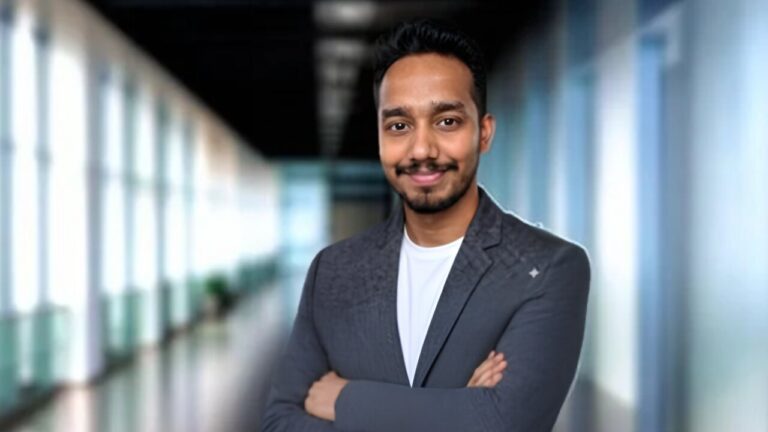
Gandhi Mathi Nathan Kumar is an engineering leader and incident command practitioner whose career spans the intersection of autonomous vehicle operations, cloud platform reliability, and quality engineering. Having commanded over 100+ high-severity incidents during his tenure at Twilio, where he pioneered AI-driven status page summary automations and incident bridge orchestration, he moved on to focus on autonomous vehicle systems and incident response operations at Aurora Innovation.
Artificial intelligence has become a powerful tool for helping organizations process information faster, recognize emerging risks, and improve operational performance. Yet despite rapid technological progress, one factor continues to determine whether AI succeeds in practice: trust.
Organizations may invest in sophisticated AI systems, but those systems deliver meaningful value only when the people using them understand how they work and have confidence in the decisions they support.
For Gandhi Mathi Nathan Kumar, building that trust begins with recognizing that AI is most effective when it complements experienced professionals rather than replacing them.
“People trust technology when they understand its purpose and know their expertise still matters,” says Gandhi Mathi Nathan Kumar. “AI should increase confidence in decision making, not create uncertainty about who is responsible.”
His perspective reflects a growing shift in conversations surrounding responsible AI adoption.
Technology Alone Does Not Build Confidence
Organizations often evaluate AI based on technical performance. Accuracy, speed, automation, and efficiency frequently dominate discussions about implementation.
However, Gandhi Mathi Nathan Kumar believes successful adoption depends equally on the human experience.
Employees need confidence that AI recommendations are understandable, transparent, and capable of supporting informed decisions rather than replacing professional judgment.
“The best AI implementations help people see more clearly,” he explains. “They don’t remove people from the process of making important decisions.”
That philosophy encourages organizations to design technology around users rather than expecting users to adapt entirely to technology.
Show the Work, Not Just the Answer
A recommendation without an explanation asks people to take it on faith. In incident management, where a wrong call can extend an outage or hide a deeper problem, faith is not enough.
Gandhi Mathi Nathan Kumar believes AI earns trust when it shows how it reached a conclusion: which signals it considered, which past events it compared, and which data it relied on. That lets professionals check the reasoning quickly instead of accepting or rejecting it blindly.
“If I can see why a system suggested something, I can decide in seconds whether it’s right,” he says. “If I can’t, I either ignore it or follow it blindly, and neither is good.”
Honest About What It Doesn’t Know
Trust also depends on AI being candid about uncertainty. A system that sounds just as confident when it is guessing as when it is certain teaches people to doubt everything it says.
Gandhi Mathi Nathan Kumar argues that well-designed tools should tell the difference between a strong match and a weak hunch. They should flag when information is incomplete and say plainly when a situation falls outside what they have seen before.
“Confidence should be earned, not performed,” he notes. “The most trustworthy answer is sometimes, ‘I’m not sure, and here’s why.'”
Trust Is Only as Strong as the Data Beneath It
Every AI recommendation rests on the data it receives. Missing records, inconsistent definitions, or outdated information can quietly undermine even the most capable system.
For that reason, Gandhi Mathi Nathan Kumar treats data integrity as a trust issue, not just a technical one. Organizations need to know where their data comes from, how current it is, and whether it reflects reality, and they need to verify AI outputs against reliable sources before acting on them.
“When an AI result surprises you, the first question should be about the data,” he says. “Is it complete, is it current, and is it what you think it is?”
Experience Creates Better Outcomes
Professional experience remains one of the most valuable assets within incident management.
Experienced professionals understand organizational priorities, customer expectations, operational risks, and the subtle context that often determines whether a response succeeds.
Artificial intelligence can organize information, but interpreting that information still depends on people capable of weighing competing priorities.
According to Gandhi Mathi Nathan Kumar, this combination produces stronger outcomes than either technology or people working independently.
“Experience gives meaning to information,” he says. “AI helps deliver that information more quickly.”
By treating AI as an enhancement to professional capability, organizations can create systems that encourage collaboration instead of dependency.
Keeping Human Skills Sharp
There is a quieter risk in successful AI adoption. If technology handles more and more of the analysis, professionals may gradually lose the hands-on skills they need when the technology is unavailable or wrong.
Gandhi Mathi Nathan Kumar believes organizations should deliberately keep those skills alive through practice exercises, mentorship, and opportunities for people to work problems without automated help. Trust in AI is healthiest when people could do the work without it.
“You can only judge an AI’s answer if you understand the problem yourself,” he notes. “Expertise is what makes oversight real.”
Looking Beyond Automation
As businesses continue investing in artificial intelligence, Gandhi Mathi Nathan Kumar believes conversations should move beyond whether automation is possible and instead focus on whether automation genuinely improves organizational decision-making.
Responsible implementation means understanding where technology delivers the greatest value and where experienced professionals continue to provide irreplaceable judgment.
“The future belongs to organizations that combine intelligent technology with experienced people,” he says. “Neither delivers its full value without the other.”
That balanced approach reflects a broader vision of AI adoption, one that values both innovation and accountability.
Rather than treating artificial intelligence as a replacement for expertise, Gandhi Mathi Nathan Kumar believes organizations should see it as an opportunity to strengthen human capability. When technology supports informed professionals instead of attempting to replace them, businesses are better positioned to respond effectively, adapt confidently, and build lasting trust in the systems they deploy.