
Travel plans rarely collapse in one dramatic burst. They fray in the inbox, vanish inside booking emails, and leave even smart travelers juggling screenshots, tabs, and half-finished notes. TripWaffle steps into that mess with a simple promise: forward your booking emails, and the app pulls the trip into one clear view. That idea has already drawn over 500 early users across more than 20 countries, a fast rise for a young travel app growing through word of mouth rather than splashy ad campaigns.
Inbox to Itinerary
TripWaffle’s appeal lands fast because the pain it targets is painfully familiar. Flights sit in one email thread, hotels in another, train tickets in a third, and airport transfer details often hide somewhere in between. Plenty of people still patch trips together with spreadsheets, starred messages, or tired memory. TripWaffle removes that grind by reading travel confirmations and turning them into a clean trip plan without asking the user to build one line by line.
That simple motion matters more than it may sound at first. Travel apps have spent years asking people to feed them data, tidy up bookings, and babysit the plan after every change. TripWaffle flips the burden. The user sends the emails, then the app sorts the trip, lines up the details, and keeps the schedule readable when travel gets messy. Recent figures point to 3,500 trips and 17,000 travel events handled so far, which suggests the idea is already sticking in real-world use.
Speed plays a major role here, but speed alone rarely wins loyalty. Travelers want a tool that feels calm under pressure, especially when a gate changes, a train runs late, or a late-night booking lands ten minutes before sleep. TripWaffle leans into that need with a stripped-down feel: one place for the details that matter, without the clutter that turns travel planning into admin work. Such restraint gives the app a sharper identity than many travel tools that try to be everything at once and end up feeling swollen.
Founder Guy frames the mission in plain language: “Turn travel chaos into calm.” That line works because it sounds less like a slogan and more like a traveler’s private wish at 5 a.m. in an airport queue. Calm, after all, is hard currency on the road.
When the App Starts Reading
Picture the usual pre-trip scene. A traveler books a flight at work, reserves a hotel on the phone during lunch, then grabs a rail ticket late that night. Each booking arrives in a different format, with different details, from different companies that rarely care how well their messages fit together. Morning comes, and the trip already feels scattered.
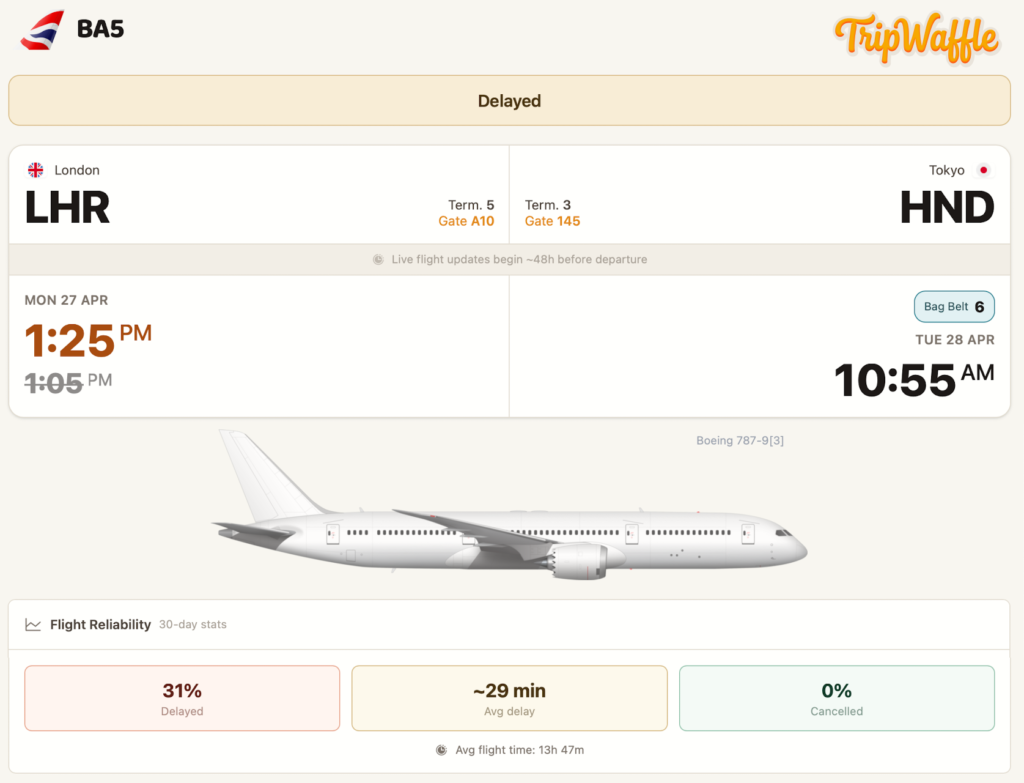
TripWaffle enters at that exact point of friction. Forward the emails, and the app pieces together the story of the trip. Flights, stays, trains, and other bookings stop acting like loose scraps and start reading like one journey. That move gives the app a stronger pulse than a static itinerary because it does more than store data; it reads the trip and pulls useful meaning from it.
Such travel intelligence is where the story gets more interesting. TripWaffle can surface visa needs, weather-based packing ideas, lost luggage risk, and even a jet lag forecast. None of that feels flashy for the sake of it. Each piece answers a question travelers often remember too late, usually while standing in line, searching a signal-starved phone, or wondering why no app warned them before they left home.
Guy strips the sales pitch down to one blunt thought: “We’re selling relief.” Plenty of software claims to save time, but relief is a richer promise. Relief means fewer tiny decisions, fewer missed details, and less of that nagging fear that something important is still hiding in the inbox. For frequent fliers and leisure travelers alike, that emotional gain may matter more than any technical brag.
Narrative matters here because travel itself is a chain of moments, not a spreadsheet. One train delay can shake a hotel check-in. One missing baggage tag can sour the first night of a long-planned holiday. One visa surprise can wreck the trip before it starts. TripWaffle seems to understand that travelers do not merely want storage; they want a guide that reads ahead a little and whispers the right warning before trouble hits.
Relief Wins
TripWaffle’s early traction hints at a wider hunger in travel tech. Users from Australia, the United States, the United Kingdom, Canada, and Norway sit among its strongest signup groups, with growing use in places like Brazil, Singapore, India, and the Netherlands. That spread matters because it shows the app is not chasing one narrow travel habit or one single market. Messy inboxes, after all, speak every language.
A broader point sits underneath the growth. AI talk often turns grand, vague, and self-congratulatory. TripWaffle feels more grounded because the job it tackles is obvious, daily, and easy to grasp. Travelers do not need a machine to flatter them with platitudes. They need help finding the hotel address, knowing whether a visa rule applies, and packing the right jacket when the weather turns cold two time zones away.
That practical focus may explain why the app feels timely without sounding noisy. Older itinerary tools helped people store plans. TripWaffle pushes further by making the plan feel aware of the trip around it. Such awareness gives the app more weight than a passive organizer, yet it avoids drifting into gimmick territory because every extra cue ties back to a real travel headache.
Pressure builds quickly when people travel for work. Pressure builds even faster when families travel for rest and find themselves doing admin all the way to the gate. TripWaffle speaks to both groups with a message that lands cleanly: a travel app should lighten the trip before the traveler feels the strain. That idea gives the company a sharp lane in a crowded market, and it gives users something rarer than convenience. It gives them a better chance to enjoy the journey while the app quietly handles the logistics storm behind the scenes.
Want to try it for yourself? It’s available on both iOS and Android.