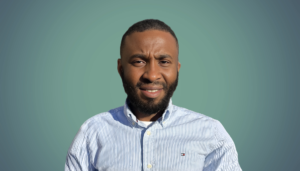
Percival W. Dyer II has spent his career moving between rooms where decisions carry weight. He coordinated papers for a U.S. president at an international trade summit. He interned at the U.S. Department of Justice during Janet Reno’s tenure. Now he is building a startup from New York with two goals that most people would treat as separate: protecting buildings from floods and tornadoes, and rebuilding the economic foundations of Black communities across America. Timbuktu’s Cornerstone sits at the intersection of both.
A Construction Concept Built Around Protection
The problem Dyer is targeting is not subtle. The United States ranks second globally in natural disaster frequency, and flood damage alone costs the country between $180 billion and $496 billion each year. Along coastlines from the Carolinas to California, the same story repeats: a storm arrives, water rises, and property that took decades to build gets destroyed in hours.
The current standard response in construction is slow and labor-intensive. Companies lift a home off its foundation, prop it onto new timber framing, and leave it elevated. Dyer’s concept takes a different position. The flood protection mechanism at the center of Timbuktu’s Cornerstone would allow a building to be raised at the point of need — a process he describes as being activated with a single switch.
The company is also developing a second device aimed at tornado resistance, targeting communities across the Midwest and South where tornado activity is high and rebuilding after destruction can become a repeated cycle. Taken together, the two products point to a market spanning homeowners, insurance carriers, local and state governments, federal agencies, and the automotive sector.
“Failing is only a part of the learning process,” Dyer said in an interview. “As long as you don’t stop, what’s going to eventually happen, inevitably, is you’re going to succeed.”
The company is currently at the prototype stage. As the project moves toward a working demonstration model, Timbuktu’s Cornerstone is open to discussions with investors while continuing to engage government and commercial stakeholders.
From the State Department to the Construction Site
Dyer’s path to construction is not the obvious one. He holds a Master of Arts in International Studies from Morgan State University and is completing a doctorate in Political Science at Howard University. His earlier career placed him at the U.S. Department of State as APEC Coordinator during the 2001 Asia-Pacific Economic Cooperation summit in Shanghai, where he managed briefing materials and documentation for President George W. Bush and Secretary of State Colin Powell.
Dyer’s background does not read like a standard construction résumé. Even so, it reflects years spent working inside large public systems where planning, coordination, and public impact matter. Timbuktu’s Cornerstone draws on that same sensibility in its work around property protection and community rebuilding.
Rebuilding More Than Buildings
Disaster protection is one arm of what Timbuktu’s Cornerstone aims to do. The other reaches further back into American history. The organization operates as an umbrella network for Black-owned businesses, with a stated mission of rebuilding the commercial districts that thrived in cities across the country.
The model is deliberately broad. Timbuktu’s Cornerstone plans to connect real estate developers, construction companies, banks, restaurants, and small retailers under a shared infrastructure, drawing entrepreneurs together through events, training programs, and campaigns targeting Black fraternities, sororities, and community leaders nationwide.
“I’d like to build from the bottom up and give other people a unique opportunity to have businesses of their own,” Dyer said. “We all aspire to have the American Dream — but we are lagging behind in certain respects. So to level that playing field, I decided to start this company.”
The connection between the two sides of the company is deliberate. Storm and flood losses often hit hardest in communities with fewer resources for insurance, repairs, and recovery. In Dyer’s view, a construction business focused on protecting property and a network focused on rebuilding Black economic communities are addressing related problems from different directions. One aims to reduce damage before it happens. The other speaks to recovery and rebuilding after loss.
The company remains in development, and its next test is simple: turning the idea into a working model. Yet the broader vision already stands out, linking the work of protecting buildings with the longer work of helping communities rebuild and hold their ground.