
The prevailing narrative in venture capital suggests enterprise software takes decades of corporate management experience to build. That assumption looks increasingly broken.
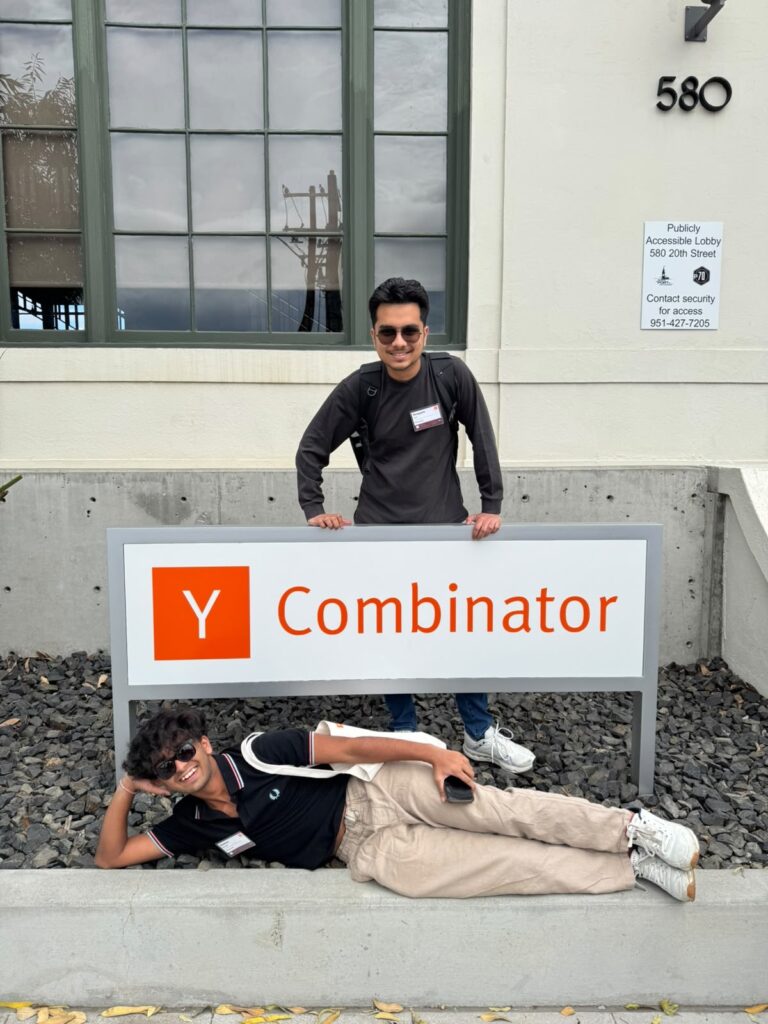
Naman Bansal and Shreyans Jain are eighteen years old. They hold no university degrees. Yet their startup, Manicule (YC P26), just secured $1.3 million in seed funding, co-led by Y Combinator and Broom Ventures, alongside strategic tech angels. Operating out of San Francisco, the two founders are taking down legacy software vendors by engineering automated systems that force AI platforms to use and recommend their clients.
Their technical thesis grew out of early, obsessive immersion in code and distribution rather than institutional schooling.
Building From Agra at Age 13
Naman Bansal, CEO of Manicule, grew up in Agra, India. While his peers spent their early teenage years inside conventional classrooms, Bansal stepped straight into the global tech ecosystem. At age 13, he began working as a fractional Developer Relations operator for overseas technology companies.
Over five continuous years of running technical distribution, shipping content, and founding a prior startup, Bansal dissected the mechanics of software discovery. When developers abandoned search bars for LLM prompts, he saw software distribution break down in real time.
“The fundamental unit of software discovery has shifted from the Google search query to the AI prompt,” said Bansal. “Passive tracking dashboards don’t bring in customers. We handle the execution end-to-end so AI models don’t just mention our clients; they are chosen and used.”
The influx of capital into passive visibility trackers annoyed him. He recognized that vendors charged astronomical prices for vanity graphs while offering zero operational solutions. Bansal decided to build an automated engine that solved the technical integration directly. He brought on a technologist with unmatched production speed to build the technical foundation.
Bypassing College for Production Systems
Shreyans Jain, CTO of Manicule, started programming at age 14. Rather than sit for university entrance exams, he completely bypassed the college path.
Jain joined Supermemory as a founding engineer. In his mid-teens, he built the consumer product single-handedly and scaled its Model Context Protocol (MCP) server to over 100,000 active users. He authored two-line SDK integrations that became core primitives across third-party artificial intelligence applications.
Living inside production codebases, Jain observed that foundation models constantly hallucinate technical syntax, fabricate dependencies, and miss developer tone.
“Foundation models struggle with developer tone and technical accuracy,” added Shreyans Jain, Co-Founder and CTO. “We treat this as an engineering problem, building custom agent rails internally to bridge the gap between AI automation and technical precision.”
Beating Incumbents with Lean Execution
Bansal and Jain founded Manicule in 2026, pairing Bansal’s strategic mastery of developer markets with Jain’s systems engineering skill. Instead of hiring bloated teams or relying on standard agency retainers, they automated high-friction workflows like technical writing and distribution using internal agent pipelines.
Their architecture allows their team to run at 5x the capacity of legacy marketing agencies while delivering direct, measurable business ROI. Enterprise customers including PromptLayer, Bright Data, Courier, and Supermemory adopted their infrastructure early.
The venture market validated the model when Y Combinator backed the startup.
“Manicule is at the frontier of how software will be discovered and purchased going forward,” said Aaron Epstein, General Partner at Y Combinator. “It’s no longer about humans deciding what tools to buy; agents are making these decisions, and strong AgentRel will determine who the big winners will be.”
The $1.3 million seed capital will finance core engineering hires, expand automated agent workflows, and scale technical capacity for enterprise accounts. Bansal and Jain are targeting the $170 billion developer tools sector first before expanding into enterprise software at large.
Manicule’s success shows that the emerging agent economy rewards operational velocity over legacy corporate playbooks. At eighteen years old, Bansal and Jain are constructing the technical rails that govern how artificial intelligence interacts with software.