
The traditional image of a serious gym is largely defined by quantity. Long dumbbell racks cover entire walls, multiple machines are dedicated to individual movements, and large pieces of cardio equipment occupy permanent sections of the floor. That arrangement makes sense in a commercial facility serving hundreds of members, but it has also influenced how fitness equipment is evaluated for the home.
A well-equipped home gym does not necessarily need to follow the same model. As home fitness has matured, equipment manufacturers have begun paying closer attention to how much training can be built into a smaller collection of products. The goal is no longer simply making gym equipment compact enough to fit inside a house. More useful designs are finding ways to preserve training variety and workout intensity while reducing the amount of equipment needed to achieve it.
FED Fitness is leaning into that idea with products such as the Feierdun DB1 Adjustable Dumbbell Set and Yosuda R2 Air Resistance Rowing Machine, two very different pieces of equipment that approach the same residential challenge from opposite directions. One consolidates a collection of free weights into a single system, while the other brings a demanding, full-body cardio workout into a machine designed around home use.
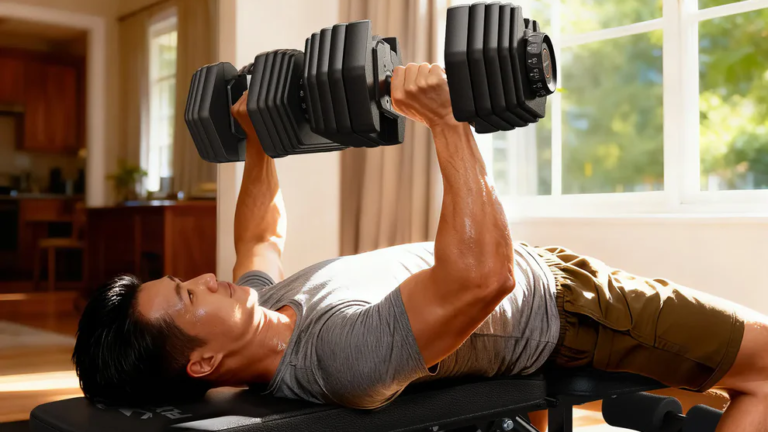
Adjustable dumbbells have become increasingly common in home gyms for an obvious reason. A traditional dumbbell collection requires considerable space long before reaching the heavier weights used for strength training. The DB1 replaces much of that collection with a weight range spanning 5 to 52.5 pounds, using a dial system that allows adjustments in seconds.
FED Fitness takes the concept further with independently adjustable dials on each side of the dumbbell. The dual-increment design creates 15-by-15 weight combinations, allowing each end to be adjusted separately rather than forcing the entire dumbbell to increase in fixed increments.
That degree of control can be particularly useful when moving between exercises. The weight appropriate for a shoulder raise may be considerably different from the weight used for a squat or row, and strength does not always progress in perfectly even jumps. Smaller adjustments allow training loads to change more deliberately without requiring another pair of dumbbells.
The DB1 can also shift between dumbbell and kettlebell training, extending the number of movements possible from the same compact system. Traditional strength exercises can be followed by kettlebell-style swings or other dynamic movements without adding another collection of weights to the room.
For a home gym, that versatility has practical value beyond saving floor space. Fewer pieces of equipment can make workouts easier to organize and reduce the time spent moving between stations, particularly when training in a bedroom, garage, or shared living space. The alloy steel construction also gives the DB1 the durability expected from equipment designed for regular strength training rather than occasional use.
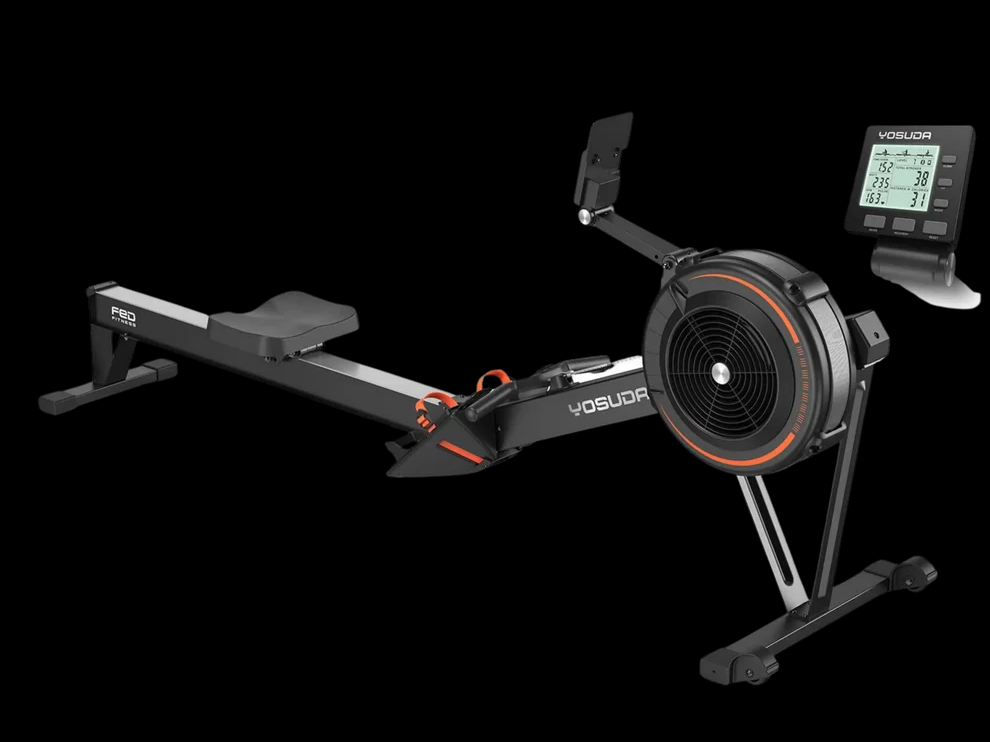
The Yosuda R2 Air Resistance Rowing Machine addresses space and performance in a different way. Rowing has long appealed to home exercisers because a single movement can involve much of the body while placing significant demand on the cardiovascular system. Air resistance adds another dimension to the workout because intensity responds directly to effort. A harder drive produces greater resistance, allowing the machine to move naturally between steady endurance sessions and short, aggressive intervals.
That responsive quality makes the R2 particularly well suited to high-intensity interval training. There is no lengthy adjustment process between easy and difficult efforts; resistance increases with the power of each stroke. The result is a workout that can change immediately based on pace and effort.
FED Fitness has paired that air-driven system with a stable drive and commercial-grade construction intended for repeated training. The machine is designed to accommodate a range of body types while providing workout data and training guidance, giving users more information than simply elapsed time.
Perhaps equally important in a residential setting, the R2 is designed to be moved and stored more easily when a workout is finished. Cardio equipment presents a unique problem in home gyms because its footprint can be difficult to justify during the many hours each day when it is not being used. Mobility and storage become part of the equipment’s usefulness rather than secondary conveniences.
Together, the DB1 and R2 illustrate a different way of thinking about home gym design. Instead of attempting to reproduce every station found in a commercial facility, a smaller number of adaptable products can cover strength, conditioning, endurance, and high-intensity training.
That approach reflects how home fitness has changed. Equipment is increasingly expected to earn the space it occupies. A product that performs one narrow function may be harder to justify when another can support multiple exercises, training styles, or levels of intensity.
FED Fitness appears to understand that the limitations of a home gym are not necessarily limitations on training. They are often limitations on space, storage, and the number of products a household realistically wants to accommodate.
The Feierdun DB1 Adjustable Dumbbell Set and Yosuda R2 Air Resistance Rowing Machine solve those problems differently, but both make a strong case for a more edited approach to fitness equipment. A serious workout space does not have to be filled wall to wall with machines and weights. With equipment designed to adapt, fewer pieces can carry considerably more of the training load.