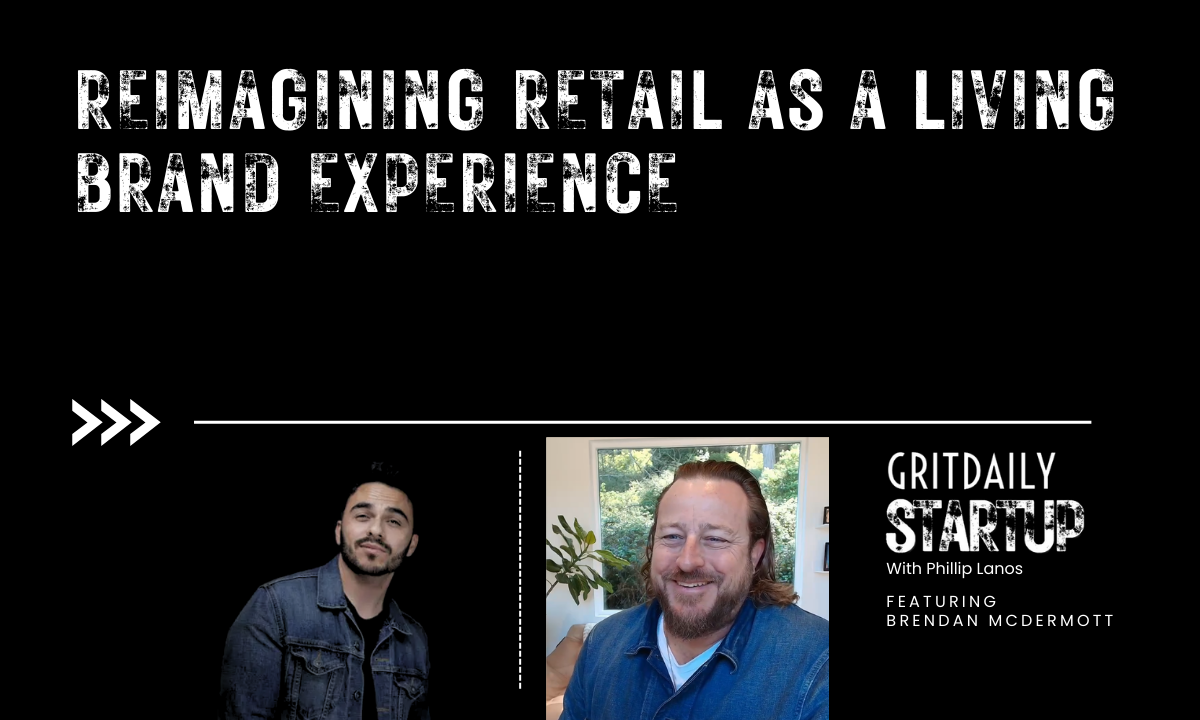
Retail design has always been about more than fixtures, signage, and floor plans. At its best, it shapes how a customer feels before they ever reach the register. Brendan McDermott, Principal and Founder of Freehold Group, has built his company around that idea, helping some of the world’s most recognizable brands translate identity into physical space with a level of precision that blends strategy, storytelling, fabrication, and logistics.
Under McDermott’s leadership, Freehold Group has become one of the country’s leading retail design, fabrication, and installation agencies by focusing on a challenge many brands underestimate: consistency at scale. In an era when every brand wants to feel immediate, cultural, and relevant, the question is no longer whether physical retail still matters. It is whether a brand can make every in-person touchpoint feel intentional.
That is where McDermott’s work stands out.
Freehold Group operates at the intersection of creativity and execution, where brand ideas have to survive the realities of compressed timelines, budget constraints, overnight installations, and nationwide rollouts. The work can begin with a flagship concept or a major cultural activation, but it does not end there. The real test is whether that same energy can be translated into partner doors, specialty displays, and retail environments across multiple locations without losing coherence.
For McDermott, that challenge begins with understanding that experiential marketing is not limited to large-scale activations or headline-grabbing events. It is embedded in every interaction a consumer has with a brand. The feel of the store, the flow of the space, the way product is introduced, the visual language at checkout, even the atmosphere created by staff and surroundings all contribute to the story a company tells. A product may be what brings someone in, but the surrounding experience is often what defines the brand relationship.
That philosophy helps explain why Freehold Group has become a trusted partner for major clients such as Nike and Gap. With Nike, the company recently helped bring to life an ambitious series of retail rollouts tied to a larger cultural moment, culminating in a major activation in Inglewood that included a large-format branded tent and basketball court. The scope reflected the kind of experiential work that demands both creativity and operational discipline. It was not enough to make the event visually impressive. It had to feel unmistakably Nike, aligned with the brand’s message, energy, and cultural positioning.
McDermott approaches those projects by treating every touchpoint as purposeful. Nothing is there simply to fill space or signal innovation. Digital elements, displays, and environments must all serve the story being told. In a crowded retail and media landscape, that restraint matters. A screen or installation only adds value if it deepens the customer’s understanding of the product, the moment, or the brand itself.
That same discipline is visible in Freehold Group’s work with Gap and Old Navy. For Gap, the company helped bring the brand’s Flatiron flagship to life while also helping shape design thinking for broader store applications. For Old Navy, Freehold Group supported the rollout of in-store beauty shop concepts, creating shop-in-shop environments that introduced a new category into a familiar retail setting. The move was not just about adding product. It was about expanding the consumer experience in a way that felt natural to the store while opening the door to new forms of engagement.
These kinds of projects reveal a broader shift in retail. Brands are no longer relying only on full-scale remodels to reset customer perception. Instead, they are increasingly using flexible moments inside the store, seasonal zones, targeted installations, and category-specific environments to refresh the experience while staying mindful of cost and operational reality. McDermott understands that most retailers cannot rebuild entire fleets every season. What they can do is create meaningful moments that keep the store alive, relevant, and aligned with larger brand narratives.
That balance between ambition and practicality has helped define Freehold Group’s growth. The company is not simply designing for spectacle. It is building systems that allow brands to express themselves clearly across different formats, footprints, and markets.
Just as important is the culture McDermott has built inside the company itself. In an industry known for burnout, turnover, and relentless deadline pressure, he has tried to create something more durable. He speaks less about titles and credentials than about values, work ethic, and ownership. Skills can be taught, but the ability to thrive in a high-pressure environment while staying collaborative and committed is harder to manufacture. That belief has shaped Freehold Group’s hiring approach and helped create a team capable of handling large, complicated projects without losing sight of quality.
The emphasis on team culture is not incidental. It is central to how McDermott thinks about the business. A company responsible for creating memorable brand experiences must also know how to create a strong internal experience for the people building them. That means empowering staff, maintaining standards across fabrication and partner networks, and building an environment where people want to stay long enough to deepen both craft and trust.
Looking ahead, McDermott sees experiential marketing moving beyond isolated pop-ups and toward something more integrated. The future, in his view, lies in building broader cultural ecosystems that connect flagship stores, retail fleets, brand spaces, and citywide activations into a unified expression of identity. That kind of work demands more than visual flair. It requires long-term thinking, operational precision, and a deep understanding of how people move through physical space.
Freehold Group’s rise suggests that retail’s next chapter will not be defined by novelty alone. It will be defined by brands that know how to make physical environments feel cohesive, human, and worth showing up for.
For McDermott, that has never been a side detail. It is the work itself.
Want more Grit Daily Startup Show? Take a look at past articles, head over to YouTube, or listen on Apple Podcasts or Spotify.