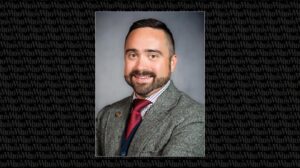

Over the course of a distinguished 37-year career within New York State’s court system, Pablo Rivera played a pivotal role in enhancing judicial operations and encouraging the professional growth of those around him. Rivera’s hand in modernizing court operations, particularly in complex commercial litigation, was critical. His retirement from the New York State Unified Court System did not mark the end of his contributions, as he was asked to serve as a state court specialist with Skadden, Arps, Slate, Meagher & Flom LLP, a role he has held since 2017.
A Humble Start
Rivera did not have an easy upbringing and had to overcome many obstacles to achieve his goals. Along the way, he was motivated by his teachers and his professors to accomplish what others may have thought was impossible for him to achieve.
“When someone tells you that you can’t do something, don’t just accept it. If you fail at it, it won’t be due to a lack of trying. No one has the aptitude to outdo any kind of job or any kind of profession. If there’s something you want to do, don’t let people discourage you. If you fall, you know you did what you had to do and there’s no shame in that. The shame is looking in the mirror and saying, ‘Oh man! I should have done that,” says Rivera.
Rivera acknowledges that his story might be nothing in comparison to what some have gone through in their lives, but he uses his personal experiences to encourage others.
Having an Impact
Rivera started his career as an officer of the court and later became the first deputy chief clerk. In this role, he made significant changes to how complex commercial cases were handled by the court system.
Even though New York City is the financial capital of the world, the court system lacked efficiency in handling such cases. Previous attempts to resolve the issue had failed, so Rivera was selected to head the commercial division. Under his leadership, the division became internationally recognized as the best forum in which to resolve commercial disputes. The changes implemented were so successful that different courts across the globe sent representatives to learn how Rivera’s division performed its business in the New York Court system.
A Perspective on Leadership
When Rivera talks to younger people, he explains his “two sides of a coin” analogy. On one side, he stresses the importance of understanding that decisions can only be made based on the information that’s available. On the other side, he stresses the importance of never putting another person down because you don’t understand their perspective.
“I use this analogy that I made up to explain to people. Take a box, for instance. It has four corners and you’re in one corner, for instance. That’s the universe. That’s what you know at the time. That’s where you live and work. That’s your boundaries. That’s as far as you can see. You can only make decisions sometimes based on the information that you get or are able to perceive. The only information you have is what you have available at that moment and in that space,” Rivera says.
In Rivera’s opinion, a sign of effective leadership is when others can seamlessly carry on the work in the leader’s absence. He regards his efforts in helping others succeed and surpass their mentors as his true legacy.
For Rivera’s leadership in law, he was honored with the Marquis Who’s Who Lifetime Achievement Award in 2024.