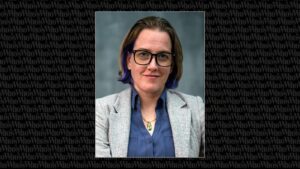

Miranda L. Carpenter, Scientist III at Boehringer Ingelheim Pharmaceuticals GmbH, has spent nearly two decades working at the intersection of patient care and biotechnology. With 18 years of professional experience, her work currently focuses on the rapidly evolving field of immuno-oncology.
Her career has been defined by consistent transitions. What began as a career in transplant diagnostics led Carpenter to the discovery of molecules that could fundamentally change how cancer is being treated today.
Education and Career
Carpenter earned a Bachelor of Science in biology in 2008, followed by doctoral coursework in biochemistry and molecular biology. She eventually obtained a Master of Public Health in environmental health science from New York Medical College in 2010, during which she was named Distinguished Student of the Year. While completing her master’s program, she worked on a U.S. Department of Defense project with Rutgers University, developing countermeasures against chemical threats.
Before launching her scientific career, Carpenter also graduated from the American Academy McAllister Institute of Funeral Service as a licensed funeral director. She was drawn to that role because of her fascination with anatomy and her desire to restore dignity to patients.
Carpenter’s professional experience includes five years at Gen-Probe (now Hologic Inc.), where she focused on transplant diagnostics and HLA typing kits. She then joined Boehringer Ingelheim in 2016, where she has since received an Achievement Award for Milestones in Startup Development.
A Pioneer in Immuno-Oncology
In her current role, Carpenter is responsible for proposing targets and designing bispecific molecules, which are large proteins that engage the immune system. Her duties involve implementing strategic plans, testing the feasibility of molecules for efficacy and receptor binding, and evaluating complex downstream cell signaling pathways.
A significant highlight of Carpenter’s career came with her contribution to a bispecific molecule that advanced to first-in-human clinical trials in 2021. Over a period of four years, she conducted feasibility studies and generated data. Through her work, she contributed to the development of a new drug approved by the FDA that can better support the immune system during tumor treatment.
Carpenter credits her professional success to her deep-seated passion for patient care and a personal interest in discovering new oncology advances. She aims to use innovations such as artificial intelligence to better interpret the tumor microenvironment while she seeks further breakthroughs that might move the industry closer to a true cure.
Research and Publications
Carpenter has contributed extensively to scientific literature, particularly with her research on metabolic disorders, environmental health and personalized medicine. Her published works include “OMICS Strategy Discoveries to Obesity in the Prevention and Personalized Therapy,” “Nutrigenomics Coupling with other OMICS Platform Enhance Personalized Health Care in Metabolic Disorders,” “Improvement Prediction Process Prevent Chronic Diseases From Environmental Threat” and “Integrated Risk Assessment Coupled With Molecular Detection Platform Enhance Personalized Health Care in Metabolic Disorders,” among many others.
Carpenter has also had several poster presentations. These include “Bisphenol-A (BPA) as an Endocrine Disruptor and its Implications on Human Health,” “Regulation of Bisphenol-A Induced Apoptosis in Human Embryonic Kidney Cells,” “Different Aspects of BPA on Public Health as an Endocrine Disruptor in Human Breast Cancer Cells, MCF-7” and “Regulation of Bisphenol-A Induced Apoptosis in Human Embryonic Kidney Cells.”
Looking to the Future
Outside the laboratory, Carpenter is a miniature enthusiast who enjoys building dollhouses. She is also an active member of the Society of Toxicology and volunteers for STEM programs to help inspire future scientists.
In the next five to 10 years, Carpenter aims to deepen her expertise in immuno-oncology. She wants to concentrate on breakthroughs in cancer research and therapeutics, with the goal of advancing toward a cure. She plans to adopt a highly focused strategic framework to deepen her impact and make meaningful contributions to personalized medicine.