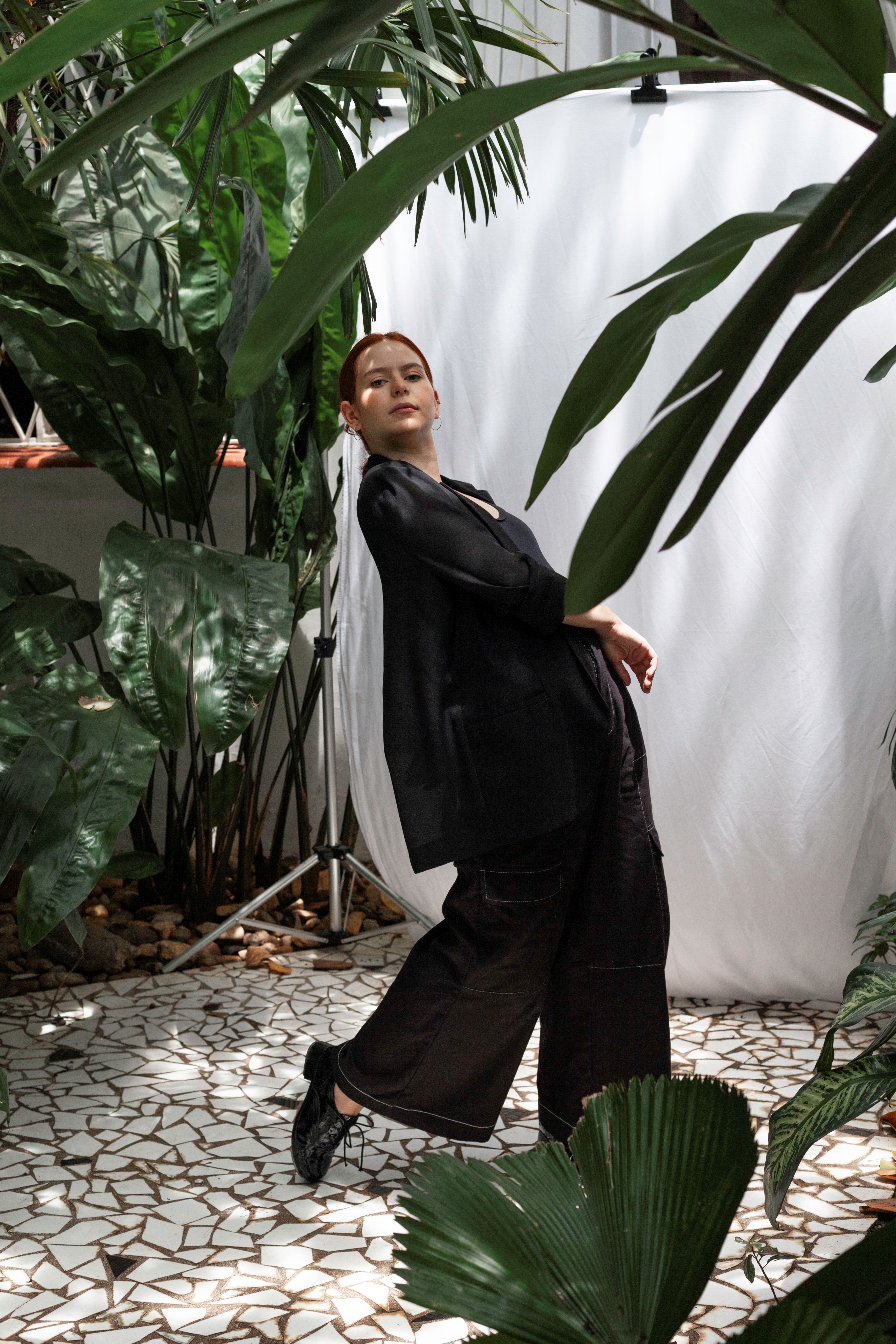
Maria Clara Laet is a tap dancer, choreographer, and historian from Rio de Janeiro, Brazil, currently based in New York City. Maria Clara started her career as a member of the company KatadoS por Aí, where she worked under choreographers including Michelle Dorrance, Steve Zee, and Caio Nunes.
In 2021, she produced, choreographed, and starred in the dance short film Luvemba, which was screened at 14 festivals internationally, including the Future Dance Festival produced by 92NY Harkness Dance Center.
In the United States, she is a dancer at kamrDANCE and performed in renowned venues such as the Apollo Theater in Harlem, the National Jazz Museum, and Arts on Site. She has also performed as a featured artist with the female-led Latin jazz group Cocomama, alongside Max Pollak and Leonardo Sandoval.
Her work, which showcases a unique blend between Brazilian rhythms and culture and the traditions of tap dance and jazz, has been selected by Dormeshia to be a part of the Ladies in the Shoe Tap Conference in 2026 at the 92nd Street Y in New York City.
One of her highlights includes being one of the 25 dancers selected to be a part of the Jacob’s Pillow Tap Dance Ensemble in 2025, directed by Dormeshia and Derick Grant. Additionally, she received the Tap City Award from tap master Dianne Walker at New York City’s Tap Festival in 2013. Maria Clara holds a bachelor’s degree in History from the University of São Paulo and is a lifelong learner.
Brazil-born, New York-based Maria Clara Laet has carved a distinctive path in the world of dance. A celebrated tap dancer, performance artist, and historian, Laet has emerged as an influential choreographer, renowned for her unique ability to fuse the rich tapestry of Brazilian rhythms and culture with the dynamic traditions of tap dance and jazz. Her work not only dazzles but also invites audiences on profound cultural and emotional journeys, reflecting a deep personal connection to every step and story she crafts.
Laet’s journey into choreography began remarkably early, at just 16 years old in Brazil. While performing with her first tap company, ‘Katados por Ai’ (meaning ‘Scavenged Here and There’), she found herself naturally drawn to creating art. “I started by experimenting with my fellow dancers, playing with phrases I would shift, displace, and layer to keep things dynamic,” Laet recalls. “What began as curiosity, naturally grew into creating full pieces.”
This organic evolution underscores a fundamental truth about her choreographic process: it is a direct extension of her work as a performer. “Every idea begins with how my body interprets the music; it has to move through me, through the memory my body carries, before it can be shared with others,” she explains. This deeply personal approach ensures that when she creates or teaches, she isn’t merely imparting steps, but rather “passing on something that has already lived in me,” she notes. “In that sense, a part of me exists in every dancer I’ve worked with.”
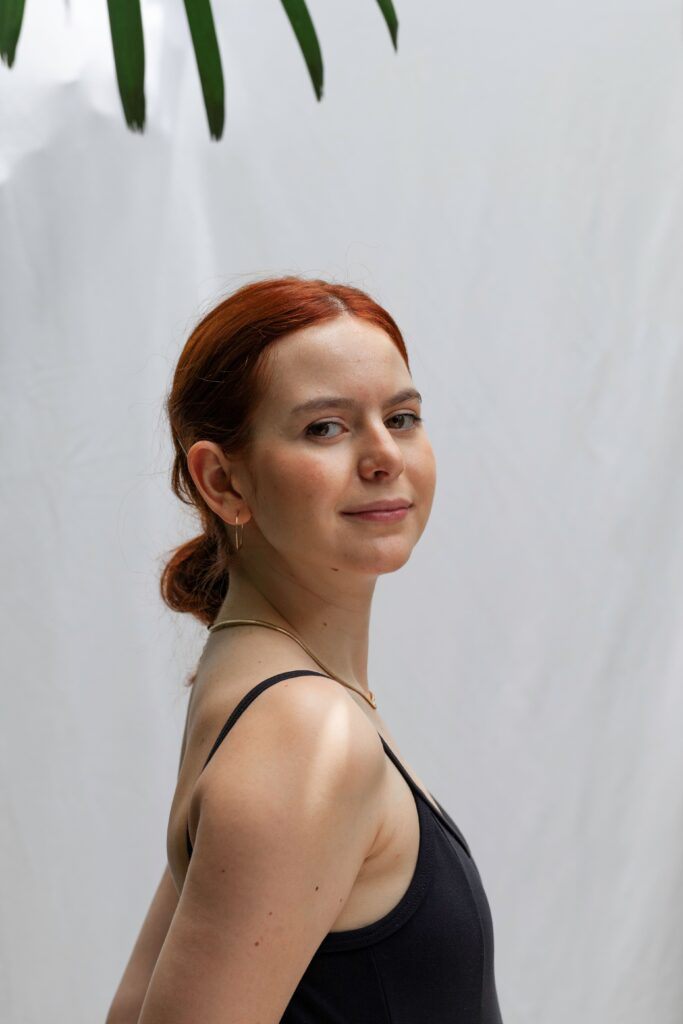
- Image Credit: Maria Clara Laet
Laet’s choreographic voice, rooted in her Brazilian heritage, has been honed by working under esteemed choreographers like Michelle Dorrance (an American tap dancer who was awarded a MacArthur “Genius Grant”), Steve Zee (master tap dancer and teacher who has trained and performed with the Nicholas Brothers), and Caio Nunes (who has danced with Disney) during her time with KatadoS por Aí.
Laet is intentional, not just about the movements, but also the stories that her dance pieces tell. For example, look to the names she gives each piece she creates, choreographs, and performs. Her recent works, “BRASEN” and “yellow-green blues” (co-choreographed with Isabella Serricella), exemplify this, delving into Brazilian grooves through her innovative lens as a tap dancer.
With these pieces, Laet aims to transcend mere observation, aspiring for audiences to “feel the joy and connection, so that they’re inspired to stand up and join me on stage.” Both of Laet’s choreographed works were developed and performed in collaboration with the Rhythmic Arts Center’s monthly Time Share event. The high-profile venue is the first studio in New York City designed specifically for percussive and rhythmic arts in the heart of Spanish Harlem.
“Yellow-green blues” subsequently graced the stage of the prestigious Ladies in the Shoe Tap Conference, as part of the Uptown Rhythm Dance Festival at 92nd Street Y in New York City in March, marking a significant milestone. The 92nd Street Y is a world-class cultural and community center that has been operating for over 150 years, and has had major public figures give talks at the venue, from Oprah Winfrey to Demi Moore and Sharon Stone.
One of Laet’s most defining moments as a choreographer and performer came with her appearance at Amateur Night at the Apollo Theater, a venue notoriously known for its demanding audiences. Making it to the quarterfinals, she choreographed a solo performance to “Brasileirinho,” one of Brazil’s most iconic and influential choro songs, composed by Waldir Azevedo in 1947. This choice was deliberate and bold, as she knew she had only “seconds to win the audience over or risk being booed offstage.” At the Apollo, where “there’s rarely a middle ground,” Laet understood the imperative to “begin strong, bringing Brazilian culture, joy, and liveliness in an unmistakable way.”
The fast-paced melody of “Brasileirinho” presented a considerable challenge, requiring her to sculpt dynamic contrasts within the choreography to prevent monotony, while maintaining relentless energy to captivate the audience. It was also a rigorous test of stamina. Laet meticulously crafted a short piece brimming with intricate, flashy steps, performed on a small tap board that allowed her precise control over the sound. “That night demanded precision, endurance, and presence—and I’m grateful it earned the audience’s approval,” she said, highlighting the intensity and skill required to command such a legendary stage.
Beyond live performance, Laet has also made a profound impact in the realm of dance film. In 2021, she choreographed and starred in the acclaimed dance short film “Luvemba.” The film garnered international recognition, screening in 14 festivals worldwide, and was selected by Michelle Manzanales of Ballet Hispanico as part of the Future Dance Festival by 92NY in 2022.
For “Luvemba,” Laet’s choreographic approach was guided by a pursuit of authenticity. “What made this piece to the film, in terms of choreography, were the simplest choices,” she explains. During a phase where she found herself endlessly editing her creations, she rediscovered the power of initial, intuitive ideas.
“I realized my very first ideas were usually the best ones because they came from a more intuitive and natural place,” she says. This led her to ask, whenever she felt herself overthinking, “What is the essence of what I’m trying to communicate? What is the objective with this step?” The resulting choreography for “Luvemba” was characterized by a profound sense of “release in the body,” precisely the feeling she aimed to convey to her global audience.
Looking ahead, Laet is embarking on new creative territories, making bold choices that continue to blend her signature Brazilian rhythms with tap dance. Her current ongoing project explores the complex subject of grief through a narrative and theatrical lens.

- Image Credit: Maria Clara Laet
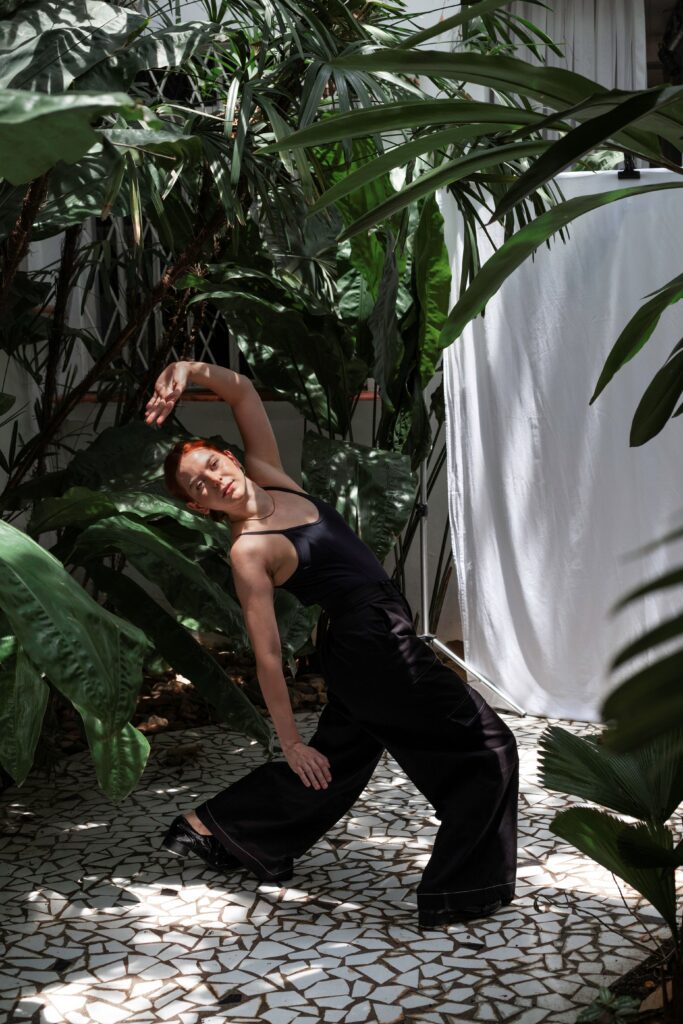
“In Brazilian culture, death and grief take on many forms and meanings, and I want to bring these layered perspectives and questions to the concert stage,” Laet said, touching upon a rich aspect of her cultural heritage.
This poignant project exclusively features music by Brazilian artists, a conscious decision to broaden perceptions of Brazilian musicality. “My intention is to show that our music not only encompasses traditional rhythms but also extends far beyond them,” she said. “From funk to soul to jazz, we have created our own distinct expressions—rich, beautiful, and uniquely ours.”
She is deeply interested in how these diverse Brazilian forms engage with tap dance—a percussive art form not indigenous to Brazil, but historically and culturally linked through the shared legacy of the African diaspora, which profoundly informs many Brazilian cultural practices. This exploration promises to be a powerful testament to the intricate historical and artistic connections between these art forms.
Beyond her formal choreography, Laet is also celebrated for her astonishing skill in improvisation, a demanding art form that allows her to create beautiful, well-constructed acts on the spot in collaboration with other musicians and artists. This mastery is the culmination of years of dedicated practice.
“I don’t think I’ll ever be finished studying and practicing improvisation or working on how to construct dialogue with musicians; I truly believe there is always room for growth,” she humbly admits. The key, she stresses, lies in solitary practice. “No audience—just me, my tap shoes, a wooden floor, and a great deal of self-compassion, with full permission to make mistakes.”
She distinguishes this from performance, rehearsal, or even class. “Practice, for me, means being alone and going inward, diving deeply into yourself and your essence so that you can offer the most authentic version of who you are to the world.” This profound introspection is what enables her to perform as a featured artist with groups like the female-led Latin jazz group Cocomama and alongside luminaries such as Max Pollak and Leonardo Sandoval.
Maria Clara Laet’s contributions to dance continue to garner significant recognition. She is currently a dancer with kamrDANCE and has performed in esteemed venues across the U.S., including the National Jazz Museum and Arts on Site. Her distinctive work, a vibrant marriage of Brazilian culture and tap traditions, has been personally selected by tap legend Dormeshia to be a part of the Ladies in the Shoe Tap Conference in 2026 at the 92nd Street Y. Additionally, she holds the distinction of being one of only 25 dancers chosen for the prestigious Jacob’s Pillow Tap Dance Ensemble in 2025, under the direction of Dormeshia and Derick Grant. Early in her career, in 2013, she received the Tap City Award from tap master Dianne Walker at New York City’s Tap Festival. A lifelong learner, Maria Clara also holds a Bachelor’s degree in History from the University of São Paulo, underscoring the intellectual depth that enriches her artistic practice.