Aaron Courseault does not need a grand stage to make his point. He needs a gym, a ball, and a room full of kids who have been taught to size each other up before they ever speak. Inside Agents of Change Basketball, that habit starts to crack. Over time, a pass, a screen, and a shared goal begin to do what speeches rarely can: pull strangers close enough to see one another clearly.
More Than Drills
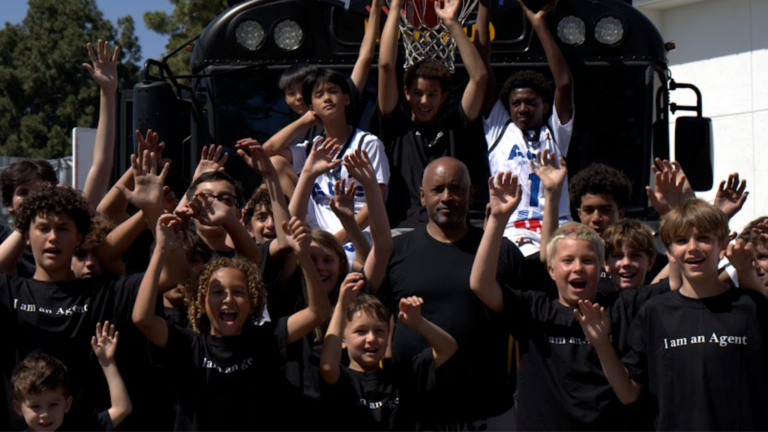
Courseault founded Agents of Change Basketball in 2013, and the aim was plain from day one. Basketball would bring kids through the door. Life would do the heavier work once they stepped inside. Over the past decade, the program has reached more than 1,000 young people across Los Angeles County.
As the program grew, Courseault did not build it alone. His good friend, Brian Part, helped shape Agents of Change into what it is today, bringing deep experience, steady leadership, and a shared commitment to making the game accessible to families from all backgrounds. While Courseault remains the face of the program and the driving force behind its vision, Brian has played a central role in helping turn those beliefs into something lasting and tangible.
Numbers tell only the first layer. Some players arrive with steady homes, reliable rides, and space to dream. Others walk in carrying stress that never shows up on a stat sheet, from money strain to family chaos to the dull ache of feeling ignored. Courseault puts them on the same side, asks them to trust one another, and lets the game strip away the masks they wear outside the gym.
That choice gives the program its pulse. Winning matters, but winning alone cannot carry a kid through a hard week, a rough home life, or the fear of being written off early. Real value lies in the habits built around the game: showing up on time, speaking with care, owning mistakes, and learning that another person’s struggle does not make them weak. Basketball is the hook, yet belonging is the deeper prize.
Los Angeles has no shortage of youth teams. Plenty of them teach footwork and shooting form. Few places, though, treat the court like common ground for kids who would rarely meet in any other room. That collision of backgrounds gives Agents of Change its charge. Privilege meets hardship. Confidence meets hunger. Each side walks away altered by what the other carries.
Where the Gym Gets Loud
Late afternoon in Santa Monica, the gym starts speaking before anyone does. Balls drum against the floor. Shoes squeal in sharp bursts. Teenagers call for the ball, clap for a stop, laugh at a miss, and race back the other way before the sound can settle. Energy fills the room fast, yet the deeper drama hides in smaller scenes.
A player lingers after practice to rebound for a teammate whose shot still comes out crooked. A coach pulls a kid aside after a bad stretch, and the talk turns toward patience, not blame. Parents from very different corners of the county wind up side by side in the bleachers, cheering for the same group. Walls that felt sturdy outside the gym start to thin once everyone has a child wearing the same jersey.
Courseault sees that change in the silence after a tough loss just as clearly as in the noise after a win. Kids learn who keeps talking when the scoreboard turns cold. They learn which teammate checks on them, which adult keeps showing up, and which kind of strength matters when pride takes a hit. Aaron Courseault puts it plainly: “We’re not just building players. We’re building people. We’re building perspective. We’re building something that lasts.”
Brian’s influence on Agents of Change reaches far beyond his title. There was a point when Courseault was ready to stop teaching basketball altogether, but Brian talked him out of it. Courseault is clear about what that meant: without Brian’s friendship and guidance, Agents of Change would not be what it is today. That history helps explain why Brian is no longer simply a trusted presence behind the scenes. Now, he leads Courseault’s girls division of Agents of Change, helping extend the program’s mission to even more young athletes and families.
That line rings true because the program is not built on fairy-tale moments. Growth shows up in ordinary flashes. One child who used to snap at teammates starts listening. Another who barely spoke at all begins calling out a play with real force. A bench erupts for a kid who spent weeks feeling invisible, and a small piece of that kid’s life changes right there, with everybody watching.
Family starts to mean something wider in a room like that. Blood does not decide it. Money does not decide it. Repetition does. Shared effort does. Kids who once guarded their private pain like a secret begin to relax around people who have earned the right to stand near it. Parents see it too, and their own caution starts to soften when they realize their children are learning how to care for people unlike themselves.
The Game After the Game
Results like these do not fit neatly into a trophy case. The first Agents of Change team started with 5 players. Years later, those five have moved into pro basketball, military service, entertainment, and sports media roles at Fox Sports Radio and ESPN. Different roads came after one shared beginning.
That early group matters because it hints at what the program can set in motion. One child may leave with a smoother jump shot. Another may leave with a steadier sense of self. A third may leave with the first serious mentor they have ever had. Courseault’s work lands hardest in that last category, where guidance can reroute a life before trouble hardens into identity.
Brian’s résumé helps explain why his role in that work matters. As head girls coach at Crossroads High School, he took a program that had been near the bottom of the league and helped elevate it into a top-three team, posting 19- and 21-win seasons. Before that, he spent more than a decade as associate head coach of Santa Monica boys varsity basketball and has been part of that program for more than 20 years. Those credentials give him authority, but inside Agents of Change, what stands out most is the consistency with which he shows up for players and families alike.
Money remains one of the cruelest gates in youth sports, and Courseault has chosen to fight that gate head-on. During the past year, Agents of Change gave more than 123,000 dollars in scholarships so financial strain would not keep kids off the floor. That choice carries weight far beyond one season. A family under pressure gets breathing room. A child on the edge of dropping out gets one more place where adults expect something good from them.
Plenty of adults speak about community in broad, polished terms. Courseault’s version looks messier and more real. It sounds like sneakers scraping across hardwood, a coach calling a kid back after a bad decision, and a group of families learning each other’s names because the children have already done the hard part for them. Basketball gives the room its rhythm. Human connection gives it meaning.
A city as large and unequal as Los Angeles can teach young people to stay in their lane and mistrust anyone outside it. Agents of Change pushes the other way. One pass asks for trust. One screen asks for a sacrifice. One team asks a child to believe that their story is still being written, and that somebody in the gym cares how the next chapter reads.