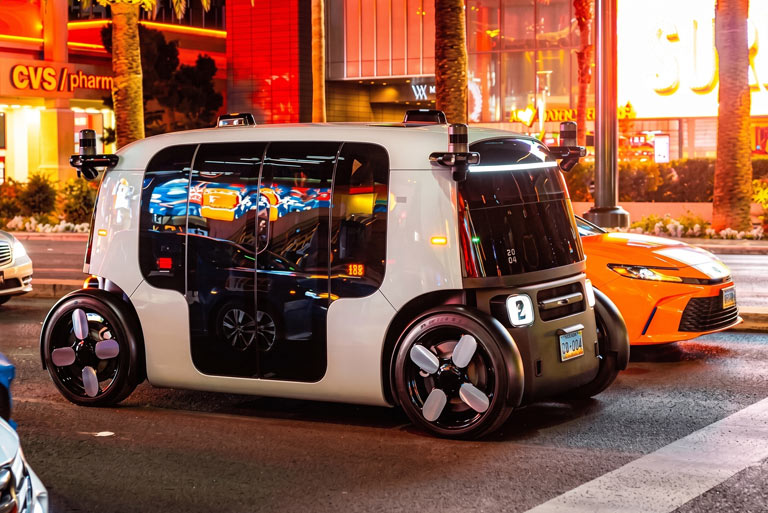
Las Vegas is famous for hospitality, but it has quietly transformed into the ultimate testing ground for mobility tech. With fleets of autonomous robotaxis mapping the grid and navigating the Strip, the city is a living laboratory for transportation startups.
This disruption brings a massive legal complication. When an algorithm-controlled vehicle crashes, the traditional framework of traffic law completely buckles. Establishing liability is no longer a simple matter of driver versus driver. According to Ben Bingham, Esq., a Las Vegas car accident lawyer who handles modern collision claims, victims are now forced into complex battles against corporate algorithms and tech company legal teams.
The Liability Puzzle of Autonomous Tech
Traditional personal injury law relies heavily on human negligence. If a driver runs a red light, they are at fault. But autonomous vehicles operate under Chapter 482A of the Nevada Revised Statutes, which explicitly permits highly automated vehicles on public roads. When one of these vehicles causes an injury, the legal question shifts from human error to product liability.
Who is responsible when a crash occurs? It could be the manufacturer of the LIDAR sensors if the hardware failed. It could be the software developer if a coding bug miscalculated a braking distance. If there is a human safety operator present in the vehicle, they might share the blame for failing to take control. This fragmentation means that securing compensation for medical bills and lost wages requires attorneys to subpoena software logs and proprietary tech data just to figure out who to sue.
Real-World Variables on the Strip
Startups use Las Vegas because the environment is incredibly challenging for machine learning. The Strip features erratic pedestrians, unpredictable tourist drivers, and constant construction zones. While autonomous algorithms are designed to obey traffic laws perfectly, they struggle with human unpredictability.
Recent data shows that many accidents involving autonomous tech happen because human drivers rear-end the robotaxis when the software executes a sudden or overly cautious stop. While the tech companies often point to the human driver as the at-fault party, the underlying programming that caused the abrupt stop is increasingly coming under legal scrutiny. It forces the courts to ask if a machine being “too cautious” is actually a driving hazard.
The “Black Box” Discovery Phase
One of the most significant shifts in modern litigation is the move toward digital discovery. In a standard crash, witnesses provide testimony; in an autonomous crash, the most important “witness” is the vehicle’s onboard data recorder. This “black box” tracks everything from sensor perception to the exact millisecond a braking command was issued. For a Vegas Personal injury lawyer, the challenge lies in forcing tech giants to hand over this data, which is often guarded as a “trade secret,” yet remains the only objective way to prove a system failure occurred.
Shifting the Insurance Landscape
As we move toward a driverless future, the insurance industry is being forced to pivot from individual premiums to massive corporate liability policies. This change impacts how settlements are negotiated. Tech companies backed by venture capital have significantly deeper pockets than the average driver, but they also have the resources to drag out litigation for years. This shift ensures that the legal battleground of the future will be fought in the fine print of software licensing agreements and commercial insurance tiers rather than simple police reports.
The Future of Traffic Court
Startups will continue to view Nevada as the perfect sandbox to scale mobility tech. The local economy benefits heavily from this innovation. However, until federal and state legislation catches up with technological disruption, the burden of holding these companies accountable falls largely on local civil courts.
For entrepreneurs and everyday drivers navigating the city, driving in Las Vegas has fundamentally changed. You are sharing the road with beta tests and complex corporate liability structures. Knowing how the legal system is adapting to these machines is now a mandatory part of participating in the modern transportation economy.