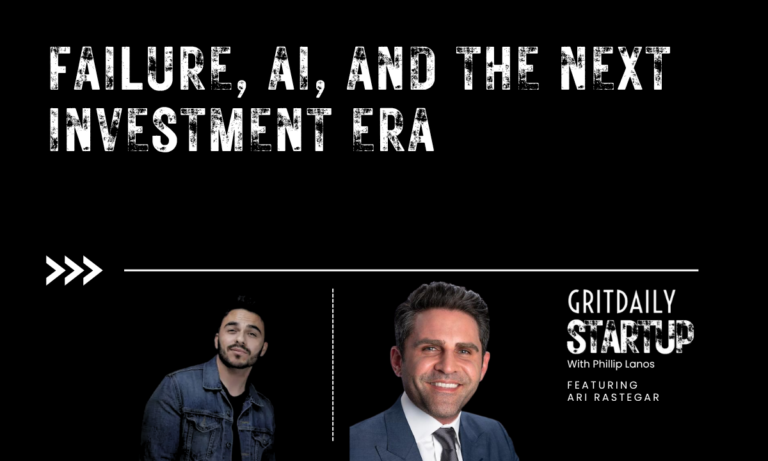
Ari Rastegar sees the current business landscape as more than a market shift. To him, it is a structural reset.
The founder of Rastegar Capital has built his reputation in real estate, investing, and market commentary, earning recognition as Forbes’ “Oracle of Austin.” But his view of the future now extends well beyond one asset class. Rastegar believes the convergence of AI, debt cycles, geopolitical instability, interest rate shocks, housing shortages, and new construction technology has created a rare opening for reinvention.
Real estate remains central to his work, but he sees the industry itself as overdue for transformation. The way buildings are permitted, financed, constructed, and delivered has changed far less than most people realize. While software and financial markets have evolved rapidly, much of construction still depends on systems that have been in place for decades.
That matters because the United States is millions of homes short of what it needs. Housing construction has historically been one of the largest job-creation engines in the economy, requiring trades, logistics, land work, financing, and development expertise to come together in one place. Yet the tools used to meet that demand are increasingly outdated.
Rastegar sees technologies such as AI, robotics, and 3D printing as part of the next wave. The opportunity is not simply to build faster, but to rethink the entire investment and development model around a world where information and capital are no longer scarce in the same way they once were.
That shift has changed how he thinks about investment firms themselves. In his view, many were built for an older world where access to information, access to capital, or access to relationships created the advantage. Today, information is everywhere, and capital is far more distributed. The new advantage is judgment.
That is where Rastegar places emphasis: discernment, synthesis, and the ability to identify the right opportunities across real estate, venture capital, private equity, and technology. Rather than remain confined to a single vertical, he sees the future as a more integrated model for finding value.
His approach is also shaped by failure.
Rastegar’s book, The Gift of Failure, reflects a core belief that wisdom is earned through mistakes, not avoided by staying safe. Failure, in his view, is not the opposite of success. It is the practice required to build resilience, judgment, and real perspective. Just as physical growth comes from training to exhaustion, business growth often comes from reaching the limits of what no longer works.
That lesson applies directly to the AI era.
Rastegar argues that adaptation now requires humility. The pace of change is too fast for people or organizations to rely only on what has worked before. ChatGPT’s rapid adoption, compared with the decades it took for earlier technologies like the telephone to become common, shows how compressed innovation cycles have become.
For entrepreneurs, leaders, and freelancers, the message is clear: learn the tools, admit what you do not know, and stay curious enough to keep retooling. AI may commoditize certain forms of knowledge work, but it also creates leverage for people willing to adapt.
That same thinking shapes his view of communication. Social media, to Rastegar, is a distribution channel, not an identity. It can help brands reach customers, but it becomes dangerous when vanity metrics replace usefulness. The real question is not whether a post performs well, but whether the product, message, or service answers a customer’s actual need.
Attention is the deeper currency. Rastegar has become increasingly intentional about protecting his own, even setting a personal goal of becoming less dependent on his phone. In a world full of noise, the ability to focus may become one of the most valuable competitive advantages.
Leadership, too, has to evolve.
Rather than making leadership dependent on one person’s charisma or constant intervention, Rastegar is increasingly focused on systems. A company’s values should show up in its behavior, not only in its messaging. If a brand claims to care about relationships but routes every customer into an impersonal system, the behavior contradicts the promise.
For Rastegar, the future belongs to companies that align mission, operations, customer experience, and communication into one coherent system. Leadership is not just what a founder says. It is what the business repeatedly does.
That is the broader thread running through his work now. Real estate is changing. Investing is changing. AI is changing. Communication is changing. But the deeper challenge is whether people are willing to change with it.
Rastegar’s answer is to keep learning, keep failing, and keep rebuilding around what the moment demands. In an economy being rewritten by technology and pressure, that may be the only durable strategy left.
Want more Grit Daily Startup Show? Take a look at past articles, head over to YouTube, or listen on Apple Podcasts or Spotify.