
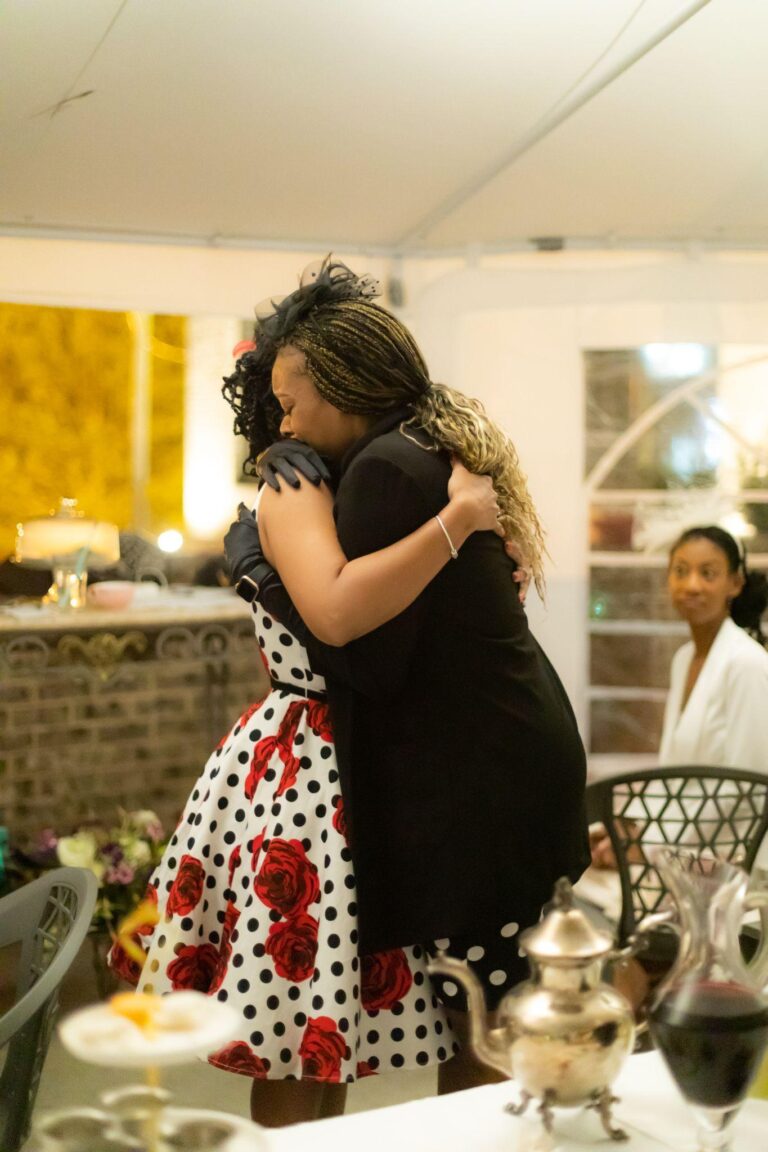
Shay Levister was a child the night her mother packed her and her brother into the car and drove them to a domestic violence shelter, one step ahead of an abusive home. The place that was supposed to feel like safety felt filthy and frightening instead, and the two kids begged their mother to turn around. She did. That single decision, made decades ago inside a building meant to protect them, is the reason a grown woman now runs a company that ties its growth directly to women’s shelter donations.
The organizations built to catch women in that moment are running out of money at the exact moment more women need them. Federal budgets have wobbled, grants have gone missing, and shelters across the country have had to say no to people who called at the worst possible time.
None of that instability is unique to one company or one founder. Every domestic violence shelter in the country depends, in some measure, on a funding structure that rises and falls with each new budget cycle, which means survivors’ access to safety often has more to do with decisions made in Washington than with the level of local need on any given day.
A personal history rooted in one shelter’s failure, paired with a funding system currently under real strain, is what led Bonding Biology Institute to build women’s shelter donations directly into its business model, tying every paying client enrollment to a contribution.
The Funding Crisis Behind Women’s Shelter Donations
Domestic violence shelter funding rests almost entirely on federal grants, and the numbers from the past year show exactly how unstable that funding has become.
President Trump’s fiscal year 2026 budget proposed cutting roughly $208 million from the Office on Violence Against Women, the federal office responsible for most of the country’s response to domestic violence, dating violence, sexual assault, and stalking. That reduction, nearly 30 percent of the office’s funding, would land hardest on transitional housing and sexual assault services.
The damage started well before that budget could even take effect, with shelters closing their doors, hotlines cutting back their hours, prevention programs shutting down, and staff getting laid off as the money behind their paychecks dried up.
Then came a stranger problem: money that had already been promised but never seemed to show up. After reaching out to more than 250 past recipients of federal grant money, journalists found that $150 million in fiscal year 2025 funding had simply gone unaccounted for as of May 2026. The 48 organizations that responded described layoffs, cut services, and advocates taking voluntary pay reductions as they waited on checks that hadn’t shown up.
None of this plays out in the abstract. On a single day in September 2025, 1,707 domestic violence programs served 84,146 victims and survivors, and still turned away 13,018 requests for help because staff and beds ran short.
Some money is still moving, to be fair. More than $463 million has gone out across 541 fiscal year 2025 grant awards through the Office on Violence Against Women, and fiscal year 2026 awards are being distributed on a rolling basis. It just arrives more slowly, more unevenly in places, and with far less certainty than the organizations counting on it would like.
A Shelter Memory and the Line Between Coaching and Survivor Support
Against that funding backdrop, one founder’s personal history explains why her company built shelter donations directly into its business model in the first place, and it also set a specific standard for what kind of help actually counts. The shelter’s failure to provide the basics, privacy, cleanliness, and a sense that the people staying there were being cared for rather than processed is what stayed with her from that night. Company materials describe that same standard, safety paired with dignity, as the guide for which shelters eventually receive their support.
Shay carried that memory into the company she later built. Bonding Biology Institute works with women who have already built successful careers and lives, yet keep landing in relationships that drain them or find themselves single despite having everything else in place. The work starts by healing what blocks them from love or turns them into a magnet for the wrong partners, clearing the conscious beliefs, subconscious programming, attraction patterns, and identity issues the company calls Love Blocks®. From there, clients move through a step-by-step process built to help them recognize and attract what Shay calls a romantic best friend: a partner who treats her child as his own and joins her in building a shared future, personally and professionally. The shelters it supports are chosen from recommendations made by women in its founder’s own community.
That giving model works alongside a separate line of work, and the two are easy to blur if you’re not paying attention. Bonding Biology’s day-to-day work has nothing to do with crisis intervention, and that distinction matters more than it might seem. The coaching side focuses on healing what blocks a woman from healthy love and shifting the patterns that draw her toward unhealthy partners, before anything ever turns dangerous. Domestic violence survivor support exists for a completely different moment: the one where a woman needs an exit right now, with no time left to examine anything.
Accountability for abuse belongs entirely to the person committing it, full stop. Blurring these two categories together risks suggesting that a woman’s relationship patterns somehow explain violence done to her, and that would badly misrepresent both the coaching work and the survivors these shelters exist to serve. The company treats its relationship programs and its shelter giving as two points along one broader mission rather than as interchangeable tools. Helping a woman heal what blocks her from love can happen years before a relationship turns unsafe. Shelter support becomes critical the moment safety itself is the only thing left to plan for.
A Social Impact Business Model, and Where Private Giving Fits
The personal story explains why this giving model exists, and the mechanics show how it operates as part of the business itself. Bonding Biology folds its shelter giving directly into each client transaction, a different approach from the typical corporate pattern of tying charitable giving to a holiday, an awareness month, or an annual fundraiser. A new client signs up, and a women’s shelter donation follows automatically, which makes the giving exactly as consistent as the revenue driving it.
That raises a useful question for anyone thinking seriously about corporate giving for domestic violence: what changes when the charitable commitment gets tied to the very activity that grows the business? A retailer could link purchases to donations, a law firm could tie signed clients to a contribution, or a subscription company could carve a fixed slice out of every new membership. Whatever the specific mechanism, the underlying idea stays the same: giving happens because the business is operating, not because someone remembered to schedule it on a calendar.
As Bonding Biology’s version of this social impact business model grows, the company has room to show its work: how much each enrollment contributes, how shelters are chosen, how often donations go out, and what results get documented. A model where every client enrollment funds a women’s shelter donation becomes more compelling as those details come into focus.
That question of scale points to a bigger one: how does any single company’s giving compare to what the federal government spends on the same problem? Private funding for domestic violence shelters was never going to replace federal grants, and nobody serious is claiming otherwise. Federal support simply operates at a different order of magnitude, distributed in the hundreds of millions of dollars annually across hundreds of individual grant awards nationwide.
What private dollars can do is cover real shortfalls as the larger funding structure works itself out through Congress, federal agencies, and advocacy groups. A company willing to direct actual money toward specific shelters adds another source of support every time its own business grows, without needing to fix the entire federal system single-handedly.
Businesses that donate to women’s shelters usually frame the giving as charity first and business second. Here, the sequence runs in reverse, a far lower bar than most corporate giving claims to clear, and an example anyone researching how to support domestic violence shelters may want to note, independent of whether they ever have a reason to become a client.
Making Women’s Shelter Donations Part of the Bigger Picture
What matters most for anyone evaluating a claim like this is separating why a company gives from how well that giving actually works. A founder’s personal history can explain motive convincingly without saying anything about the scale, consistency, or results behind women’s shelter donations tied to a company’s growth, and those are different questions that deserve separate answers.
Timing also plays a role here. The federal funding system described earlier moves in political cycles, subject to whichever administration and Congress control the budget in a given year. A private commitment tied to a company’s own growth runs independent of any single budget cycle, which makes it a different, steadier kind of addition to the overall funding picture.
Shelters already managing the funding shortfalls described earlier have less room to absorb a missed grant cycle or a delayed check than they did five years ago, which is what makes a steady, transaction-based commitment worth something even at a modest scale.
Readers who want more detail on Shay Levister’s programs, or businesses weighing their own giving models, can see how Bonding Biology structures its enrollment-linked donations by visiting Bonding Biology Institute directly. As with any giving model built into a company’s revenue, the specifics, how funds are tracked, which shelters receive them, and what outcomes get reported, are worth asking about directly.
For a shelter system stretched thin by federal uncertainty, additional private support arriving on a predictable schedule is a different kind of help than a one-time check, whatever the reason a company decides to give it.