
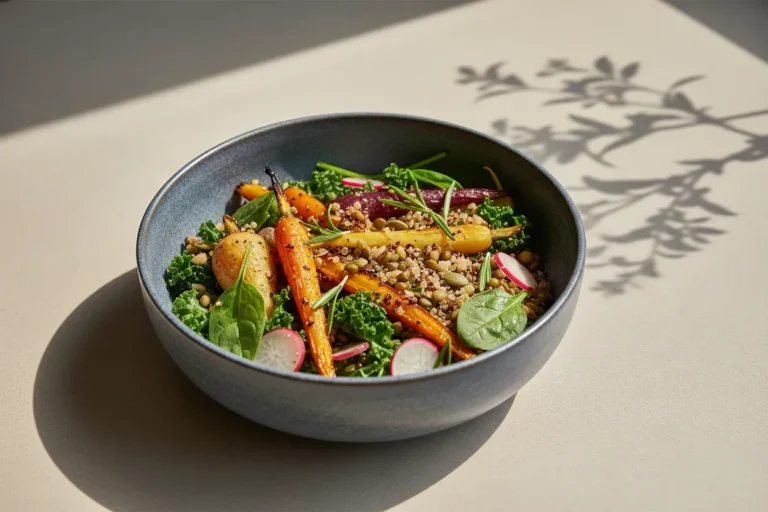
Food choices have a direct impact on the planet, from carbon emissions to water use and land degradation. This guide offers practical strategies for reducing environmental harm through daily eating habits, backed by insights from nutrition and sustainability experts. Simple shifts in what and how we eat can lead to meaningful change without requiring a complete lifestyle overhaul.
- Replace Beef With Lentils
- Support Regenerative Farms
- Center Plates on Lentils and Millets
- Measure Portions First
- Choose Seasonal Produce
- Ditch Bottled Water
- Cook Simple Foods at Home
- Blend Everyday Staples
Replace Beef With Lentils
Swap out half the beef in a meal you already like with cooked lentils. Pasta sauces like spaghetti Bolognese have a lot of flavor in the sauce itself that the lentils will soak up. Keeping the lentils intact will ensure you have enough body to still follow the original recipe. The number of beef servings required is cut in half instantly. Per kilogram, beef has a significantly higher impact on the environment than lentils. It’s easier to repeat what you know how to make. Honestly, forcing yourself to eat dinner that you don’t like is not a good consistency plan.
If your recipe calls for 500 grams of ground beef, use 250 g of beef and 250 g of cooked, drained lentils. Make your normal sauce. Brown the beef, then add the lentils near the end so they don’t get mushed up. And please don’t go fill your pantry with weird ingredients you don’t like (the dinner still needs to taste awesome). Repeat as needed with meals you enjoy.

Support Regenerative Farms
The most impactful change I made was shifting toward food grown on soil that’s actually being measured and restored—not just labeled. When you understand that nutrient levels in American produce have dropped significantly over decades due to soil depletion, “eating healthy” takes on a completely different meaning. The soil the food grew in matters more than the package it came in.
My advice: stop optimizing for labels and start asking about outcomes. Organic tells you what inputs were avoided. It tells you nothing about what the food actually became nutritionally. Find farms—farmers markets, CSAs, direct relationships—where you can ask the farmer what their soil looks like and whether they’re restoring it or mining it.
One concrete thing I’ve done personally is prioritize eggs, chicken, and beef from farms I can trace to specific land management practices. These are the exact categories we’re starting with in our Proof Foods testing program because their residue and quality profiles are well-documented—and the gap between marketing claims and actual outcomes is real.
The environmental impact of your diet isn’t just carbon math. It’s whether the land producing your food is getting healthier or more depleted every year. One farmer restoring soil health on degraded land does more measurable good than a hundred people swapping packaging choices.

Center Plates on Lentils and Millets
The change that stuck for me was building meals around lentils, millets, and whatever vegetables are in season locally, instead of relying on packaged and out-of-season food flown in from far away. It began as a health decision — more whole plants, less processed stuff — but the lighter environmental footprint came with it, since local seasonal produce travels less and legumes are gentle on water and land.
The practical part: don’t overhaul everything at once. I started with two plant-forward dinners a week — a pot of dal, a seasonal sabzi, a millet roti — and let it grow from there. Cooking a little extra and finishing it the next day cut my food waste more than any grand plan ever did.
My honest advice: pick one meal, make it seasonal and plant-based, and repeat it till it’s a habit. Small and repeatable beats ambitious and abandoned.

Measure Portions First
One impactful change I made was planning my meals around raw ingredients instead of deciding portions after cooking.
I started measuring whole foods like rice, grains, fruits, and protein sources before cooking, then preparing only what I actually needed. This helped me reduce food waste because I was no longer cooking large portions and throwing away leftovers just because the cooked quantity was more than I needed.
Planning my meals also encouraged me to choose more whole foods and rely less on heavily packaged options. While packaged foods are sometimes necessary, being more intentional about fresh ingredients can reduce unnecessary waste while supporting healthier eating habits.
My advice to others is to start with simple meal planning. You do not need to completely change your diet overnight. Just understanding what you need, preparing the right amount, and making mindful food choices can make a meaningful difference for both your health and the environment.

Choose Seasonal Produce
My work tracing supply chains globally – including agricultural and food supply networks – means I see how sourcing decisions upstream create real environmental consequences downstream. That lens changed how I think about my own plate.
The most impactful shift I made was moving toward seasonal, locally sourced produce. When you understand that a single geopolitical disruption – like the conflicts affecting Ukrainian agricultural exports – can ripple through global food systems and inflate basket costs by significant margins, buying locally stops feeling like a lifestyle choice and starts feeling like genuine risk awareness.
Practically, I stopped defaulting to the same ingredients year-round and started asking where things actually come from. That question – the same one I ask about third-party vendors professionally – turns out to be just as clarifying at a farmers market.
My advice: treat your weekly shop like a due diligence exercise. One question, asked consistently – “where did this come from and how far did it travel?” – builds the habit faster than any overhaul.

Ditch Bottled Water
Switching from bottled water to a home filtration system was the biggest shift in my hydration habits. It cut out the constant plastic waste while giving me mineral-rich water every day.
My background as an athlete showed me how much clean water matters for performance and health. At ProEcoLife, we designed the PEL75 system to remove contaminants like lead and chlorine while adding back minerals, and it directly tackles the bottled water habit that piles up waste in kitchens.
I recommend starting with a water test at home to see what is really in your supply. Then choose a whole-house or under-sink filter that fits your space so every drink supports both your body and the planet without extra packaging.

Cook Simple Foods at Home
Honestly, the biggest change I made wasn’t some perfect, ‘all-or-nothing’ overhaul; it was just eating a lot less processed food and a lot more simple, real food cooked at home. That naturally pushed me toward more plants, fewer packaged snacks, and buying local produce when I can. It’s better for the planet, but I’ve also noticed I feel more stable energy-wise and less inflamed, which matters when you’re talking about healing and nervous system health all day.
My advice for others is to start small and make it practical. Pick one or two habits you can actually stick with—like cooking at home three nights a week, swapping one meat-heavy meal for a plant-based one, or planning meals so you throw away less food. You don’t need to be perfect to make a real difference for your health and the environment; you just need to be consistent.

Blend Everyday Staples
One of the most impactful changes I made to reduce my environmental footprint at home was shifting the baseline ingredients in my kitchen rather than trying to change the meals themselves. Most families don’t want to give up the foods they love, and major diet overhauls rarely stick. What does work is quietly adjusting the foundation of the pantry so the meals stay the same but the impact drops.
The approach is simple. I started using blended ingredients that cut the footprint of everyday staples in half: ground beef mixed with finely minced mushrooms, butter blended with olive oil, and even dairy products that incorporate plant-based components. We still make tacos, burgers, pasta, and all the usual comfort foods, but the core ingredients are lighter, more sustainable versions of what we already enjoy.
The reason this works is that it removes the psychological friction that usually comes with dietary change. No one feels deprived. No one has to learn new recipes. The meals taste familiar, and the environmental benefit happens automatically. In my home, this single shift reduced our meat and dairy footprint significantly without any disruption to our routines.
My advice to others is to stop thinking about sustainability as a dramatic lifestyle change and start thinking about it as a quiet shift in defaults. If you replace the baseline ingredients with blended versions, your environmental impact drops without anyone noticing. Small, invisible changes often outperform big, ambitious ones because they fit naturally into daily life.
This approach proves that meaningful sustainability can be simple, practical, and completely compatible with the foods people already love.