
That constant hissing sound from your bathroom isn’t all in your head. Your toilet is flushing water and quietly adding to your utility bill. Plumbing repair service contractors generally say running toilets are the most common call plumbers get, immediately after leaks. It’s worth trying a DIY fix first. If it doesn’t work, you can always go through the service details and book a plumber from there.
Most running toilets come down to a handful of worn or misaligned parts inside the tank. Nothing exotic. You don’t need special training, just a willingness to lift the lid and look.
Fix 1: Adjust the Toilet Float to Control Water Level
The float is the bobbing ball or cup-shaped mechanism that notifies the tank when to cease filling. If the setting is too high, the water will overflow into the overflow tube, and the fill valve will never shut off.
On older toilets, you’ll see a ball float on an arm bend that arm slightly downward. Newer types employ a cylinder float that either turns or slides down the fill valve stem. Adjust so the water is roughly 1 inch below the overflow tube. Simple fix, takes two minutes.
Fix 2: Inspect and Replace a Faulty Flapper
Probably the flapper is the most plausible suspect. When you flush the rubber seal at the bottom of the tank goes up and then goes back down to contain water. It warps, it hardens, or it accumulates mineral deposits over time, and it ceases to seal effectively.
Drop some food dye into the tank and wait ten minutes without flushing. If there is color in the bowl, the flapper’s leaking. Shut off the water supply valve, flush until the tank is empty, disconnect the old flapper, and take it to a hardware store to match the replacement. They cost around $5–10 and snap right into place.
Fix 3: Check the Fill Valve for Malfunctions
If adjusting the float didn’t work, the fill valve itself may be worn out. This is the vertical assembly where the float is attached to manage the water level entering the tank. A failing fill valve hisses constantly or keeps running even when the float is correctly positioned.
Turn off the supply valve and flush. Then lift the float arm or cup and see if the water stops. If it doesn’t, the valve’s probably the issue. Replacement kits are inexpensive and come with instructions. That said, this repair involves a bit more disassembly. If you’re unsure, this is where a plumber visit starts to make sense.
Fix 4: Adjust or Repair the Chain Mechanism
The chain connects the flush handle to the flapper. Too short, the flapper never fully closes. It gets caught underneath too long and lets water seep through all the time.
Remove the chain and re-attach it with about half an inch of slack. Also look for snarls or tangles. Sometimes that’s genuinely all it is, a chain that got looped wrong. Took one homeowner in a Reddit thread three weeks to figure that out before someone mentioned it. Check the chain first, honestly.
Fix 5: Check the Overflow Tube for Water Level Issues
The overflow tube is the vertical pipe in the center of the tank. If water’s running into it, it drains directly into the bowl, and your toilet runs forever.
Fix 1 is the first one because it usually has to do with the float being set too high. But if you’ve messed with the float and water is still coming into the tube, the tube may be too short for your tank, or you may need to change the fill valve. Mark the water line; it should be well below the top of the overflow tube.
When These Fixes Don’t Work: Signs You Need a Plumber
At least one of the above will fix most toilet tank problems. But if you’ve tried all five repairs and the toilet is still running, there is probably a more serious problem: a fractured overflow tube, a faulty flush valve seat, or a problem further down the supply line.
If you don’t see anything different after repairs, if you have water on the floor around the base, or if the flushing mechanism is loose or damaged even after making adjustments, call a plumber. Although this toilet repair guide spans the DIY spectrum, some problems really do require a hands-on expert evaluation.
In Conclusion
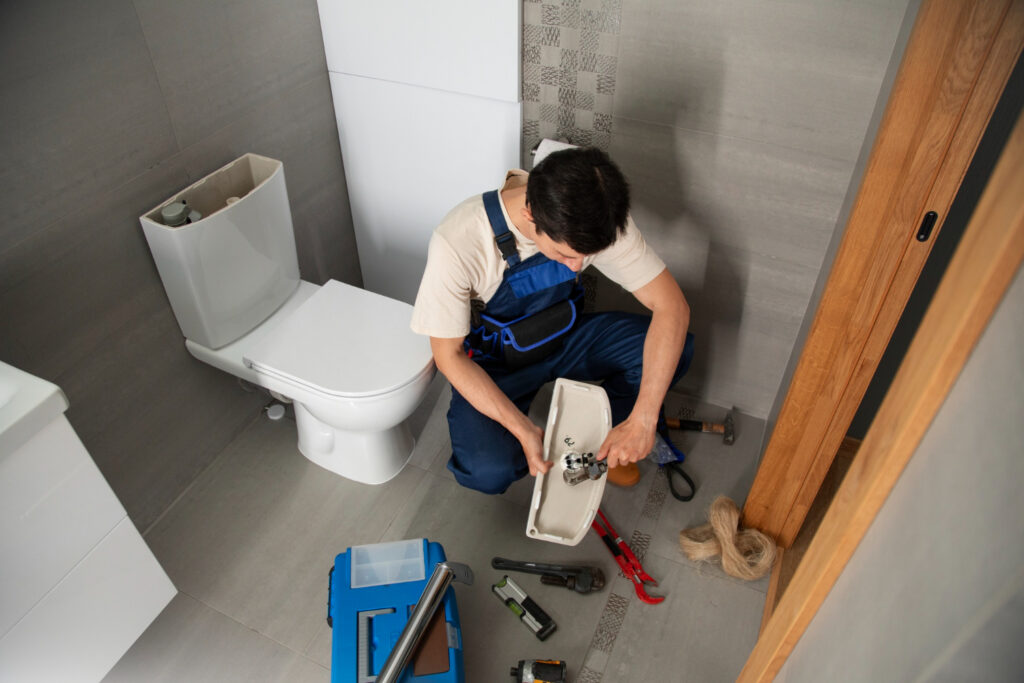
A running toilet isn’t a crisis — most of the time, it’s a $10 part and thirty minutes of work. Use this toilet repair guide to work through each fix methodically before assuming the worst. Start with the float, check the flapper, and go from there. Nine times out of ten, you’ll find the problem before you ever need to make a call.