The IRS isn’t messing around this year. With the failure-to-file penalty now at $510 for returns over 60 days late and information return penalties hitting $330 per form, 2025-2026(filled in 2026)marks a new era of stricter enforcement. But beyond these headline penalties lies a more insidious threat: the everyday errors that trigger IRS Automated Underreporter (AUR) notices and CP2000 demands for additional tax plus interest.
According to recent guidance from the Illinois CPA Society and accounting experts, taxpayers are walking into predictable traps. The most dangerous? Income calculation errors. Whether it’s overlooking a 1099 from a side gig, misreporting Box 1 figures from multiple W-2s, or forgetting interest income, missing income sources creates immediate red flags when the IRS cross-checks your Form 1040 against third-party data. But that’s just the beginning.
The Hidden Error Epidemic
Beyond income mismatches, USA Today identifies a cascade of “simple” mistakes that derail returns: Social Security number typos that cause automatic rejections; name inconsistencies with previous filings or SSA records; incorrect filing status selections that cost married couples valuable deductions; and botched direct deposit information that delays refunds indefinitely. Even something as basic as forgetting to sign and date the return—or misunderstanding that a filing extension doesn’t extend your payment deadline—can trigger penalties. “You want to make sure everything is consistent across the board,” notes Charlene Rhinehart, a Chicago CPA. Yet consistency is nearly impossible when taxpayers manually transcribe figures from faded thermal receipts, scattered PDFs, and multiple 1099/W-2 forms onto Form 1040. Each keystroke introduces potential error; each manual lookup risks omission.
The Thermal Receipt Time Bomb
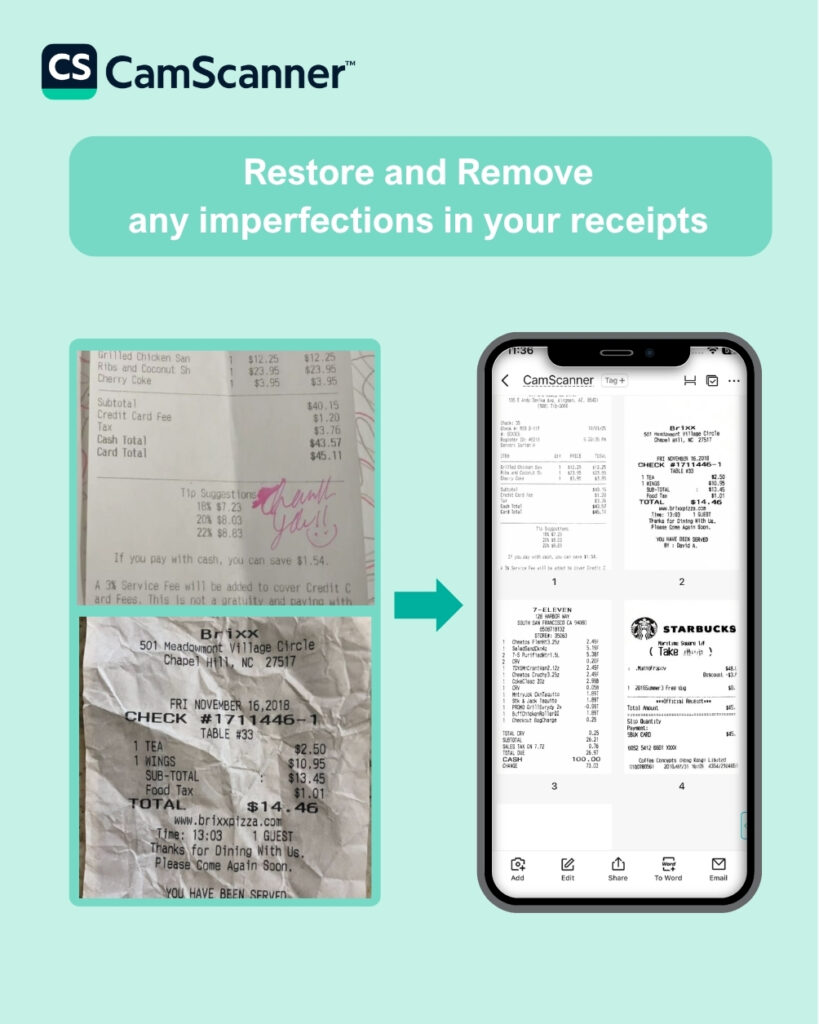
Here’s a documentation disaster most taxpayers overlook: thermal paper receipts—the kind you get from gas stations, restaurants, and office supply stores—fade irreversibly within months when exposed to heat or light. By tax season, that deductible business lunch from July might look like a blank slip of paper. Traditional phone photos capture shadows, distortion, and poor angles that may not meet IRS “clear document” standards during an audit, leaving taxpayers without proof when they need it most.

AI-Powered Prevention
CamScanner’s AI documentation workflow targets these vulnerabilities at the source. Instead of squinting at faded thermal paper receipts or switching between browser tabs to check figures, users capture documents with automatic shadow removal, perspective correction, curvature adjustment, and text enhancement—ensuring thermal receipts remain audit-readable for the IRS’s three-year retention requirement.
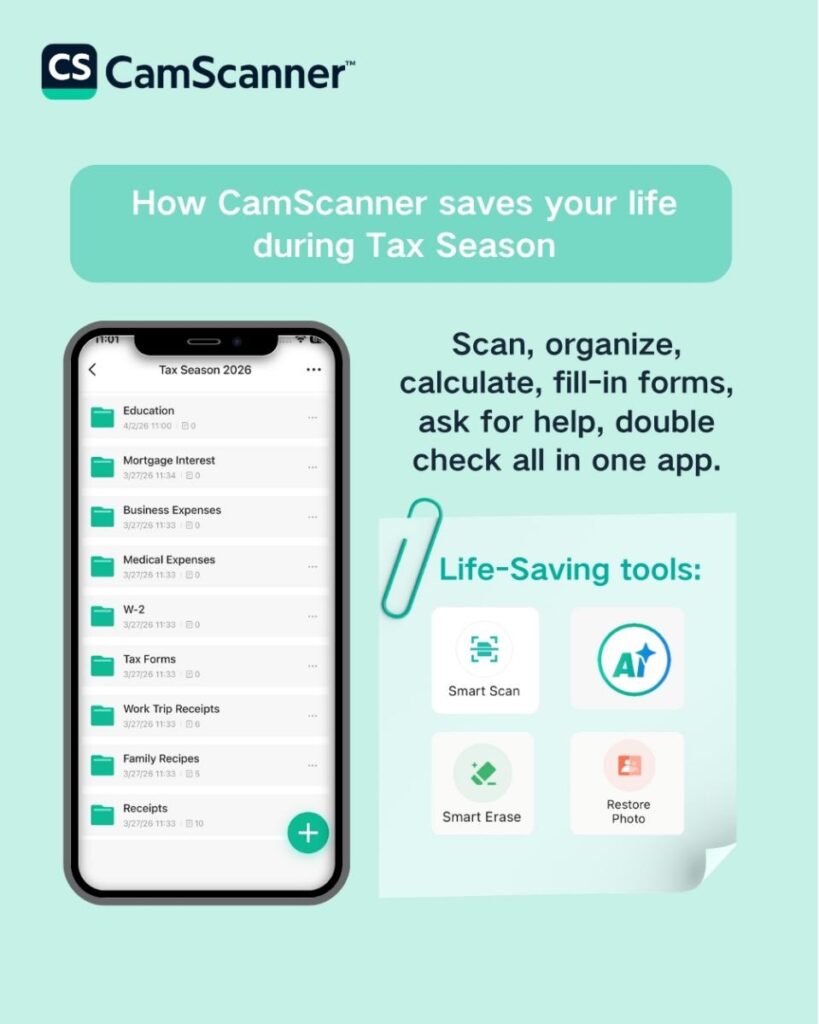
The real game-changer: OCR extraction that pulls exact figures from W-2s, 1099s, and 1098 forms, allowing users to search specific values (like Box 1 amounts) without manual transcription. By eliminating hand-entered data, CamScanner removes the human error factor that triggers AUR mismatches. Organized PDF folders further ensure no deduction documentation gets lost in the scramble, while merged files allow users to consolidate related documents—like bundling all medical receipts for HSA claims or organizing 1098-T tuition forms for education credits.
Beyond document processing, CamScanner’s CS AI serves as an intelligent tax assistant. Users can ask questions to interpret complex IRS policies, get plain-language explanations of confusing form fields, and even receive help calculating totals from their scanned documents—bridging the gap between raw paperwork and accurate filing.
Who Needs This Most
Freelancers juggling multiple 1099s, gig workers with fragmented income streams, international students filing for the first time, small business owners tracking expenses across categories, and anyone who has ever stared at a faded receipt, wondering if that was a 6 or an 8. With penalties up and enforcement tightening—including passport revocation thresholds now at $64,000 for seriously delinquent debt—documentation accuracy isn’t just convenient. It’s financial self-defense against an increasingly automated IRS scrutiny system where even minor discrepancies can cascade into major headaches.
As the April 15 deadline approaches, remember that last-minute IRA and HSA contributions can still reduce your taxable income for 2025-2026—but only if you have the documentation to support your deductions. In this environment, AI-powered document management isn’t just a tech luxury; it’s a necessary shield against costly compliance mistakes.