
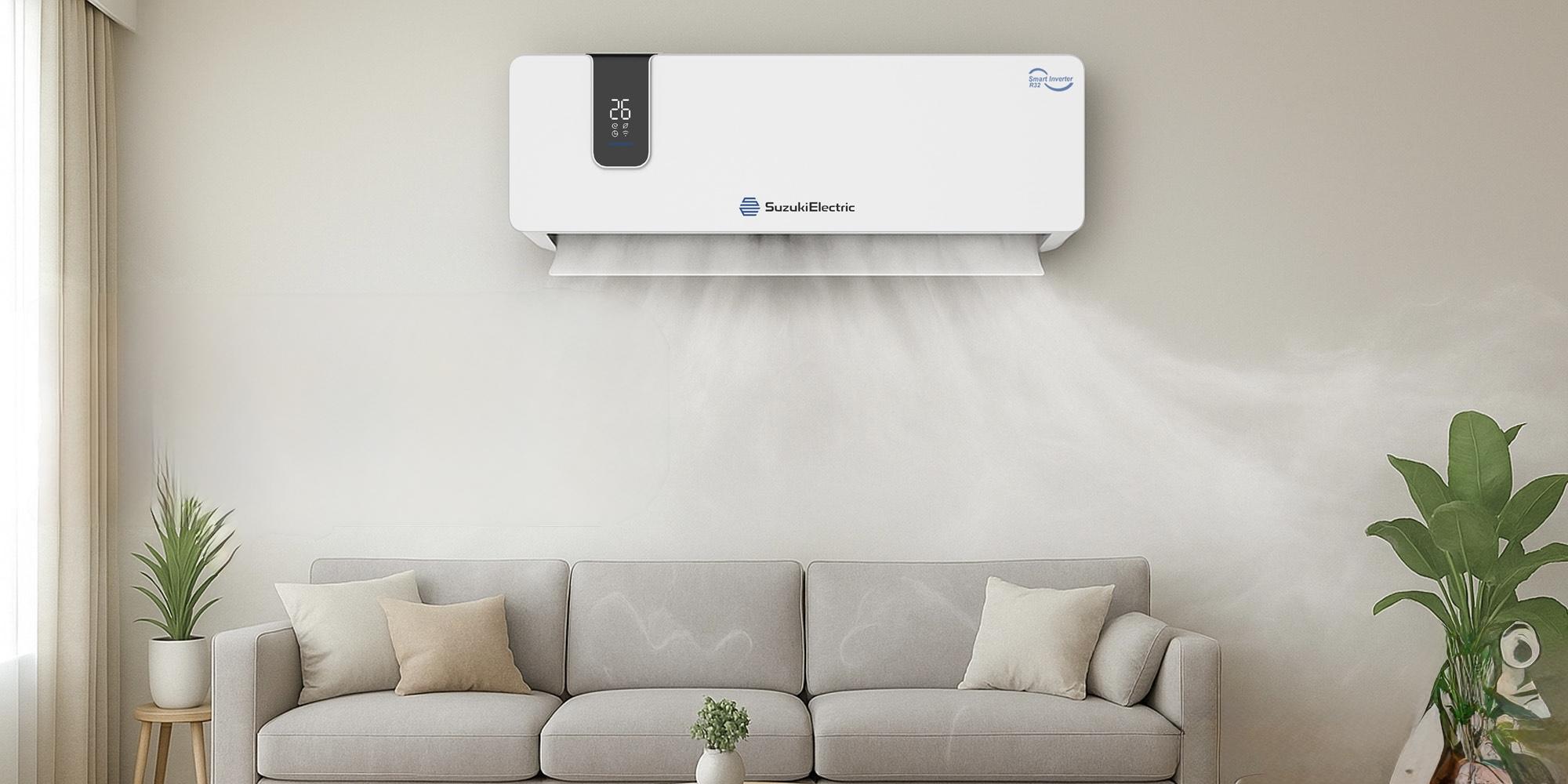
For homeowners across Eastern and Central Europe, the choice of an air conditioning system has become a proxy battle over comfort, cost, and conscience. At a moment when energy prices, climate pressures, and design expectations are all rising, Suzuki Electric is quietly testing whether a cooling system can function as both an essential utility and a lifestyle statement, without asking users to sacrifice aesthetics or affordability.
A New Model of Access and Control
Suzuki Electric International Ltd., founded by Japanese engineer Yasutomo Suzuki and headquartered in Hong Kong, has built its European strategy around a deceptively simple question: Who actually controls the market for comfort at home? Instead of relying on original equipment manufacturer-based brands that dominate the heating, ventilation, and air conditioning landscape, it has chosen a direct-to-wholesaler model that bypasses layers of intermediaries and the markups that come with them.
The company’s press advisor and general manager, Hyomito Kyo, frames that decision as both economic and philosophical. “We want to free the market from the limitations of OEM-based brands,” Kyo says, arguing that distributors and end users deserve transparent pricing and clear accountability for performance. In practice, that means European wholesalers gain access to cost-effective air conditioners and fan coils that are designed in the tradition of Japanese engineering, with an emphasis on reliability, precision, and what the company describes as aesthetic refinement suitable for contemporary interiors.
Comfort as Design, Not Afterthought
Suzuki Electric’s pitch to the region’s increasingly design-conscious homeowners rests on the idea that an air conditioner should not merely disappear into the background of a room, nor should it dominate a wall in industrial silence. Its systems are built for both residential and commercial settings, but what distinguishes the brand in the home is its insistence that cooling hardware can complement, rather than disrupt, a carefully considered space.
Through manufacturing partnerships in China, the company maintains scalable production while insisting on strict quality oversight, preserving the marriage of Japanese design and cost efficiency that it believes sets it apart. The units incorporate advanced automation and offline voice control, a combination that allows users to tailor temperature and operation with minimal friction, even when connectivity is inconsistent. That technical layer, coupled with a visual language that aims to read more like a deliberate fixture than an intrusion, underpins Suzuki Electric’s ambition to integrate air conditioning into a broader home design conversation rather than an afterthought installed at the end of a renovation.
Quiet Pressures, Quiet Mission
Behind this repositioning of air conditioning as a lifestyle choice lies a harder edge of necessity. The International Energy Agency has tracked a growing appetite across Europe for energy-conscious HVAC systems, driven by stricter environmental standards and accelerating infrastructure development. In Eastern and Central Europe, especially, distributors are looking for systems that meet rising efficiency expectations without pushing retail prices beyond the reach of ordinary households.
Suzuki Electric’s answer is to maintain non-exclusive partnerships and a lean logistics structure, promising fast order fulfillment, consistent quality checks at every production stage, and pricing that allows wholesalers to protect their margins while serving cost-sensitive customers. “Our mission is simple,” Yasutomo Suzuki says. “Deliver Japanese quality that stands out, affordable, durable, and precisely engineered.” For the homeowners who will live with these systems season after season, the real test will be whether that mission translates into everyday comfort that feels seamless, considered, and quietly aligned with a future in which design, efficiency, and access are no longer treated as opposing demands.