
Walk into any pharmacy aisle, and the pattern is hard to miss. Rows of familiar brands of toothpaste, floss, and mouthwash with loud promises, but backed by a system that has barely changed in decades.
Oral care has long been treated as routine, not innovation.
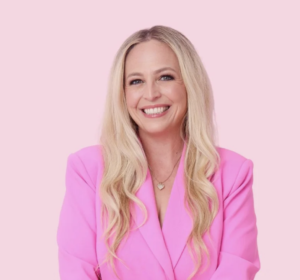
Samuel Goodman, co-founder of Cheeky, set out to challenge this routine with his co-founder, who lost a custom dental guard one day. This is a type of dental guard that typically costs hundreds of dollars through a dentist and is often not covered by insurance. Replacing it felt less like a health decision and more like a financial one.
So they started digging. That search led them to a dental conference in Chicago, where they got a close look at how the industry actually works today with 3D scanning, digital impressions, and direct-to-consumer manufacturing. The conclusion was hard to ignore.
“The cost wasn’t justified by the complexity anymore,” Goodman says. “The markup was a legacy of the traditional dental channel, not a reflection of what it actually costs to make a great product. That insight became Cheeky.”
The Problem With “Standard” Oral Care
For years, oral care has operated on a simple model. Dentists provide access, and legacy brands dominate shelves, while consumers pay what they’re told is standard.
But that model has cracks. Let’s take night guards, for example.
According to Goodman, more than 20% of the population grinds their teeth, yet the most common solution remains expensive and inconvenient. The process often requires dental visits, impressions, and a final product that feels out of reach for many.
And that’s just one category. Across oral care, consumers face a mix of high prices, unclear ingredients, and products that feel more clinical than usable. The experience hasn’t kept up with how people actually live.
This is where Cheeky saw an opening.
Building for Access, Not Markup
Cheeky began with a simple goal to make custom-quality night guards accessible at a fraction of the traditional cost. But as the company grew, something else became clear.
Customers weren’t just frustrated with one product. They were frustrated with the entire category. So, they expanded into retainers, whitening, water flossers, mouth tape, and built the company into a full oral care brand.
“Each product followed the same principle of removing unnecessary complexity, lowering the price and improving the experience,” Goodman explains.
Today, Cheeky products are available both online and in major retailers like Walmart and Target.
Why Legacy Brands Are Struggling to Keep Up
Traditional oral care companies built their dominance through distribution and advertising. That way of communication still works, but it’s no longer enough.
Today’s consumers are more aware and seek brands that feel more personal. Instead of starting with retail, Cheeky went direct-to-consumer first. By building a community online, the company was able to understand what customers actually wanted, not what the industry assumed they needed.
Goodman shares that reviews, repeat purchases, and direct conversations became proof points. When the brand eventually entered retail, it wasn’t asking for trust as it had already earned it.
Questions such as, What’s in the product?, Why does it cost this much?, Do I actually need it?, or Does this fit into my routine? These questions were answered by Cheeky’s products, which are designed to be clean, BPA-free, pathogen-free, and formulated with sensitivity in mind. Manufacturing partners are vetted and FDA-registered. At the same time, design plays a bigger role than many legacy brands acknowledge.
“If a product feels clinical, people avoid it. If it feels intuitive, they use it,” Goodman continues. “That distinction matters in a category built on daily habits.”
Growth Without Losing the Core
As Cheeky scales, the challenge shifts. It’s no longer just about proving the concept; it’s about maintaining it.
For Goodman, growth is tied to access. The goal is to reach more people who have been priced out of effective oral care or didn’t know better options existed. That includes expanding retail presence, strengthening direct-to-consumer channels, and continuing to identify gaps in the market.
“As we scale, we’re being intentional about packaging, sourcing and making sure the supply chain we’re building reflects the brand we want to be long-term,” Goodman concludes. “We’d rather move deliberately and do it right than slap a green label on something that doesn’t earn it.”