
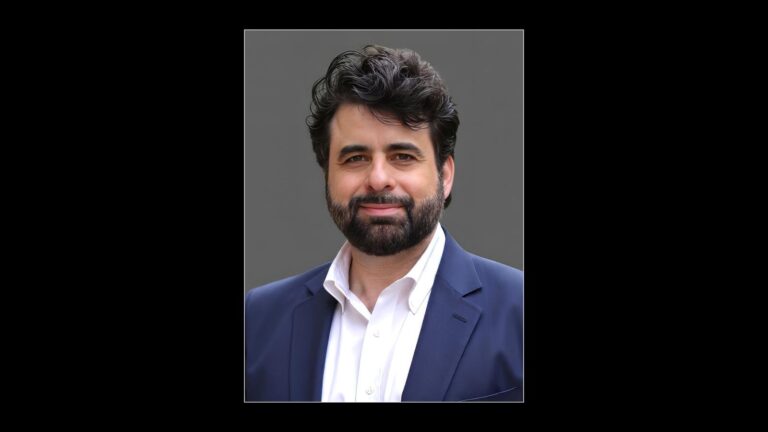
With decades of experience in electrical engineering and mathematics, Robert F. Melendy, PhD, aims to explain to the general public why research matters. Complexity can alienate the human side of scientific achievement, but key studies can transform lives. As Dr. Melendy makes his own discoveries, he aims to communicate their significance clearly.
Hodgkin and Huxley and Physical Neural Requirements
Dr. Melendy takes inspiration from leaders like Carl Sagan and Richard Feynman, whose achievements were amplified by their ability to describe the human stakes behind science. His work builds on the Nobel Prize-winning efforts of Hodgkin and Huxley, who used squid neurons to show that neurons function as electrical circuits, a physics-based response executed with precise mathematical timing.
For seven decades, scientists have not been able to explain why the equations governing how neurons fire take the mathematical form they do. Using a branch of mathematics called Lie group theory, Dr. Melendy and his collaborators proved that the Hodgkin-Huxley equations weren’t arbitrary but reflected physical requirements shared across species. Overall, it’s a complicated concept. However, Dr. Melendy argues that it could significantly impact humans.
When the patterns Hodgkin and Huxley describe break down, signals go wrong, switches lose coordination, and everything that depends on them suffers. Dr. Melendy suggests that epilepsy, Parkinson’s disease, ALS, and multiple sclerosis may each result from these breakdowns in neuro-mathematical patterns.
Making an Impact in Engineering and Mathematics
Beyond the symmetry argument, Dr. Melendy developed a mathematical model describing how a neuron fires. Closed-form descriptions were published in the Journal of Applied Physics in 2015 and AIP Advances in 2016, laying the groundwork for the seminal model, which he shared in the Journal of Electrical Bioimpedance in 2018. Dr. Melendy considers this paper, “A Single Differential Equation Description of Membrane Properties Underlying the Action Potential and the Axon Electric Field,” among his most notable achievements.
For nearly 11 years, he pursued one goal: building a working electrical circuit that behaves like a real neuron. His 2026 publications finally gave him the rigorous mathematical foundation to do it.
Dr. Melendy considers his most revolutionary achievement to be an unexpected one: while developing the mathematical framework for his own neuron circuit work, he and co-author Daniel H. Blue applied that same framework to the classical Hodgkin-Huxley equations and answered a question that had stood for seven decades: why those equations take the form they do. That result, published in Membranes in March 2026, was almost a side project; it turned out to be the finding that stopped people in their tracks. The culmination of his primary body of work, stretching from his closed-form descriptions in 2015 and 2016 through his seminal 2018 model, is his September 2026 publication in Frontiers in Neuroscience.
Dr. Melendy hopes a drug or treatment based on broken symmetry could help patients with related conditions. He explains his research in this video.
“It would be great if others in the scientific community, doctors, biochemists, research pharmacists and others, could build on this idea and consider designing new therapies,” says Dr. Melendy.
Looking to the Future
Currently, Dr. Melendy serves as an associate professor of electrical engineering at George Fox University, a position he has held since 2023. He has spent three decades studying and working in electrical engineering and mathematics and remains dedicated to lifelong discovery. Dr. Melendy focuses on the neural science side of engineering, which drives his research interests.
In the next few years, Dr. Melendy hopes to delve deeper into the human side of neuromorphic engineering research. He intends to adopt Carl Sagan’s approach to science communication, adapting it to help inform the treatment of neurodegenerative diseases such as Parkinson’s and epilepsy. He also aims to build a working circuit prototype, potentially creating an artificial neuron model.