Maria Jessica Roa has spent fourteen years doing work that most people never see. She has written hundreds of individualized plans for children who learn differently, coached athletes with disabilities to national competitions, and crossed an ocean to rebuild her professional life inside a system entirely unlike the one she was trained in. She did all of it without headlines, without accolades, and without ever losing the thread of why she started.
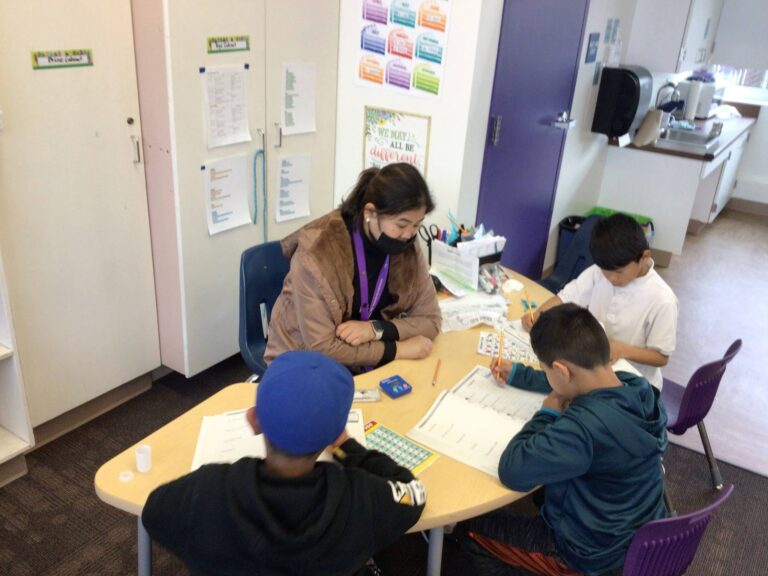
Roa teaches Special Education at Martin Elementary in South San Francisco, California, through the J-1 Cultural Exchange Program. Her students are young — kindergarten through second grade — and many arrive carrying needs that go far beyond academic readiness. What she brings to that room is shaped by two countries, two decades, and one unshakeable conviction: that belonging is not a privilege reserved for children who learn easily.
What the Philippines Taught Her
Roa’s career began in 2011 in Quezon City, where she joined the Philippine Department of Education and spent a decade teaching students with special needs at Commonwealth Elementary School. The work centered on life skills — the practical, daily competencies that help young people with disabilities move through the world with confidence and independence. Community inclusion was the goal, and every lesson was oriented toward it.
However, resources were scarce, and the systems differed from anything described in the international education literature. Families often traveled difficult distances just to get their children to school. The challenges were real, but so was the warmth. Parents respected teachers deeply. Students showed up ready, even when the circumstances were hard.
For five years, Roa served as department chair, coordinating staff, programs, and services across her school. She coached a Bocce team for the Quezon City Paralympics — guiding students with disabilities through training, competition, and the kind of confidence that only comes from being taken seriously as athletes. Several of her students reached regional and national level competitions. That work eventually led to a formal invitation from the Department of Education to contribute to a national Bocce sports manual, now used in public schools across the Philippines.
The decade left her with something that no graduate program fully teaches: the ability to work with very little and still produce valuable outcomes for children.
The Decision to Cross the Pacific
The COVID-19 pandemic arrived and, with it, a window. Roa looked at the disruption around her and made a choice. She would apply for the J-1 Cultural Exchange Program and take her practice to the United States.
The J-1 program places international educators in American schools, filling critical teaching vacancies while offering educators a reciprocal professional experience. Special education is one of the most persistently understaffed fields in U.S. public schools, and districts like South San Francisco Unified actively rely on teachers like Roa to serve students who cannot afford to wait for the staffing pipeline to catch up.
What she encountered on arrival was not what she expected. American special education runs on compliance architecture — Individualized Education Programs with legally mandated timelines, multidisciplinary team meetings involving psychologists, therapists, and administrators, and documentation requirements that govern nearly every instructional decision. She had taught with heart and skill for a decade. Now she had to learn an entirely new professional language.
“What I had was the heart of a teacher willing to learn and serve the best that I can,” she said.
She learned, and today, between 95 and 99 percent of her students are meeting their IEP goals — a rate that reflects her instructional skill and the meticulous planning, cross-team coordination, and sustained advocacy that the American system demands.
Two Systems, One Classroom
What makes Roa’s presence in a California classroom genuinely distinctive is the cross-cultural depth she carries into it. Her years in the Philippines trained her in relational teaching — a style that centers the whole child, carefully reads family context, and treats warmth as a pedagogical tool. That sensibility travels with her into every IEP meeting she facilitates, every professional development session she attends, and every morning she spends helping a five-year-old learn to regulate their emotions before the school day begins in earnest.
SSFUSD serves a highly diverse student population. Many of Roa’s students are English learners, just as she was when she arrived in a new country. That shared experience is not incidental — it shapes how she reads a child’s silence, how she builds trust with families navigating bureaucratic systems in a second language, and how she constructs instruction that meets children where they actually are rather than where a curriculum map assumes they should be.
Her research reflects this layered understanding. Her forthcoming publication, T-P-C Framework: A Collaborative Practice Between Paraprofessionals and General Education Teachers in Inclusive Education, is directly informed by her observations working within the American inclusion model. True inclusion, she argues, depends on the adults in the room being genuinely aligned. A student placed in a general education classroom is not automatically included. Inclusion requires teachers and paraprofessionals who plan together, communicate clearly, and share responsibility for every child’s progress.
“Inclusion will not be successful if there isn’t a general education teacher willing to open the classroom door and welcome a student with special needs,” she has said.
That conviction sits at the center of her work, and it is the kind of conviction that only comes from someone who has watched what happens when it is absent. Roa did not arrive in California with a theory. She arrived with fourteen years of direct evidence, a willingness to keep learning, and a classroom full of children who needed exactly what she had to give.