Most people start their morning on autopilot: shower, shampoo, conditioner, body wash, repeat. The routine is intimate, daily, and almost entirely built on single-use plastic. The Earthling Co. noticed the disconnect long before it became a talking point. Instead of waiting for the industry to clean up its act, they built a company that made clean the default: no plastic, no toxic ingredients, no compromise on performance. Just a better way to do something most of us do every single day.
A $400 Billion Industry with a Dirty Secret
The global personal care market is valued at approximately $400 billion, according to Fortune Business. It is also one of the most plastic-dependent consumer categories on the planet, and the problem runs deeper than the bottle.
Conventional personal care formulas are routinely loaded with liquid plastics and endocrine disruptors: sulfates, phthalates, parabens, artificial fragrances, and dyes. Research has linked the buildup of microplastics in the body to cell damage and hormonal imbalances, yet these ingredients remain standard across most mainstream products. The packaging compounds the problem — plastic bottles sitting in a hot shower, day after day, releasing compounds directly onto skin. The industry has had this information for years. Change, broadly speaking, has been slow.
The consumer, though, has started moving without waiting for it. More than 65% of shoppers now actively seek out environmentally friendly brands, and 55% of Gen Z consumers say they’re willing to pay a premium for products that align with their values, according to recent sustainability research. A climate crisis report by dcdx puts a sharper point on why: 70% of Gen Z believe large corporations are doing too little to address the effects of climate change.
When the biggest players are seen as part of the problem, younger consumers start looking toward smaller, more intentional brands that solve the issue. The Earthling Co. built its business inside that gap.
What If the Bottle Was the Problem All Along?
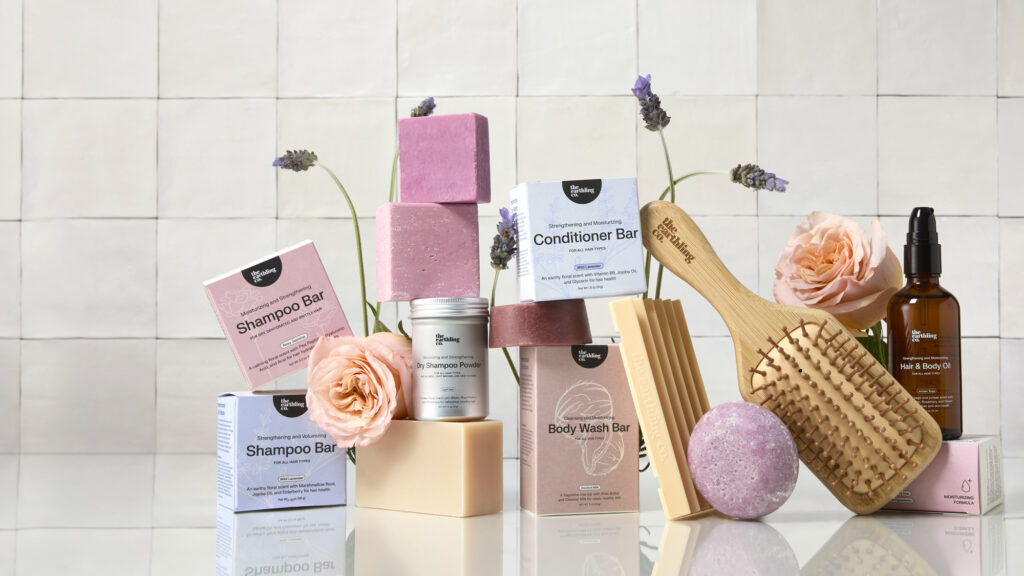
The brand’s premise is as straightforward as it sounds: hair and body products made without toxic ingredients or plastic packaging, designed from the ground up for people who’ve started asking harder questions about what they put on their bodies every day.
Their lineup, including the Volumizing Shampoo Bar, Volumizing Conditioner Bar, and Hair & Body Oil, is free from sulfates, phthalates, parabens, and artificial fragrances. Packaging is compostable. Everything is manufactured in the USA.
The brand’s approach to microplastic exposure works on two levels: clean formulas with no liquid plastics in the ingredients, and plastic-free packaging that doesn’t heat up in your shower and leach compounds onto your skin. It’s a clean break from category convention, and it was built this way from day one, not retrofitted after the fact.
Built to Perform, Not Just to Feel Good
For a brand defined by what it removes, The Earthling Co. has been equally deliberate about what it delivers. Their Volumizing Shampoo and Conditioner are clinically tested: 84% of users say it outperforms their previous liquid shampoo. Their Conditioner Bar is clinically shown to increase hair shine by 89% and lasts two to three times longer than a conventional bottle. Their Hair & Body Oil increases hair hydration by 30%.
These aren’t virtue purchases. They’re products built for consumers who expect results and who have done enough research to know the difference between something that’s genuinely formulated well and something that just has good packaging. That distinction matters for the long-term health of the business and its consumers: the sustainable brand that wins isn’t the one that makes customers feel good about buying it. It’s the one that earns them back because the product actually works and keeps them healthy.
In Personal Care, the Founders Who Read the Room Early Are Winning
The personal care industry is at an inflection point. Consumers are reading labels. They’re connecting daily habits to long-term health outcomes in ways that weren’t mainstream conversation five years ago. They’re asking what’s in the formula, what happens to the packaging, and whether the brand they’re supporting actually means it. The brands built to answer those questions (not scramble to respond to them) are in the strongest position to define the category ahead.
For entrepreneurs watching consumer goods, The Earthling Co.’s trajectory makes the case clearly: build for where the consumer is going, not where they are right now. The brands scrambling to add sustainability credentials today are playing catch-up to founders who treated it as a founding premise and not a feature to be bolted on when the market demands it.