
Children experience fear, frustration, excitement, and disappointment long before they have the language to understand what is happening inside them. Author Jackie Gill believes they can begin learning how to work through those feelings much earlier, and she’s building an imaginative world to help.
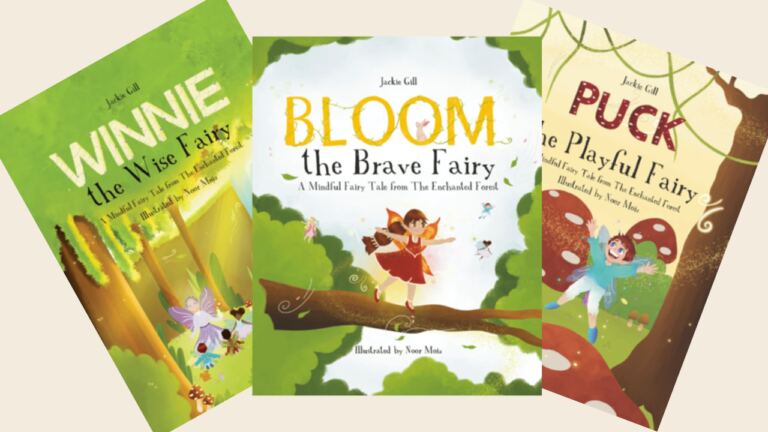
Her children’s book series, The Enchanted Forest, introduces young readers to fairy characters who each face a familiar emotional challenge. Through their stories, children encounter practical tools such as breathing, meditation, movement, and grounding, learning how to recognize what they feel and choose what to do next.
The idea grew from Gill’s own experience. A little over a decade ago, around the time she turned 30, she realized that her approach to life was taking a toll. She was raising two young children, working full-time and starting her days early, while anxiety, perfectionism and people-pleasing had become deeply ingrained habits.
“I remember thinking, ‘There has to be a better way to move through life than this,’” Gill recalled.
That question led to a decade of learning about the nervous system and emotional regulation. Already a personal trainer, she became a certified yoga instructor and began incorporating mindfulness, meditation, and breathwork into her life. By 40, she could recognize anxious or perfectionistic patterns, pause and choose how to respond rather than automatically reacting.
She wanted children to have access to those skills much earlier.
Turning Emotional Lessons Into Stories
Before becoming a personal trainer, Gill worked as a third-grade teacher. She knew children often learn best through stories, play, and imagination, rather than formal instruction. The two parts of her background came together as she began imagining characters who could introduce emotional skills through their own experiences.
One is Bloom the Brave Fairy, who feels fear so intensely that it can leave her stuck. Gill drew on her own experience as a highly sensitive child and on raising a daughter with significant fears. At bedtime, the two began imagining thoughts as clouds drifting past, taking a belly breath as each one appeared and choosing one small brave step for the following day. That practice became part of Bloom’s story.
Bloom helps children understand that bravery doesn’t require fear to disappear. They can calm their bodies, create space around frightening thoughts and take a step forward while still feeling afraid.
Winnie the Wise Fairy explores big emotions and reactivity. Readers first meet Winnie as the wise fairy who introduces Bloom to meditation, but her own story reveals that she once struggled with anger, frustration, and excitement. Her mother teaches her a gentle yoga sequence that combines breathing and movement, helping her work through those feelings.
Puck, meanwhile, is full of energy and ideas. His thoughts “popped up like fireflies—one bright thought, then another, faster than he could catch them.” His story introduces grounding through a game called “spy listening,” in which Puck and his father become quiet and listen closely to the sounds around them.
Gill is careful to show that Puck’s energy and creativity are strengths. His attention doesn’t need fixing; he’s learning how to bring it back when it gets scattered.
The books can be read in any order. The characters appear in one another’s stories, creating a connected world, but each book stands on its own so families can choose the one that best fits what a child is experiencing.
Making Mindfulness Part of Everyday Life
Gill believes children are naturally mindful. Paying attention to the present moment can be as simple as playing I Spy, listening for sounds in a room, or noticing what they can see, hear, smell, and feel on a walk. Movement, yoga, sensory play and breathing games can all help children return their attention to the present without requiring a formal meditation practice.
She also sees parents as an important part of that learning. When children watch adults pause, breathe and regulate their own reactions, they begin to see what those skills look like in everyday life.
Gill has created a free mini mindfulness curriculum to accompany the books, with short video lessons and printable activities. Each lesson uses part of a story before introducing an exercise connected to what the character is experiencing.
One activity from Winnie’s story introduces a “safe space helper”—a person, place or thing that helps a child feel secure. A kindergarten teacher friend used the exercise with a student struggling with homesickness. The child drew her own safe space helpers, giving the teacher a practical way to discuss what might help her feel more comfortable at school.
Parents and educators can follow the curriculum or choose individual activities through The Enchanted Forest’s online resources.
Helping Parents Through the Hard Moments
Although the books are written for children, Gill says their lessons often resonate with adults, too. One of her central beliefs is that there are no bad emotions. Anger, jealousy, resentment, and frustration are normal human experiences. The important skill is learning that we can feel something without acting on every impulse that comes with it.
She also wants parents to understand that a child’s emotional outburst isn’t evidence of parental failure. Children are still developing impulse control and emotional regulation. When they’re overwhelmed, they often need to borrow an adult’s calm before they can find their own.
That idea informs one of Gill’s guiding principles: “connection before correction.” When a child is highly upset, a lecture is unlikely to help. Staying close, using fewer words, and allowing the emotional intensity to settle can make a more productive conversation possible afterward.
Gill recently put that approach into practice when one of her daughters realized she’d left a favorite new toy at a restaurant after it had closed. Her daughter was devastated and wanted to go back immediately. Gill couldn’t fix the situation that night, so she sat with her, breathed, and acknowledged how hard it felt. They returned the next day, but the restaurant couldn’t find the toy.
Her daughter was disappointed. And, Gill says, it was okay to feel disappointed.
For her, emotional safety isn’t about keeping children calm and happy all the time. Sometimes it means staying present while they move through something difficult.
The Enchanted Forest Is Becoming a Real Place
Gill’s vision has always extended beyond the books. She imagined a physical space where children and adults could experience the mindfulness and somatic tools introduced through the stories.
On July 1, she and her husband purchased a yoga studio. They’ve been transforming it into their own version of an enchanted forest, with plans to bring the storybook lessons to life through storytelling, movement, and imagination. Adults will also have opportunities to experience regulation in their own bodies.
The next book is already written, and Gill expects the series to keep growing. For now, she’s giving herself room to see how the books, resources and physical space develop together.
“We’ve planted a lot of seeds with The Enchanted Forest,” she said. “I’m excited to see what grows.”