

India’s top technical institutions are moving beyond academic research to build innovation pathways that connect doctoral scholarship with startup creation and industry deployment. Two parallel initiatives launched this year signal a significant shift in how higher education frames research impact: a strategic partnership between The Indian Institute of Technology Bombay and Imperial College London, and a new Rs 245 crore doctoral fellowship programme from The All India Council for Technical Education.
The initiatives share a common goal: converting laboratory work into practical solutions, commercial opportunities, and measurable social benefit. Rather than treating research as confined to peer-reviewed papers, both programmes explicitly link doctoral scholarship to entrepreneurship, technology transfer, and real-world problem-solving.
The Indian Institute of Technology Bombay and Imperial College London launched a formal partnership to deepen research collaboration and student exchange across clean technology, medical technology, and related fields. The agreement creates joint research and innovation programmes, academic workshops, and student entrepreneurship initiatives. Researchers from both institutions already collaborate on water management, energy security, disease modelling, and climate science. One active project explores remote monitoring of upper-limb movements for physiotherapy and diagnostics. Another examines data-driven power sector reforms, addressing demand flexibility, grid resilience, and decarbonisation. A third combines quantum computing with biotechnology to develop climate-resilient crops.
Professor Peter Haynes, Provost and Deputy President of Imperial College London, framed the partnership as bringing complementary expertise to shared challenges. “The partnership will build on Imperial’s longstanding links with India and bring together complementary expertise to address shared challenges,” he said, adding that collaboration could accelerate research with potential to benefit people in India, the UK and beyond.
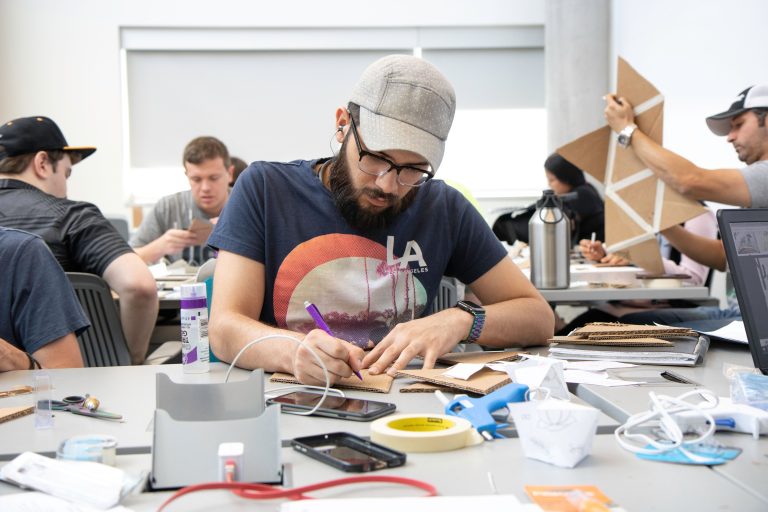
The partnership also expands opportunities for student entrepreneurship. This year, 170 IIT-B students participated in Imperial Enterprise Lab’s Global Challenge Lab, where students develop startup ideas under guidance from industry experts.
Doctoral Funding Tied to Real-World Application
The All India Council for Technical Education launched the AICTE Innovation and Entrepreneurship Doctoral Fellowship Programme, a new initiative designed to support PhD research with direct practical and commercial potential. The programme has a projected outlay of Rs 245 crore over five years and will support 150 PhD fellowships.
The focus differs markedly from traditional academic fellowships. Rather than prioritizing peer-reviewed publication as the primary outcome, AICTE explicitly seeks research that leads to innovation, technology transfer, commercialisation, and solutions to social or industry-related challenges. The fellowship criteria reward doctoral scholars who work on problems with clear practical applications.
AICTE Chairman Prof Yogesh Singh and Member Secretary Prof Shyama Rath launched the programme as part of India’s broader push to build a research and innovation ecosystem that moves beyond theoretical knowledge creation.
Closing The Gap Between Labs And Markets
Both initiatives acknowledge a persistent bottleneck: good research does not automatically reach industry, startups, or communities. Academic institutions develop knowledge and technologies, but the pathway to marketplace deployment remains unclear or disconnected.
The AIEDFP explicitly aims to build stronger links between higher education, industry, and the startup ecosystem. By supporting research with practical and scalable outcomes, AICTE intends to create pathways for ideas developed in laboratories to move toward the marketplace and wider society.
IIT Bombay director Professor Shireesh B Kedare stated that the Imperial partnership could help develop solutions with global impact, particularly in clean technology and medical technology. The existing projects undertaken by both institutions already illustrate this integration: quantum computing meets agriculture, power sector data meets climate goals, and physiotherapy diagnostics meets remote monitoring technology.
The scale of support reflects institutional commitment. A Rs 245 crore investment over five years signals that India views research-to-entrepreneurship conversion as essential to competitiveness and economic impact. Supporting 150 doctoral fellows specifically chosen for practical innovation potential represents a deliberate reallocation of doctoral funding.
Student Exchange And Cross-Border Collaboration
Both programmes emphasize student and researcher mobility. The IIT-B and Imperial agreement creates opportunities for students and researchers to undertake exchanges and placements in Mumbai and London, collaborate on projects, and share knowledge and data. These exchanges expose emerging researchers to different innovation ecosystems and industry partnerships.
The 170 IIT-B students participating in Imperial’s Global Challenge Lab this year demonstrate active demand for practical entrepreneurship training alongside doctoral or graduate-level technical work. Students develop startup ideas with industry expert guidance, merging technical rigor with commercial thinking.
Implications For India’s Innovation Economy
The two initiatives converge on a shared premise: India’s research institutions must produce not only knowledge but also deployable solutions and entrepreneurial talent. Traditional academic pathways emphasize publication, peer recognition, and theoretical contribution. These programmes add a second track: research that generates startups, licenses, adopted technologies, and measurable outcomes for industry and society.
Neither initiative is purely new in concept. Doctoral programmes worldwide increasingly encourage commercialisation and entrepreneurship. University-industry partnerships are standard practice at leading global institutions. What distinguishes these Indian programmes is their scale, explicit policy framing, and integration into national research strategy.
The Rs 245 crore commitment and 150 fellowship slots represent meaningful institutional weight. The IIT-B-Imperial partnership positions two leading institutions to shape research priority and student preparation across multiple technical disciplines. Together, they signal that conversion of academic research into startup creation and commercial deployment is now a primary success metric, not a secondary outcome.
Whether the fellowships and partnerships produce measurable increases in technology transfer, startup formation, and industry adoption remains to be demonstrated. The programmes have launched, but the proof lies in the research outcomes and entrepreneurial ventures that emerge over the next two to three years.
Frequently asked questions
What is the AICTE Innovation and Entrepreneurship Doctoral Fellowship Programme?
The AICTE programme provides Rs 245 crore in funding over five years to support 150 PhD fellowships explicitly focused on research with practical applications, technology transfer, commercialisation, and solutions to social or industry-related challenges.
What did IIT Bombay and Imperial College partnership include?
The partnership creates joint research programmes, academic workshops, and student entrepreneurship initiatives. Research collaborations include water management, energy security, disease modelling, climate science, and quantum computing for climate-resilient crops.
How many IIT-B students participated in Imperial Enterprise Lab programmes?
This year, 170 IIT-B students participated in Imperial Enterprise Lab’s Global Challenge Lab, where they develop startup ideas under guidance from industry experts.
What disciplines does the IIT-Imperial partnership prioritize?
The partnership focuses on clean technology and medical technology as initial priority areas, with active projects spanning quantum computing, biotechnology, power sector data reform, and physiotherapy diagnostics.