
Crypto security often promises safety through metaphors: vaults, air gaps, and hardware locks. These images suggest isolation, yet many cold wallets rely on systems that never truly leave the network. Most wallets store only private keys offline, while the assets themselves remain on a live blockchain.
This distinction matters. The asset remains exposed even if the key is protected. A hacker with the right credentials can move funds without ever touching the device itself. Physical distance offers little protection when the value itself remains tied to the network.
The term “cold” has become a marketing label rather than a technical guarantee. Hardware wallets, paper wallets, and air-gapped systems may feel offline, but the underlying value is still connected to public systems. The result is a security model that looks safe on the surface, yet depends on global infrastructure that cannot be fully controlled.
Assets Stored Where They Belong
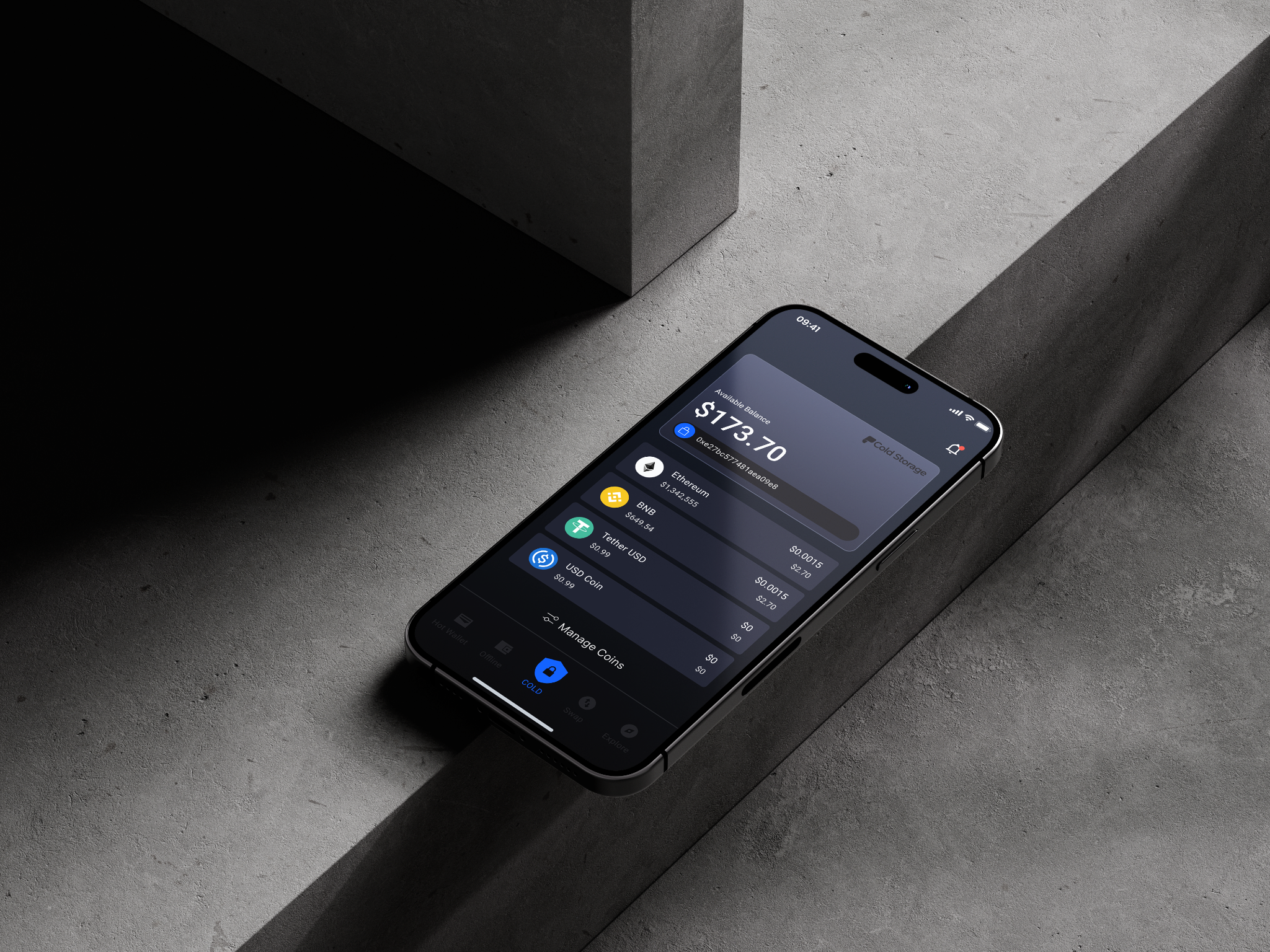
Pure Wallet remasters what “cold” means. Assets are stored directly on the user’s mobile device as Offline Tokens in a segregated, encrypted environment. These tokens exist locally and are processed in isolation.
This design transforms security from a promise into reality. The system protects the asset itself rather than a key that unlocks it elsewhere. There is no external endpoint to hack, no network layer to exploit, and no exposure to the typical smart contract attack surface. Without physical access to the device, the assets are inaccessible.
Even if a private key is exposed, possession of the key alone would not enable access to assets stored within the cold wallet environment. The asset is stored entirely on the device, wrapped in multiple encryption layers, and managed through an isolated processing structure. The network becomes irrelevant to its security.
Beyond Keys: Redefining Cold Storage
Most cold wallets rely on offline keys while the asset continues to exist online. This approach reduces some risks but leaves value exposed if credentials are compromised. Pure Wallet changes this paradigm by holding the assets themselves offline, locally on the device.
The implications for security are profound. Access depends on physical possession of the device combined with internal encryption and isolation. Remote attacks become impossible, and the attack surface shrinks from global to local.
In essence, Pure Wallet mirrors physical custody. Stealing cash from a safe requires proximity. Stealing assets from Pure Wallet’s cold wallet requires the same reality. Network defenses are irrelevant because the asset is not connected to the network.
Security Built Around the Asset
The cold wallet’s environment is more than offline. It is segregated, encrypted, and isolated from external systems. Asset processing happens within this protected environment, with restricted access and no dependency on live blockchain networks. The security boundary surrounds the asset itself
This matters because most wallet breaches exploit connectivity rather than breaking encryption. APIs get hijacked. Signing flows are manipulated. Users can unknowingly approve transactions. All of these attacks assume the asset is reachable through a network. Pure Wallet eliminates that pathway.
With the assets stored on-device, there is no on-chain transaction to intercept. There is no network layer to exploit. Malware on the device cannot transmit what is never exposed externally. Offline becomes a structural condition.
Physical Control as the Final Barrier
What truly sets Pure Wallet apart is the physical binding of assets to the device. The value exists where the device exists. Ownership is enforced by possession and internal isolation. Cold, in this context, finally means what it claims: disconnected, unreachable, and inaccessible remotely.
Even if a device is lost, Pure Wallet provides a secure recovery process. Access can be restored without compromising the offline security model or reintroducing network exposure. The system does not rely on a cloud ledger, servers, or external endpoints. Custody remains local, even through recovery.
The result is a digital wallet that behaves more like physical possession than a permission-based system. Security is tangible. Assets cannot be moved remotely, copied, or stolen through network attacks. They exist in isolation, on the device, under layers of encryption and processing safeguards.
Pure Wallet’s cold wallet delivers a rare certainty in crypto storage: the value itself is unreachable without the device. The design sidesteps risks entirely, making digital custody a matter of presence and structure.