The smartphone has spent the last decade following us everywhere. It’s on our desks at work, in our hands while we wait for coffee, beside the bed at night, and usually within reach even when we’re supposed to be doing something else.
Now, another familiar object is starting to take on some of those digital responsibilities: the humble pair of glasses.
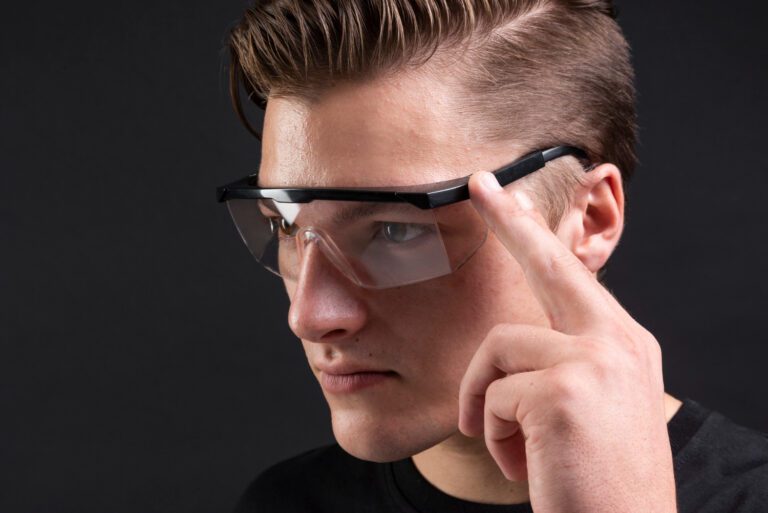
Today’s smart glasses can do much more than help someone see clearly. Depending on the model, they can play audio, capture photos and video, connect with a phone, and use artificial intelligence to respond to questions.
What’s interesting is that they aren’t necessarily trying to replace smartphones. Instead, they’re making some everyday interactions possible without requiring us to pull out another screen.
Why Glasses Make Sense as a Wearable
People already know how to wear glasses, which gives them an advantage over many other types of wearable tech. Unlike a smartwatch or earbuds, glasses don’t require people to change much about their daily routine. The bigger challenge is making the technology light and comfortable enough to wear for hours. In the end, the best smart glasses might be the ones you barely notice are smart at all.
Sometimes the Most Useful Feature Is Just Sound
One of the simplest ideas in smart eyewear is also one of the most practical: putting speakers into the frame.
Think about how often people use earbuds for things that don’t require complete isolation from their surroundings. Someone might listen to directions while walking, answer a call while carrying groceries, or play a podcast while cooking.
In those situations, glasses with speakers offer an interesting alternative.
The goal isn’t to match high-end headphones in sound quality. It’s about making everyday listening easier. You don’t need to put anything in your ears or reach into your pocket. The audio is just there whenever you need it.
That kind of simple convenience can make a real difference when you use it throughout the day.
Then There’s the Screen-Time Problem
There’s another reason eyewear is getting attention: we spend a huge part of the day looking at screens. Between laptops, phones, and TVs, our eyes rarely get a break. For many people, especially those working in tech, design, or media, tired eyes have simply become part of everyday life.
The American Academy of Ophthalmology’s EyeWiki notes that prolonged use of computers and other digital devices can contribute to digital eye strain. It also points to factors such as reduced blinking, viewing distance, glare, and the surrounding environment.
That doesn’t mean people need to abandon their devices. For most of us, that’s not realistic.
It does mean that how we use those devices matters.
Where Blue-Light Glasses Fit
Blue-light filtering has become a popular feature in modern eyewear. People who spend much of their day working at a computer can find options such as blue light glasses designed with digital use in mind.
Still, it’s worth being careful about some of the claims made about these lenses.
The American Academy of Ophthalmology doesn’t recommend special glasses to protect against screen damage. Taking regular breaks, reducing glare, and adjusting your screen can often do more to ease eye discomfort.
Specialized lenses can still be useful for comfort or glare, but they’re not a replacement for good screen habits.
Cameras Change the Conversation
Audio is relatively straightforward. Cameras are different.
Once a camera is built into a pair of glasses, the device can capture what the wearer sees without requiring them to reach for a phone.
That can be useful for travelers, creators, athletes, or anyone who wants to document something without interrupting the moment. Instead of stopping to take out a smartphone, the wearer can potentially capture a first-person view while continuing with whatever they’re doing.
Products such as glasses featuring a built-in camera show where this side of smart eyewear is heading.
But the convenience comes with a question that manufacturers can’t ignore: what happens to everyone else in the room?
Privacy Is Part of the Product
With a smartphone, it’s usually obvious when someone is recording. They take it out, point the camera, and start filming. With a camera built into glasses, recording can be much harder to notice.
That raises real privacy concerns, especially in places like workplaces, restaurants, and schools where people may not expect to be recorded.
The Federal Trade Commission recommends that consumers using connected cameras pay attention to security practices such as strong passwords, software updates, and how the device stores and transmits information.
Smart glasses need the same level of scrutiny. Clear recording signals and simple privacy settings can help people feel more comfortable. For the technology to go mainstream, trust will matter just as much as the features.
AI Could Make the Glasses More Useful
AI can make cameras and speakers much more useful. Imagine walking through a new city and seeing a building you don’t recognize. Instead of reaching for your phone, you could simply ask your glasses about it.
The same goes for quick questions when your hands are busy. You can get an answer without stopping what you’re doing.
The appeal isn’t one groundbreaking feature. It’s these small conveniences that can make everyday life a little easier.
The Boring Part May Decide Whether They Succeed
For all the excitement around cameras and AI, comfort may be what really determines whether smart glasses succeed. They need to feel good, look stylish, and have enough battery life for everyday use. After all, people choose glasses based on how they look and feel, not just their features. The technology needs to blend naturally into the frame rather than getting in the way.
They Don’t Need to Replace Smartphones
Smart glasses probably won’t replace smartphones, and they don’t need to. Phones are still better for things like watching videos, editing photos, reading, and working on documents. Glasses can simply handle the quick stuff—calls, music, directions, photos, or simple questions. Instead of replacing your phone, they could make everyday tasks a little easier.
The Real Opportunity Is Convenience
The real appeal of smart glasses isn’t one standout feature. It’s the convenience of having technology there when you need it, without constantly reaching for your phone.
You can hear directions, capture a moment, or ask a quick question without breaking what you’re doing. These may seem like small changes, but together they could make technology feel less distracting.
If smart glasses can combine useful features with comfort, good design, and privacy, they may eventually stop feeling like futuristic gadgets and simply become another kind of everyday glasses.