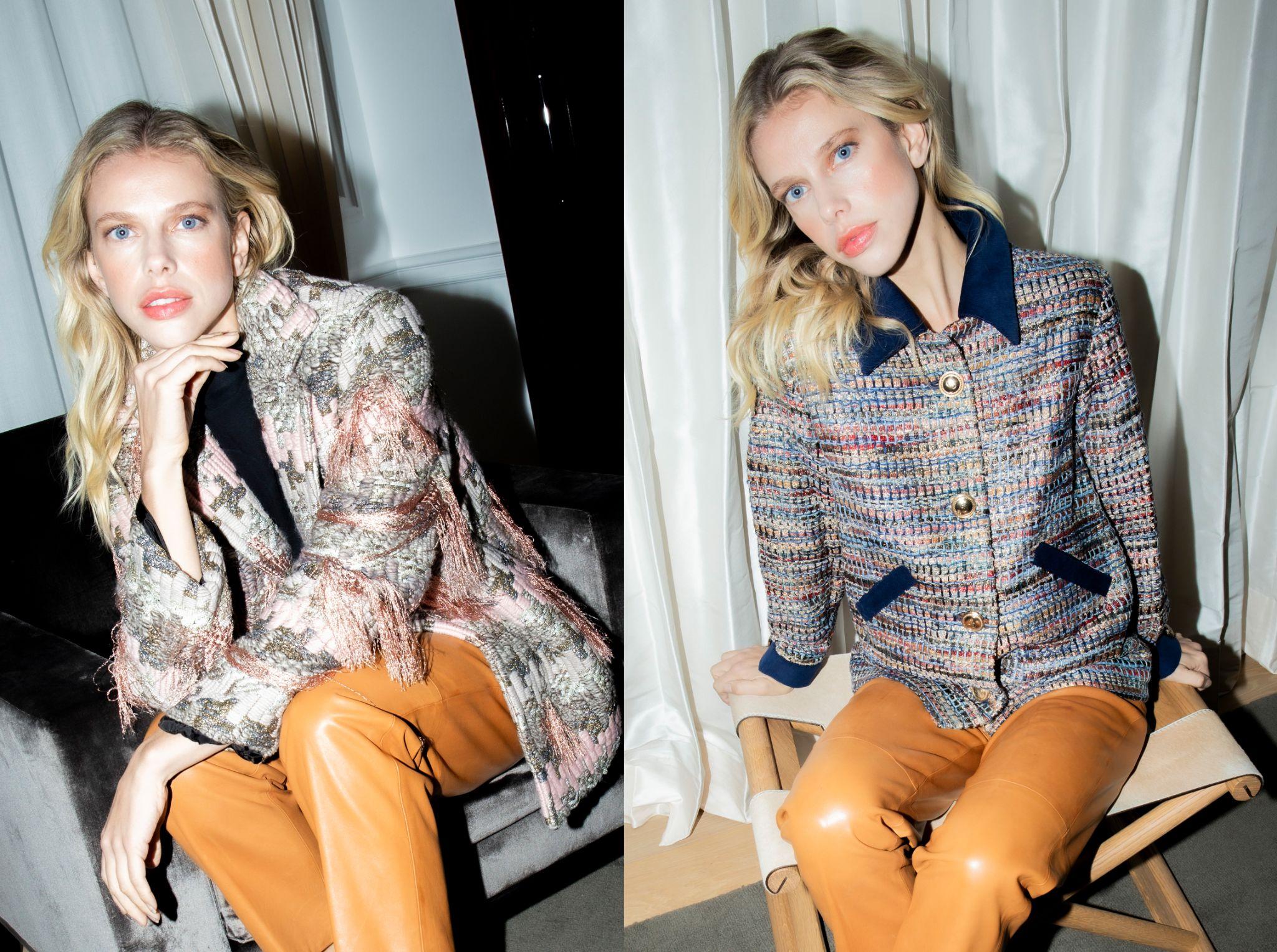
The fashion industry has always had a gift for eating its young. It chews up dreamers, spits out trend-chasers, and rewards those with deep pockets, strong connections, and a publicist on speed dial. So when a young British designer named Georgia Crossley decided at the end of 2019 to launch a premium womenswear brand, after stints at two of fashion’s most revered houses, Alexander McQueen and Jenny Packham, the conventional wisdom would have told her to wait, to fundraise, and to find a backer willing to believe in her vision.
She did none of that. She picked up her phone instead.
Building Vogue Dreams on a Shoestring
Georgia, the founder of GeeGee Collection, a London-based luxury womenswear label, did not arrive with venture capital, a fashion week slot, or a famous surname. What she had was time, the strange and suspended gift that the COVID-19 pandemic handed to anyone paying attention, and an obsession with hand-designed and hand-woven fabrics that could not be knocked off by a fast fashion algorithm. She recruited friends as models, posted consistently, and ran Instagram promotions scrappy enough to make any bootstrapped founder proud. Independent department stores noticed. Customers followed.
Through a conversation on the Founder’s Story podcast with host Daniel Robbins, Georgia unpacked what it actually takes to survive and thrive in a market that already has too much of everything. Her answer was not a pitch deck. It was, refreshingly, a philosophy. “The market is always oversaturated,” she said. “The real differentiator is obsession, clarity of mission, and consistency until your people find you.” For founders practically expected to raise a seed round before selling a single unit, that kind of self-reliance reads almost like a quiet act of defiance.
The Anti-Algorithm Aesthetic
GeeGee Collection’s entire identity is a gentle rebuke to the disposable. The brand creates one-of-a-kind luxury womenswear using hand-woven fabrics from skilled artisans in Italy and France, then cuts and stitches them entirely by hand in the United Kingdom and the European Union. Where fast fashion churns out micro-trends that arrive on a Tuesday and feel dated by Thursday, Georgia’s brand bets on the opposite: pieces built from fabrics so individual they resist mass replication, designed to build confidence and express identity rather than chase the approval of a comment section.
Georgia also offered a measured perspective on one of the defining tools of the digital age. While influencer partnerships offered visibility, she found that paid advertising and behind-the-scenes studio content, the unglamorous and real-world texture of building something from scratch, drove stronger and more loyal momentum. Authenticity, it turns out, is not just a buzzword. It is a business model, one that GeeGee Collection has built its reputation on since its earliest days in East London.
Slow Burn, Global Reach
GeeGee Collection has since expanded into the United States, and the brand has been featured at London Fashion Week, yet Georgia has taken no outside investment. She prefers a slower burn, protecting her creative direction and preserving the standards that made the brand worth noticing in the first place. For premium products, she favors physical retail, trunk shows, and pop-ups, spaces where a customer can touch the fabric, hear the story, and understand why a piece is worth the price.
This is a model that runs counter to every growth-hacking gospel preached from Silicon Valley to Shoreditch. Georgia operates on a non-seasonal basis, releasing new pieces thoughtfully throughout the year rather than in large drops, a deliberate choice to sidestep the overproduction cycle that has long plagued the industry. No aggressive scaling. No pivot. Just craft, consistency, and the patience to wait for the right people to find her.
The Last Stitch
The fashion world has long worshipped at the altar of excess, where the loudest brands tend to win the most shelf space and the most column inches. Georgia is building something that works entirely against that current. Her approach, grounded in slow growth, traceable materials, and handmade production, stands as proof that a brand built on genuine craft and a clear mission can travel further than one propped up by early-stage funding and borrowed momentum.
The congregation is steadily growing. And unlike most things in fashion, it was not bought.