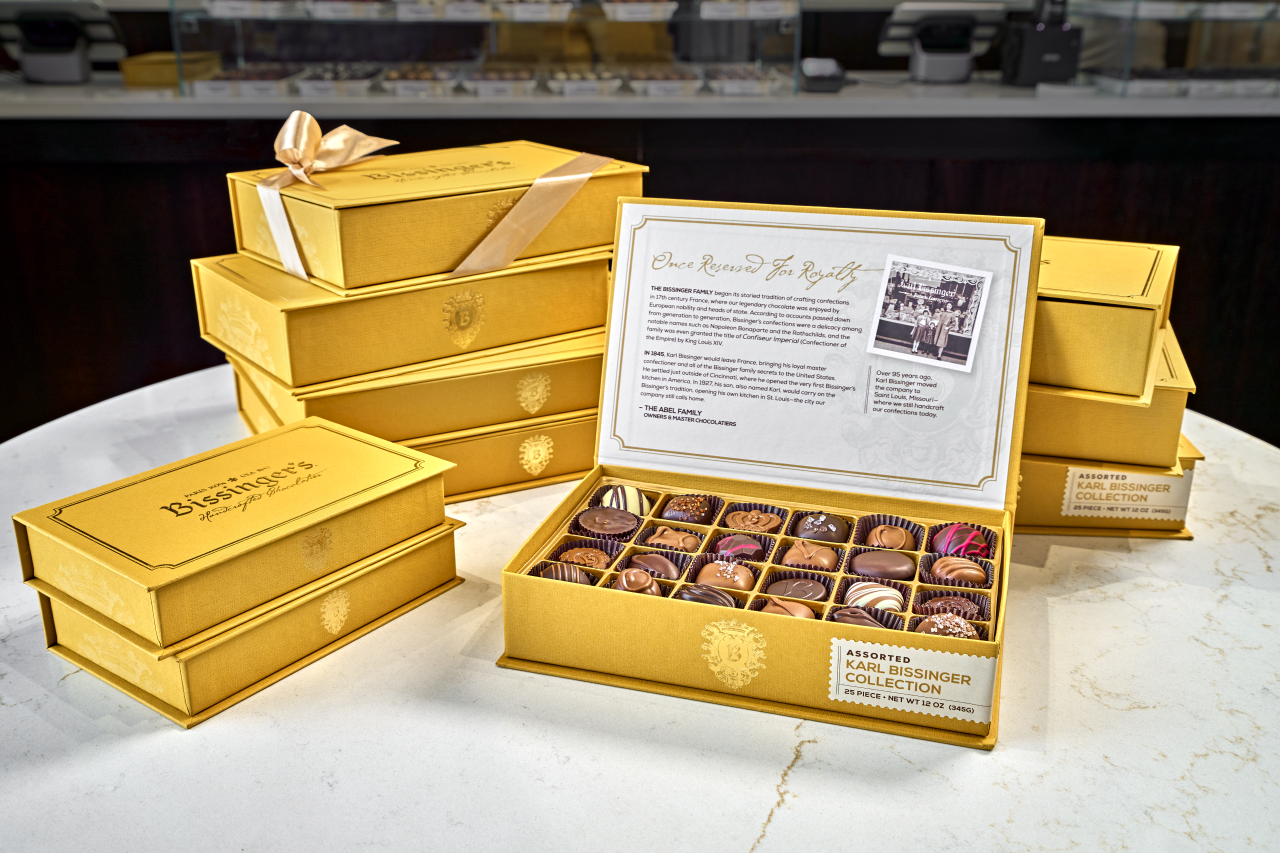
Few luxury food brands can trace their origins back more than three centuries, fewer still can claim relevance in today’s fast-moving consumer landscape. Bissinger’s Handcrafted Chocolatier is one of the rare exceptions. Founded in Paris in 1668, the chocolatier built its earliest reputation serving European royalty, earning the title “Confectioner of the Empire” from King Louis XIV. Even Napoleon is said to have carried the company’s chocolate during military campaigns, underscoring the brand’s longstanding association with refinement and quality.
While its beginnings were unmistakably French, Bissinger’s has since evolved into an American luxury confectionery anchored in St. Louis and now owned by the Abel family. That geographic shift has not diluted the brand’s heritage. Instead, it has positioned Bissinger’s as a company adept at translating Old World craftsmanship for modern consumers.
In 2026, that strategy is becoming increasingly visible. The chocolatier is expanding its direct-to-consumer footprint with boutiques in Nashville, New York City, Palm Beach, Indianapolis, and the Ritz-Carlton Key Biscayne, with additional locations expected. The move reflects a broader retail trend in which premium brands are investing in physical spaces designed to deliver an immersive experience rather than simply facilitate transactions.
“We’ll never compromise on quality. Everything we do is going to be the same as Bissinger’s has always done. Handcrafted, hand-striping, hand-dipping. Same recipes,” says Dan Abel Jr., Chief Chocolate Officer at Bissinger’s Handcrafted Chocolatier.
For luxury chocolate makers, differentiation often hinges on authenticity. Bissinger’s continues to lean heavily on time-honored techniques, particularly in products that showcase deliberate, labor-intensive preparation. The Glaceed Oranges au Chocolat, for example, begin with oranges sourced from France. Each slice is submerged in natural sugar for two weeks, allowing the sweetness to fully penetrate the fruit before it is dipped individually by hand in 60% dark chocolate. The method illustrates the company’s commitment to processes that prioritize flavor development over efficiency.
“There is a black-bound recipe book, mostly written in French, that we keep in a safe because it’s from 1899. We take pride in using original recipes and the fact that our chocolates are handmade. There’s no easy button here,” Abel says.
Caramels represent another throughline connecting the brand’s past to its present. Bissinger’s Salted Caramels rely on a recipe more than 300 years old, enhanced with gourmet salts including Mediterranean sea salt and Chardonnay salt. Meanwhile, the Milk & Dark Sea Salt Caramels Flight caters to consumers increasingly drawn to curated tasting formats that double as approachable luxury gifts.
Yet heritage alone is rarely enough to sustain growth. Consumer expectations have shifted toward ingredient transparency and dietary flexibility, prompting even historic confectioners to adapt. Bissinger’s award-winning Gummy Pandas reflect that evolution. Made with organic sweeteners and positioned as vegan and non-GMO, the product signals a willingness to meet modern preferences without abandoning the brand’s emphasis on flavor.
Seasonal offerings further demonstrate that balance. The limited-edition Strawberry Bark, crafted from European milk chocolate swirled with naturally colored pink strawberry chocolate and topped with freeze-dried strawberries, taps into the growing appetite for collectible, occasion-driven treats that feel both premium and timely.
Taken together, these products point to a company carefully navigating the tension between preservation and progress. Boutique expansion suggests confidence not only in the strength of the brand but also in consumers’ continued appetite for tactile retail experiences, particularly in the luxury segment, where storytelling and environment often shape purchasing decisions as much as the product itself.
Bissinger’s longevity offers a reminder that legacy brands do not endure by standing still. Instead, they evolve while remaining grounded in the principles that first earned customer trust. As the chocolatier extends its reach into new markets, it is doing more than opening storefronts, it is reaffirming that craftsmanship, when paired with thoughtful innovation, can remain relevant across centuries.