
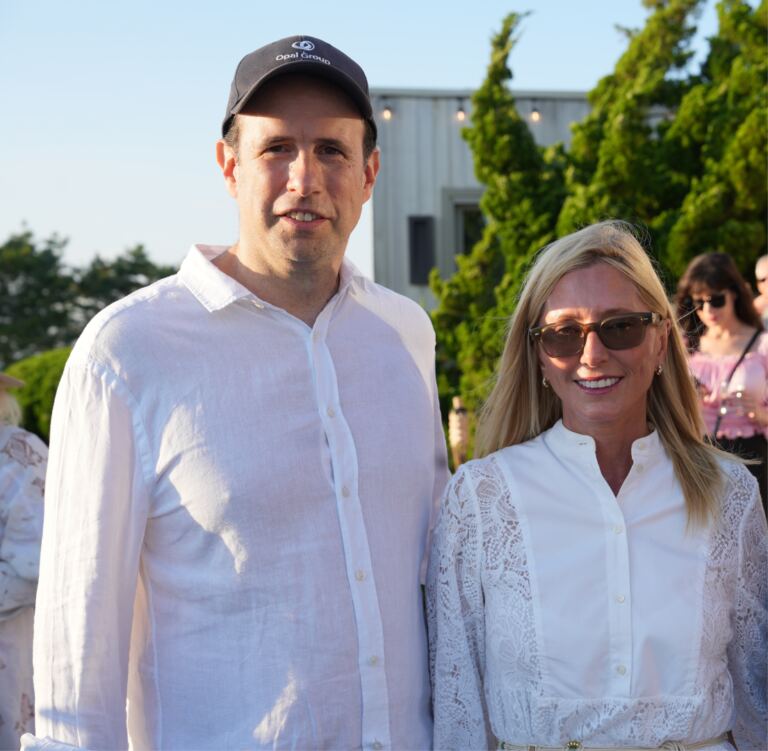
At 22, Opal Group founder Abe Wellington faced a challenge few people could imagine. A passenger in a car involved in a head-on collision with an alleged drunk driver, he suffered a shattered skull and severe brain trauma. He spent weeks in intensive care and subsequently underwent two years of cognitive and physical rehabilitation. At one point, reading a single sentence was exhausting.
Today, Wellington spearheads Opal Group, a global conference organizer that brings together senior executives and decision-makers across a range of industries. His journey from a devastating injury to building a successful business has given him a distinct perspective on persistence, personal growth, and the importance of human connection.
Developing Opal Group
Opal Group began in a small, humble office in Mount Kisco, New York. Its first conferences were a tremendous success, quickly establishing the company as a player in the industry. As the business expanded, it moved to New York City and broadened its reach beyond investments into structured finance, healthcare, technology, facilities management, real estate, and human resources.
For Wellington, the principles behind rebuilding a life and building a business are surprisingly similar: both require patience, adaptability, and a willingness to keep moving forward. Recovery, he explains, did not arrive through one dramatic breakthrough. Instead, it came through incremental improvements. “A sentence became easier to read. A thought became easier to hold onto. Gradually, those small improvements added up.”
He is particularly fascinated by neuroplasticity, the brain’s ability to reorganize, adapt, and create new connections. It is a reminder that progress can be happening even when it isn’t immediately apparent. When people ask whether there are things he still doesn’t remember from before his injury, he responds with characteristic humor: “How would I remember something I’ve forgotten?”
Purpose: A Philosophy
What kept him going was learning to concentrate on the possibilities immediately in front of him rather than the distance still to travel. “I learned that progress begins with believing you can take the next step,” he says. He also discovered the importance of purpose, something that provides the motivation and hope to persevere through life’s most difficult moments. Wellington believes there is an important distinction between refusing to give up and refusing to change course.
“Persistence and stubbornness can look remarkably similar. The difference lies in whether you’re committed to the goal or attached to achieving it a particular way,” he explains. “Persistence means listening to feedback, adapting, and moving forward without accepting defeat. Stubbornness means ignoring feedback simply because it challenges your expectations.”
He adds, “Changing direction isn’t the same as giving up. Sometimes, abandoning an ineffective approach is precisely what allows you to achieve a larger goal.”
Growing From Adversity
Wellington is also careful not to romanticize adversity. While hardship can create opportunities for personal growth, it can leave permanent scars, both physical and emotional. The familiar notion that adversity automatically makes people stronger overlooks the damage that difficult experiences can cause.
“What matters is the possibility of post-traumatic growth: the ability to develop new strengths, perspectives, and a deeper sense of purpose through adversity,” he says. “The scar may always remain, but sometimes what grows around it becomes more meaningful than the scar itself.”
He also draws a distinction between genuine hope and denial. “Denial seeks to escape reality, while hope begins with the courage to face it honestly and accept it as it is.” That acceptance, he believes, must be accompanied by grace, patience, and compassion.
His perspective extends to how people approach their own limitations. Some obstacles are real, he acknowledges, but today’s limitations do not necessarily define tomorrow’s possibilities. “Rather than asking, ‘Where are my limits?’ I prefer to ask, ‘How much further can I go than I currently believe is possible?’”
Building Relationships
There is another connection between Wellington’s personal experience and his professional life: the importance of relationships. Just as the brain rebuilds through countless neural connections, he believes organizations and communities become stronger through collaboration.
“Perhaps the real magic lies not in what we can accomplish alone, but in what becomes possible when we connect, collaborate, and build something together,” he says. It is an especially fitting philosophy for someone whose company brings influential people together to exchange ideas and develop relationships. He believes meaningful progress, whether personal or professional, rarely happens in isolation.
Wellington also believes compassion is essential because so many people are dealing with struggles that aren’t immediately visible. “A little patience, curiosity, and compassion can accomplish far more than judgment ever will,” he says.
Ultimately, he believes progress begins with the conviction that individual efforts matter. “We don’t need to know that our efforts will succeed. We simply need to remain open to the possibility that our actions matter and that even small contributions can make a difference.”
If he could return to the moment when his 22-year-old self was lying on the carpet, exhausted after reading a single sentence, Wellington knows exactly what he would say. “You’re doing better than you think. Keep going. You have so much ahead of you.”
It is a message that applies as much to building a business as rebuilding a life.