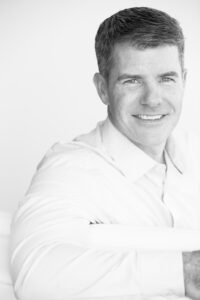
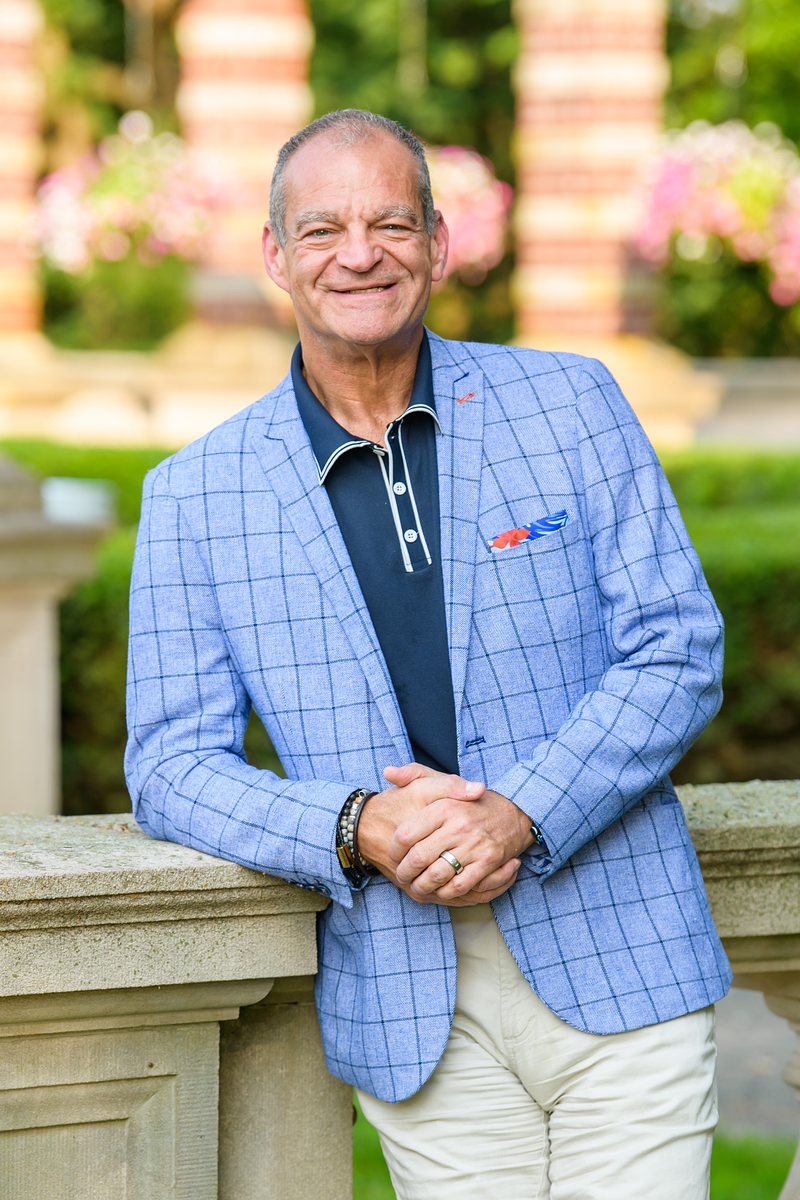
Pete Sacco spends his days building the infrastructure that makes artificial intelligence possible. Data centers consuming megawatts. Cooling systems managing thermal loads. Server racks stretching like city blocks. When people tell him they’re afraid AI will replace them, he understands the fear. He’s walked through rooms humming with the machines everyone worries about.
But he’s not afraid.
“I helped build this technology,” Sacco says. “But I’ve also spent the last decade building something else—the interior technology that makes me human. While AI learned to optimize everything, I learned why optimization isn’t the point.”
Sacco is what neither technologists nor philosophers expect: someone who lives in both worlds at once. THE BRIDGE between optimization and discernment. From that position, he sees what both sides miss when they argue about whether AI will save or destroy people.
The real question, he insists, isn’t what AI can do. It’s what consciousness is for.
The Letter That Changed Everything
The revelation came through something ordinary. Sacco wanted to write his seven-year-old daughter a birthday message. He was tired, distracted by work, reaching for words that wouldn’t come. So he did what millions now do—he asked ChatGPT for help.
The result arrived in seconds. Articulate, warm, perfectly calibrated. Better than what he would have written alone.
“The perfect letter landed like a stone in my chest,” he recalls. “If a machine could write a better letter to my child than I could, what was left for me to give her?”
The question felt personal, but it wasn’t. It was something every parent, every worker, every person would soon be asking. If AI can write, reason, research, and create—where does that leave people?
Most answer with fear or denial. The fear says AI will replace them. The denial says nothing fundamental will change. Both miss what’s actually happening.
“My daughter doesn’t need a perfect letter writer,” Sacco says. “She needs a father. Someone who can be trusted when nothing makes sense. Someone who loves her when she’s difficult. Someone who shepherds her toward what matters when the world offers easier paths.”
Trust. Love. Leadership. These aren’t features you can add through better training data. Their presence made visible through time, through sacrifice, through promises kept when breaking them would be simpler.
The machine can write an apology. It cannot carry the weight of having failed someone. AI has no weight to carry.
Two Technologies, Not One
Building AI infrastructure taught Sacco something unexpected about consciousness: they’re complementary poles, not competitors.
AI is the technology of optimization. It takes defined problems and finds efficient paths through them. It’s relentless, tireless, exponentially improving. In execution, AI will surpass every human who ever lived.
Consciousness is the technology of discernment. It decides which problems are worth solving. It determines what “efficiency” should mean when human dignity is at stake. It feels the weight of consequences before they arrive. It says “no” when every incentive says “yes.”
“This isn’t mysticism,” Sacco explains. “It’s physics applied to meaning. The ancient Hermetic principle of polarity teaches that opposites are identical in nature, differing only in degree. AI and consciousness are both intelligence technologies—one optimizes what exists, the other discerns what should exist.”
For decades, people have built a civilization that rewards optimization over discernment. Productivity over presence. Output over insight. People have been taught to define worth by what they produce and how fast they produce it.
Then came AI—perfect at optimization—and suddenly people are confused about what humans are for.
“AI isn’t the problem,” Sacco says. “AI is the mirror. It shows us what we’ve been worshipping: speed, scale, efficiency, and performance. Now that we’ve created something that does those things better than we could, the mirror asks: Is that really all you are?”
The Architecture of Consciousness
Years ago, Sacco’s body was failing. Chronic stress. Perpetual tension. Sleep that never restored. A nervous system locked in fight-or-flight mode even when nothing threatened him.
“I’d spent decades building companies through sheer force of will,” he says. “I was good at optimization. My body was sending me a different message: You’ve forgotten how to be present.”
What followed was a complete rebuild. Somatic therapy to release stored trauma. Contemplative practices to train attention. Plant medicine ceremonies that dissolved armor he’d worn since childhood.
“Consciousness is an intelligence technology,” he explains. “It has architecture. You can build it or let it atrophy. That architecture has three load-bearing pillars: body, mind, spirit.”
Body provides presence. A regulated nervous system doesn’t optimize faster—it discerns better. It notices what’s wrong before metrics fail. It feels when trust is fracturing, when decisions will cause harm, when the efficient choice is the wrong choice.
“This capacity to sense what’s happening before data confirms it cannot be automated,” Sacco says. “AI can analyze sentiment. It cannot feel the shift in a room when someone tells the truth after months of performance.”
Mind develops discernment. Not analytical intelligence—people are losing that race to machines. Discernment: the ability to choose what matters when everything demands attention.
“AI can optimize any goal you give it,” he notes. “It cannot tell you which goals are worth pursuing. It can generate a thousand strategies for market domination. It cannot tell you whether domination is the game you should be playing.”
Spirit supplies meaning. The questions that have no optimization function: What matters if someone is not performing? Who is someone when they are not producing? What’s worth protecting when profit and purpose conflict?
“AI will never ask these questions,” Sacco says, “because AI has no existential confusion. That mourning, that questioning, that slow work of rebuilding meaning—that’s not a bug in the human operating system. That’s the feature AI will never replicate.”
What Becomes Possible
The future doesn’t need people who compete with AI at optimization. It needs people who can integrate both technologies: the artificial intelligence that optimizes execution and the consciousness that discerns direction.
This is THE BRIDGE most people can’t cross. Technologists dismiss consciousness work as unmeasurable. Spiritual teachers treat technology as suspect. Both miss the synthesis.
“I build AI infrastructure. I also build consciousness infrastructure,” Sacco says. “These aren’t contradictory projects. They’re complementary poles of the same transformation.”
In an age of abundant AI-generated content, trust becomes more valuable and harder to fake. Anyone can produce perfect prose. The question becomes: who can be trusted to use those tools wisely?
“Trust accumulates in the gap between promise and performance,” he explains. “It’s what remains after the tenth time you kept your word when breaking it would have been simpler.”
Love in the AI era isn’t sentiment. It’s sustained attention directed toward another person’s becoming.
“My daughters don’t need a father who can generate perfect birthday cards,” Sacco says. “They need a father who notices when a cute message isn’t what they need—when they need silence, or challenge, or someone to sit with them in confusion without trying to fix it.”
Leadership becomes about asking the right questions rather than having the answers. When anyone can generate strategic plans, leadership is about knowing which plan aligns with what’s true.
“The leaders who matter won’t be the ones who optimize fastest,” he says. “They’ll be the ones who discern wisest.”
The Choice Ahead
Last month, Sacco stood in a data center—rows of servers processing billions of calculations per second, cooling systems humming, power flowing through circuits designed for exponential growth.
“This is the infrastructure of artificial intelligence,” he reflects. “It’s extraordinary. But it’s incomplete. The complete infrastructure includes what I built in parallel: the capacity to be still when everything demands motion. The discernment to ask whether the problems we’re solving are worth solving.”
AI will become more capable. That’s inevitable. What remains undecided is whether humanity will use that capability as permission to abandon what makes people human, or as freedom to finally become more present to what people have been too busy to notice.
His daughter turns eight this month. The perfect birthday note he didn’t send her last year sits in a digital file somewhere—a reminder of the day he learned what matters.
“She doesn’t know about that note,” he says. “What she knows is that her father shows up. Not perfectly—presence isn’t perfection. But consistently. With attention that isn’t divided. With love that doesn’t optimize her into someone easier.”
That’s the work AI can’t do. That’s the work that’s always been the work. And that’s the work the future will reward, once we stop measuring worth by what people produce and start recognizing it in who someone chooses to become.
The machine can’t make that choice for someone. That’s why people are still here.